
– Stefano Mordini’s new film is a psychological thriller about gender-based violence which leads us to wonder what’s truth and what’s paranoia
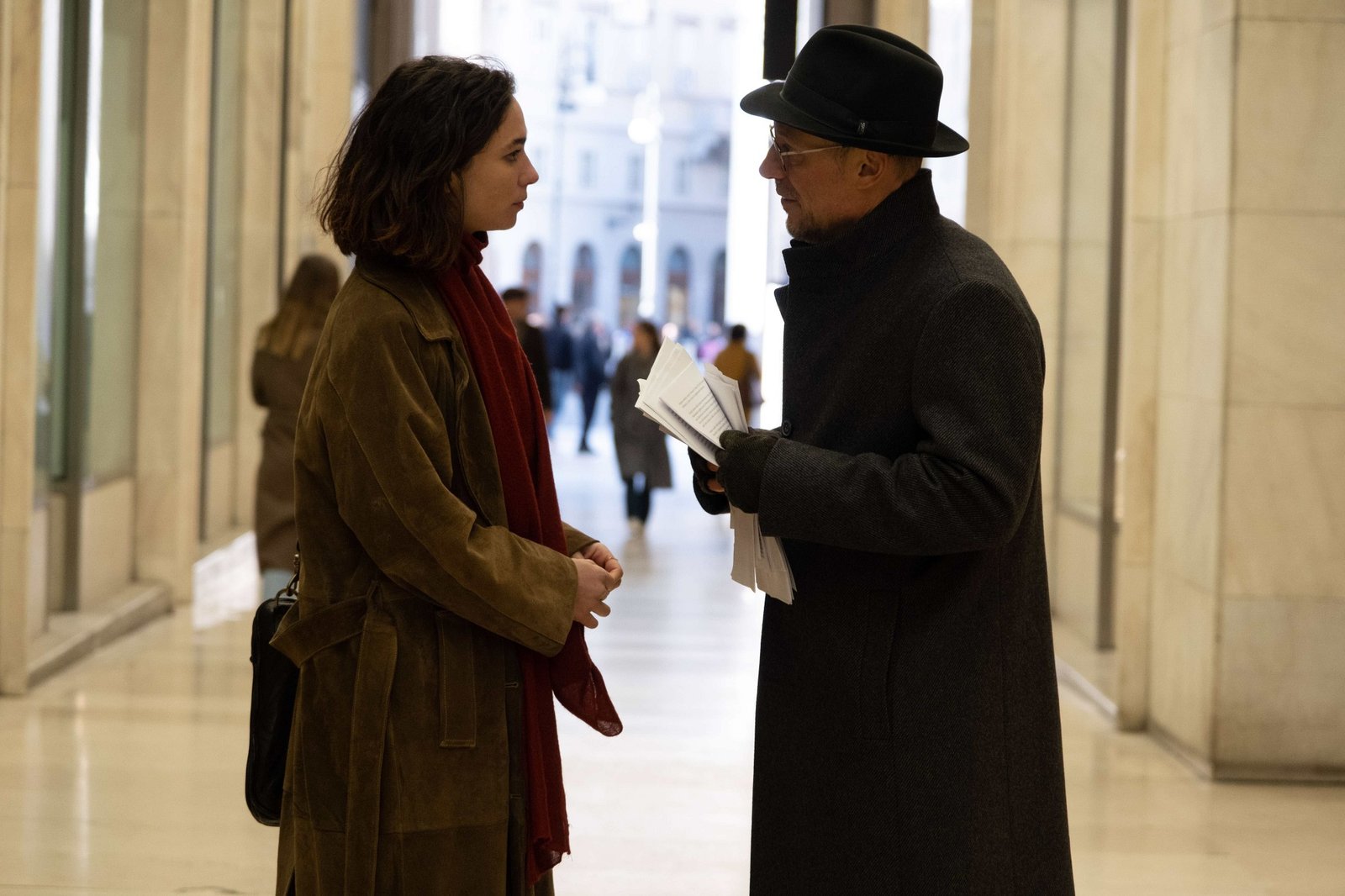
Matilda De Angelis and Stefano Accorsi in The Lesson
We’re in a court room. A woman who’d accused her university professor of sexual assault is now retracting everything. It’s a dramatic turn of events which results in a victory. Except the lawyer defending the professor doesn’t seem overly excited. This is how The Lesson [+see also:
trailer
film profile] by Stefano Mordini (hitting Italian cinemas on 5 March via Vision Distribution) opens: in a haze of ambiguity. Based on the novel of the same name by Marco Franzoso (who previously wrote Il bambino indaco, which inspired Saverio Costanzo’s Hungry Hearts [+see also:
film review
trailer
interview: Saverio Costanzo
film profile]), this new movie by the director behind The Catholic School [+see also:
film review
trailer
interview: Stefano Mordini
film profile] and the more recent Race for Glory [+see also:
film review
trailer
film profile], to name only two titles, is a psychological thriller which plays on duplicity – of characters and events – and which leads viewers to wonder what’s true and what’s fuelled by paranoia, while its protagonist wins cases whilst simultaneously fighting against stalking, which she herself is the victim of.
The lawyer in question is Elisabetta (highly sought-after actress Matilda De Angelis, recently seen in Dracula, Fuori [+see also:
film review
trailer
interview: Mario Martone
film profile] and Siblings [+see also:
film review
film profile]), a young, highly-esteemed professional who’s successful yet short on cash (for reasons which aren’t entirely clear), to the point she’s forced to sublet her apartment in the centre of Trieste during the Barcolana: the historic sailing regatta held annually in the Friulian capital. Elisabetta is frantic, she feels like she’s being followed and spied on: her ex-boyfriend, who was previously convicted of stalking (played by Marlon Joubert), is, once again, at large and seems to be back on her tracks. Everyone tells her she’s exaggerating, that she’s no longer at risk. In the meantime, Angelo Walder (Stefano Accorsi) – the professor she’d defended – comes back onto the scene requesting her assistance once again. Elisabetta refuses to help him a second time, but he becomes insistent. Holed up in a house in the woods outside the city, the protagonist is increasingly alone and afraid. So, armed with her anger, and given that no-one believes her, she decides to exact justice herself.
The Lesson is a film which deserves attention more for the importance of the themes it explores – psychological abuse and its aftermath, manipulation, stalking and the struggle to be believed – than for the final product itself. It’s a slow-burning psychological thriller: it builds up suspense little by little, so slowly that, as viewers we become desperate for something to happen. But when the film takes a turn halfway through, it loses credibility amidst illogical actions and ill-considered decisions (Elisabetta has a police officer boyfriend whom she could turn to for help at any point, but she doesn’t), and our empathy evaporates. The wind in Trieste messes with people’s hair and souls, a love song (Elisabetta and her ex-boyfriend’s song) echoes through the air, emphasising the protagonist’s anguish, while hundreds of sailboats cut through the water, painting a unique picture. All the necessary elements for a compelling thriller are present and correct, and the close-ups on the brilliant Matilda De Angelis leap off the screen. But the plot isn’t constructed coherently enough to keep the audience glued to their seats.
The Lesson was produced by Picomedia and Vision Distribution in collaboration with Sky. Vision Distribution are handling world sales.
(Translated from Italian)
