
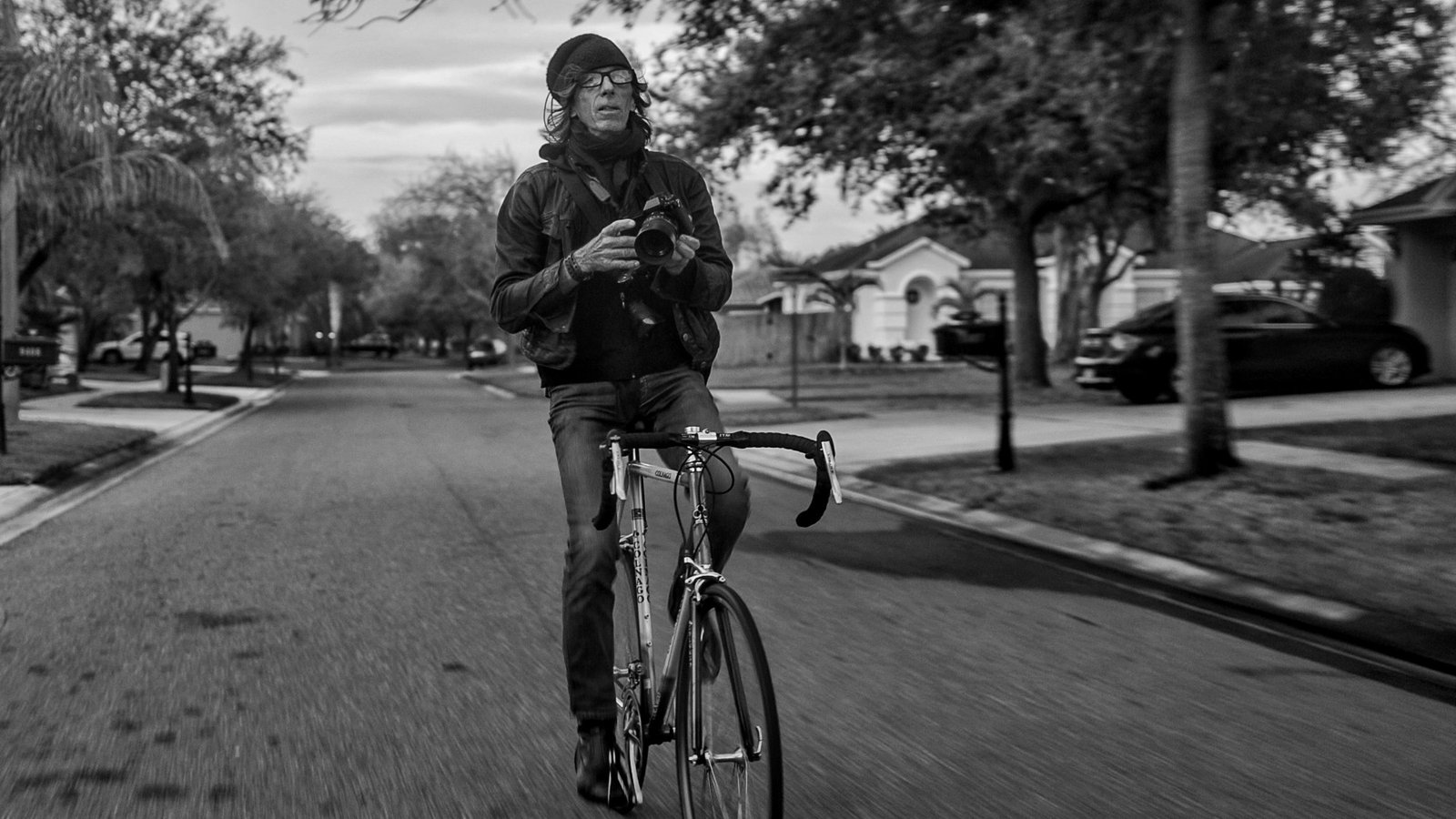
– Piotr Małecki and Maciek Nabrdalik’s powerful and cleverly structured film speaks about PTSD through its protagonist, famous war photographer Christopher Morris
Christopher Morris is one of the world’s most famous war photographers. He has covered 28 wars, mostly for TIME magazine, and has won all possible awards in his field many times over. Now, he is the subject of the documentary Tickling the Devil, which world-premiered at the Krakow Film Festival and won the Golden Hobby Horse for Best Feature-length Documentary Film, as well as Best Editing in the National Competition.
It was co-directed by two photographers-cum-cinematographers, Piotr Małecki and Maciek Nabrdalik. While Małecki is relatively well-established as a film director, it is Nabrdalik’s profile that gives us some hints as to what this documentary is essentially about. He is a photojournalist who focuses on social change, and has published books on German Nazi camps, Chernobyl and the Polish LGBT+ community – topics united by violence and trauma.
As befits a film by two photographers about a photographer, it is shot in luxurious black and white. Most of it takes place in Morris’s home in Tampa, Florida, which he shares with his wife, Vesna (whom he met when he was covering the Yugoslav wars), their two daughters, two dogs and a cat. His first line, reproduced in voice-over accompanying images of his street, gives us an early glimpse into his leanings: there are no like-minded people in Tampa. “Trucks with Confederate flags, in the 21st century?” he says with exasperation.
The film goes back and forth in time without time stamps, as we witness Trump’s election and the start of the war in Ukraine, and we also see COVID-era masks. He covers what seem to be three demonstrations at the same time, or perhaps that was a decision made by editor Ilona Urbańska-Grzyb in order to convey the increasingly polarised and violent USA, as he perceives it. This is followed by his memories of his father, who worked in the Air Force in the Philippines, where he first saw photographers during the Vietnam War and wished to become one, but where he also witnessed his father’s racism and learned about American exceptionalism, all of which shaped him.
We find out how he and Vesna met and covered Mogadishu right after Bosnia, and hear many horrifying stories from his experiences, but his old materials are packed in a room that he is consciously avoiding. We see labels on the boxes – Africa, Latin America, Southeast Asia – and chilling souvenirs like bullet-pocked Sarajevo car numberplates. After Mogadishu, he stopped doing conflict photography, but he doesn’t cite the horror of the atrocities themselves as the main reason. Rather, it is the fact that he had to get close to soldiers that he was attached to in order to do his job, only to witness them murdering people.
And in a way, he seems to be getting ready to leave – he instructs his daughters how to digitise his old negatives. PTSD is mentioned, and it is a well-known professional hazard for his profession, but it doesn’t really land for the viewer until the last, devastating 15 minutes of the documentary. It sneaks up on you and hits you with a force that you didn’t even know had been stacking up. This is why it is a great dialogue opener on many issues beyond war and its consequences, thanks equally to its clever structure and to the fascinating protagonist himself.
Tickling the Devil is a co-production by Poland’s Short Docs Media, Lollipop Films and Polish Television. KFF Sales has the international rights.
