
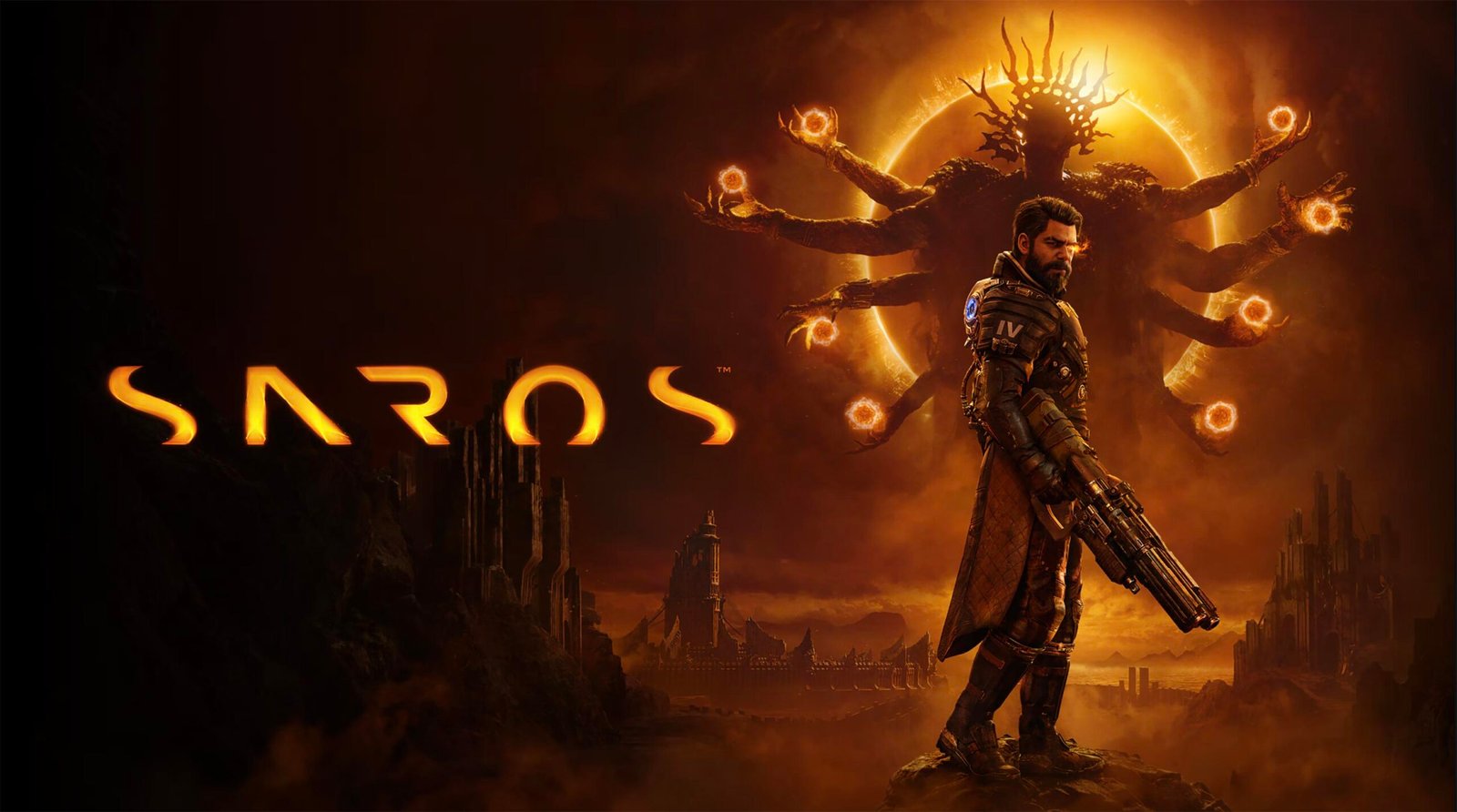
As I went into my preview of PlayStation’s Saros, I didn’t quite know what to expect. After all, I loved a lot about developer Housemarque’s last game, Returnal, but ultimately found it too difficult for my tastes. Because of that, I wasn’t exactly sure if the spiritual successor to that 2021 sci-fi shooter would be for me. But after playing three hours of Saros and hearing from the team at its Helsinki, Finland studio, I’ve come away exponentially more excited for it than I was.
That all starts with the measured approach that Housemarque has taken. To be clear, Saros should be comfortably familiar for fans of Returnal, focusing once again on “bullet ballet,” roguelike run-based third-person shooter gameplay in which you must dodge increasingly intricate and colourful patterns of incoming fire. All the while, the story — which focuses on Soltari Enforcer Arjun Devraj (Midnight Mass‘ Rahul Kohli) as he investigates a mysterious off-world colony — evokes the haunting atmosphere of its predecessor. All of that worked remarkably well before, even for me, and Housemarque has smartly expanded upon it all in Saros.
In particular, I appreciate how the developer is making the planet of Carcosa even more of a character than Atropos was in Returnal. “Returnal is a beautiful game, but it happens to be very enclosed. There’s a few biomes that are more open, but you cannot describe a continuous geography,” says Simone Silvestri, art director on Saros. “Instead, what we wanted to do [in Saros] is like, ‘Let’s expand that — let’s actually make you feel like you’re going through this journey where you can keep track of where you are, and if you see a thing in the distance, you’re like, ‘I know I’ll get there.’”
Indeed, that greater sense of scope could be felt immediately as I left Arjun’s base, The Passage hub area, into the introductory Shattered Rise biome. It’s a vast, mountainous region in which the last vestiges of an eerily red fauna are sprouting throughout. As I exit an elevator, I gaze upon rows of distant towering structures, the last of which, to Silvestri’s point, is absolutely reachable in a single run. And while I could just rush there with Arjun’s breakneck running speed, I opt to progress slowly to properly soak in the spooky vibes, observing all sorts of cragged structures depicting praying and writhing alien creatures along the way.
In a pre-demo presentation, Housemarque teased that the game is about “power, corruption, regret, and the cost of starting anew,” and even early on, with little narrative context, I can certainly feel all of that through the strong environmental storytelling. When conceiving all of this, Silvestri says he deliberately mixed the otherwise opposing art styles of neoclassicism and Italian futurism — specifically, the “mystical” and “epic” elements of the former, and the “aggressive” and “violent” edges of the latter. It all comes together to create something remarkably striking that’s stuck with me, even two weeks after my demo.
But above all else, Housemarque is, by its own admission, a “gameplay first” studio, and so the meat of Saros lies in its core combat. This is where the developer has made a bunch of refinements that are really speaking to me as someone who regrettably fell off Returnal. Right off the bat, the team has made the conscious decision to make runs much tighter this time around, acknowledging criticism — which I very much shared — that they could be overly long in Returnal. This means that your typical full run should come in, on average, at a more merciful 30 minutes.
Additionally, a new fast travel system lets you quickly revisit previous biomes upon death, which further streamlines runs into more digestible bursts. (Of course, skilled players who avoid dying can still play in larger marathon spurts.) All of this addresses one of my biggest pet peeves in games that I also struggled with in Returnal: I just don’t find the act of dying and having to redo big chunks of gameplay particularly enjoyable, especially if it was deliberately challenging to begin with. At the same time, none of these tweaks make the combat itself any easier, so the Returnal faithful can rest easy.
But perhaps my favourite addition is a meaty upgrade tree in which you can spend a resource called Lucenite that you gather on each run throughout the environment and from defeated enemies. You can spend Lucenite on permanent buffs like increased health and armour, as well as skills that let you return to life once upon death and or start each run with a key that can unlock one chest.
This is all part of Saros‘ “Come Back Stronger” design ethos, and I absolutely love it for that. The enemies themselves are still tough, but now, I’m just a bit more prepared for them each time I venture out, thanks to this progression system. There will also be Carcosan modifiers that can either make the game more forgiving (i.e. by reducing damage or extending shield duration) or difficult (like increased enemy aggression or disabling your one-time Second Chance revive ability) — a smart way to welcome players of varying skill levels.
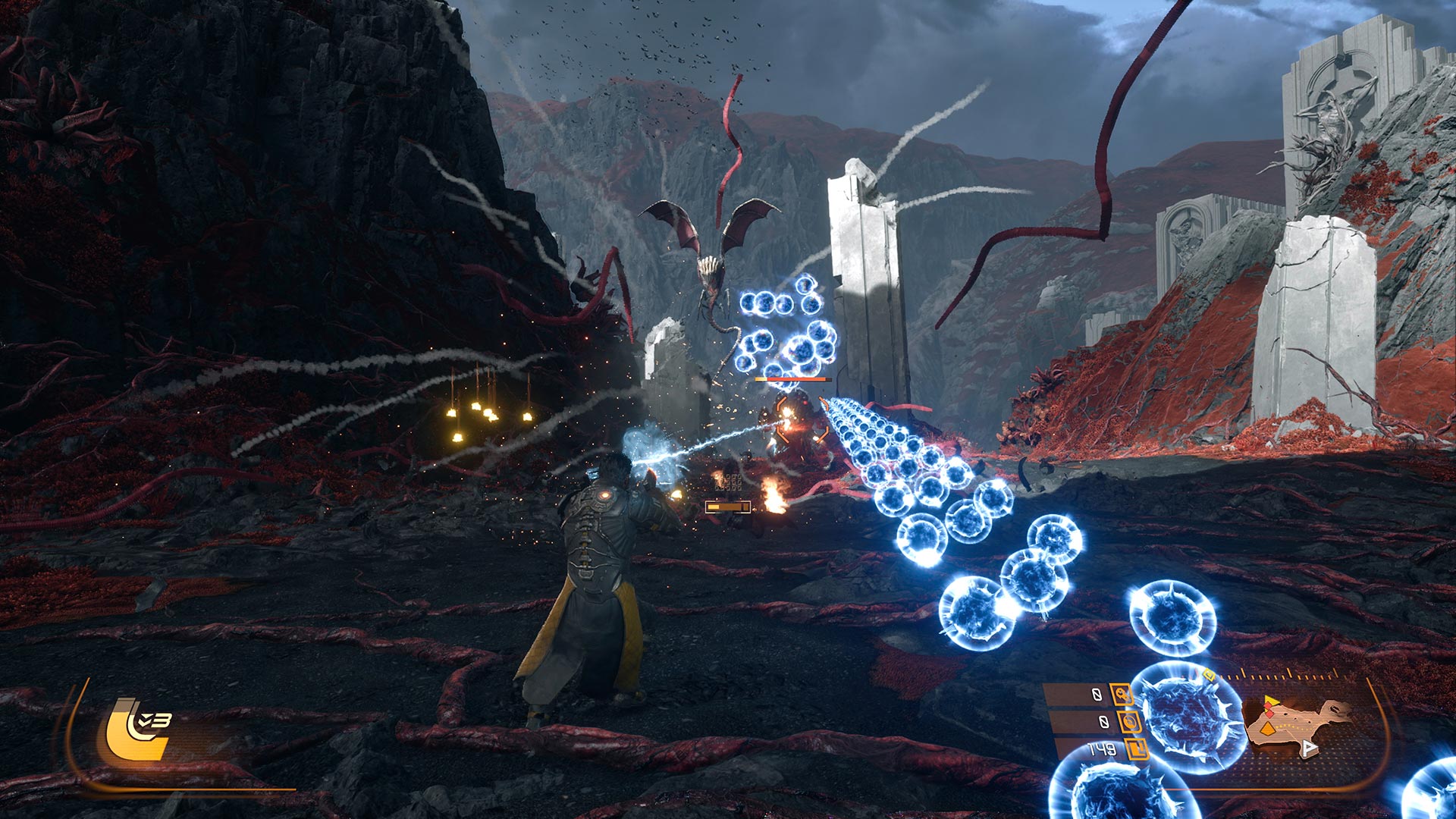
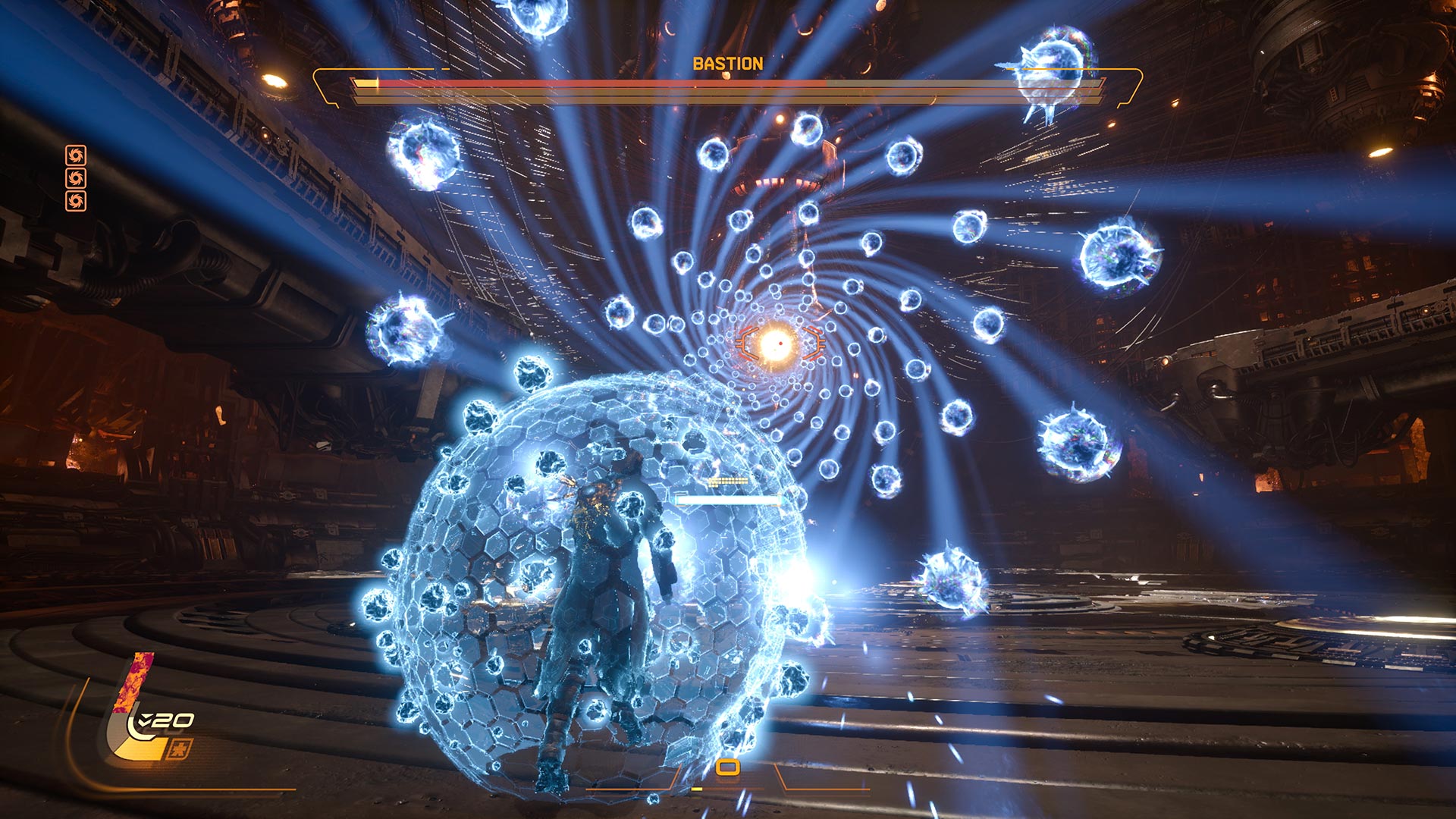
On top of that, Arjun has one key ability that greatly shakes things up from Returnal: a shield. By holding the R1 button, I can bring up a neon barrier that will temporarily absorb certain incoming fire. I can then redirect this energy into my Power Weapon, which can include a rocket or homing lasers. (Like Returnal, this alternate fire is satisfyingly executed by fully pulling back the DualSense’s left adaptive trigger.) It’s an ingenious way to help me handle the sometimes relentless intensity of the “bullet ballet” while also adding a level of dynamism to the combat. After all, you still have to pay attention to which attacks have to be dodged versus absorbed, all while managing the limited ammo of your Power Weapon. (Your repertoire should feel even better once Arjun unlocks a parry ability, although I didn’t get to try it in my demo.)
All of these systems coalesce to create a gameplay loop that retains the snappy and challenging freneticism of Returnal while affording many more options to make it feel more surmountable. I don’t generally have that “just one more run” mentality in roguelikes (again, I typically don’t vibe with that inherent repetition), but in Saros, the combination of runs being more manageably sized and the promise of making Arjun more powerful each time proves to be deeply enticing.
If that weren’t enough, each run feels dynamic not only because of the various weapons, temporary upgrades and rooms that will spring up, but also in how the world itself continues to change. As you work your way through a biome, Arjun might only be able to continue by triggering the ominous Eclipse that’s hovering over Carcosa. In addition to enveloping the environment in chilling, apocalyptic yellow hues, the Eclipse alters the planet itself, from the aforementioned decaying fauna evolving into monstrous, moving plants to the enemies, like a prevouisly simple wolf creature, transforming into stronger and more fearsome threats. That latter point is especially noteworthy because it creates a novel risk-reward element; do you take a gamble on fighting these beefed-up beasts to earn extra Lucenite, or do you rush past to conserve precious resources? Through each of my several runs, I came to appreciate the added tension and strategy provided by the Eclipse.
With all of that said, I do still have many questions about the game’s broader story. That’s because one of the other key ways that Housemarque is differentiating Saros from Returnal is through a more pronounced narrative and larger cast of characters. Where the previous game was centred around Selene’s lone trek through Atropos, Saros follows Arjun as he arrives on Carcosa with an entire team who were sent by the Soltari company. Housemarque teases that this journey will have a “psychological” impact on the crew, and I’m already seeing hints at that through tense exchanges between them all, as well as their wider apprehensions towards the shady corporation that employs them.
But even after a few hours, I didn’t form much of an initial connection to any of the characters. While it’s clear that Arjun is haunted by some past failure that’s driving him to relentlessly press on through Carcosa, I never felt any deeper emotional resonance behind his struggles in the demo. Likewise, the rest of the characters, like Commander Bouchard (English-Canadian actress Jane Perry, who played Selene in Returnal), haven’t made much of an impression yet.
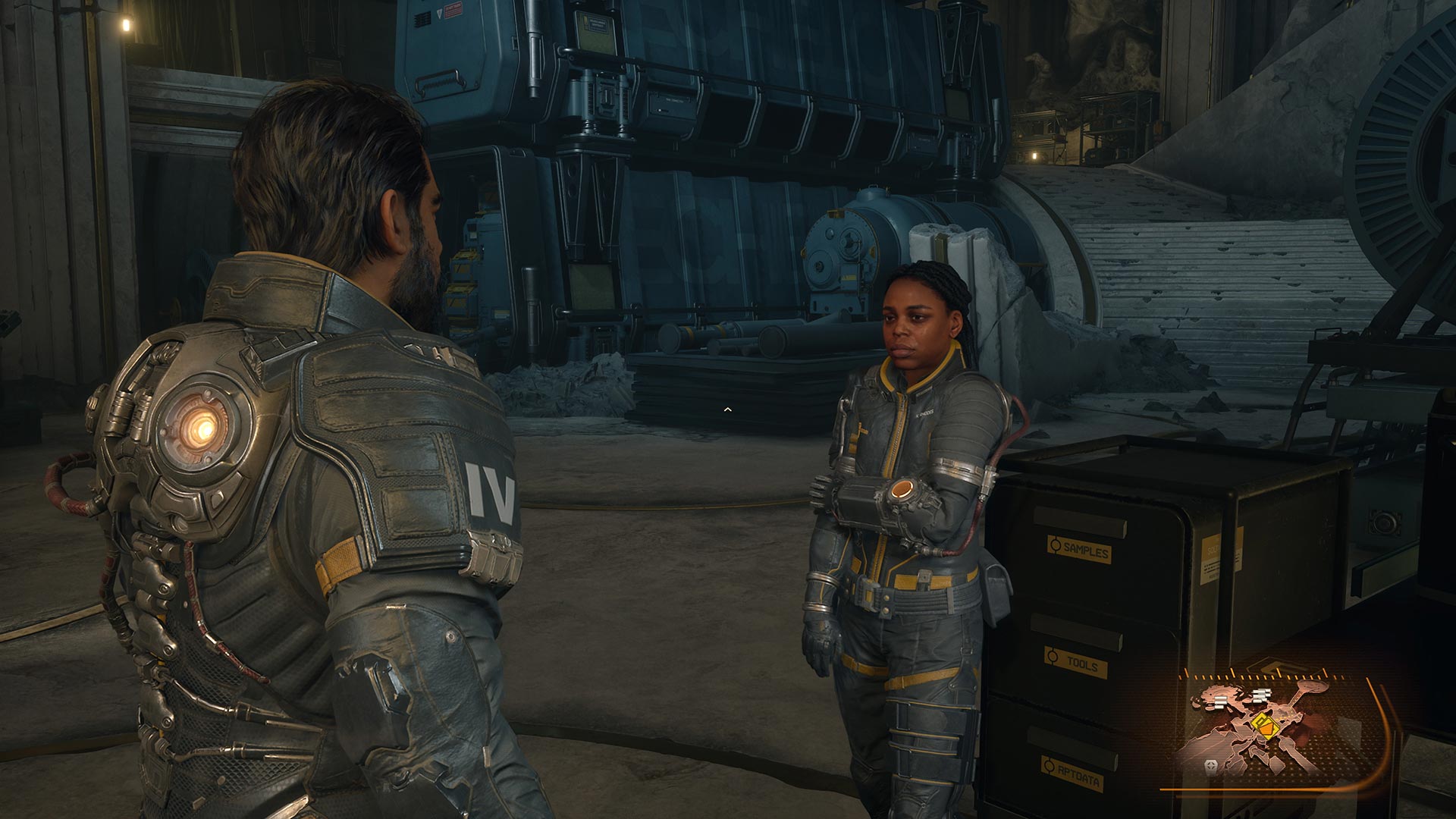
But of course, it’s still early on, and so I’ll reserve judgment on the narrative until I experience the full game. If nothing else, I do appreciate that The Passage provides a Mass Effect-like setup of being able to run around to talk to the crew and read dossiers. Not only is this an efficient way to create some more (optional) world-building, but it affords some breathing room between each run to improve the overall pacing even more compared to Returnal.
And that’s ultimately what has me now so excited about Saros. It retains the rich alien atmosphere and tight and intense combat of Returnal while making runs and character progression feel more meaningful and taking a different approach to narrative. I can’t wait to see how it all comes together when Saros launches on PS5 on April 30.
Image credit: PlayStation
