
A California-based startup named Science Corp. has just announced that several patients with severe eyesight problems have regained the ability to read letters and numbers after receiving their PRIMA ocular prosthesis. Some have even read entire pages of a book.
This breakthrough was recently reported in The New England Journal of Medicine. And with all that has happened since, the company’s CEO, 36-year-old Max Hodak, speaks about the milestone as if it had happened long ago, even though the announcement was only made at the end of October.
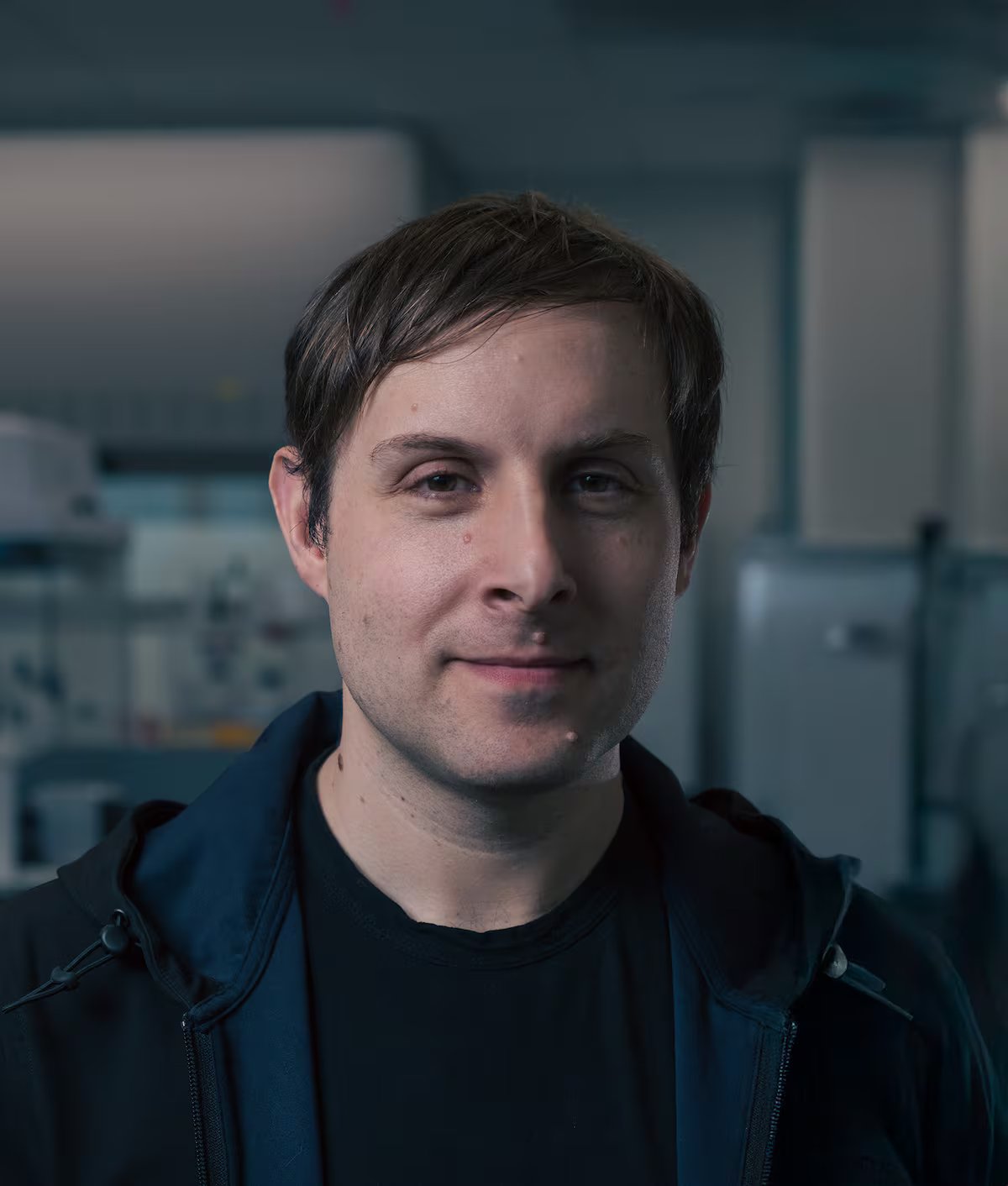
A biomedical engineer by training, Hodak, who was born in New York State, is the co-founder of Elon Musk’s company Neuralink, where he previously served as president. In 2021, he founded Science Corp., after ending his partnership with Musk. The startup focuses on restoring vision through brain-computer interfaces.
Hodak gave an interview to El PAÍS at the Web Summit in Lisbon, where he was one of the keynote speakers. His conversation style is serious, fast-paced and technical, somewhere between the scientist and the startup founder that he is.
Question. On your personal website, you mention that you were interested in brain-computer interfaces from a young age. That’s a complex topic for a child…
Answer. The brain is the seat of your entire experience. It’s the only organ that I really care about. The rest of the body exists to support the brain, move it around and facilitate its functions. This was quite clear to me from a very early age. And, with brain-computer interfaces, certain effects can be achieved that aren’t possible in [the field of] medicine.
Q. How so?
A. With brain-computer interfaces, you place an implant in the motor cortex and, 30 minutes later, you have a patient playing video games with the PRIMA retinal prosthesis. Patients go from being almost blind – so much so that they can’t recognize faces – to being able to read every letter on an eye chart and do crossword puzzles.
Q. How much of what you dreamed about as a child is now a reality?
A. A lot. All of this was really just science fiction 20 years ago… [but] now, there are many advances happening rapidly.
Q. Your company focuses on restoring vision. Can you explain how PRIMA works?
A. It’s a small chip. If you look at it under a microscope, you see it as a set of tiny hexagonal cells. And each of [those cells] is a solar panel. This chip is placed under the retina, behind the eye. [It then] works in conjunction with the glasses that are worn by the patient. These lenses have a camera that looks out at the world and a laser projector that [shines light] into the eye.
Q. This is the basic hardware, but how is the information transmitted?
A. The camera records videos of [a patient’s] surroundings. Then, an infrared emitter projects the images onto the implant, behind the eye (the information has been pre-encoded to form patterns that can be transmitted this way). When the infrared light hits the retina, it stimulates it so that, in essence, PRIMA acts as an electronic photoreceptor.
This is only viable for patients who have grown up with sight. Their brain knows what it’s like to see and the optic nerve is intact, but the light-sensitive cells in the retina – the cones and rods (photoreceptor cells) – have died for some reason or another.
Q. Which eye diseases could be treated with this approach?
A. There are many diseases that cause the death of the cones and rods in the eye, from age-related macular degeneration (the paper that was published about PRIMA discusses results in patients living with this condition), to retinitis pigmentosa, Stargardt disease, or, in some cases, diabetic retinopathy. If the brain can see and the retina is still connected to the brain – even if it’s no longer sensitive to light – our chip allows us to stimulate the retina directly, bypassing the dead cones and rods.
Q. So, it seems like you’ve taken a mechanical approach?
A. An electronic approach, yeah. It works because the brain is an information-processing organ: you can interact with it informationally.
Q. What’s it like for you and your team when you see a patient able to read words again, after years of being unable to do so?
A. My maternal grandfather had retinitis pigmentosa, so I grew up around blindness. And seeing this solution reach patients is very exciting.
Q. Was your grandfather able to treat his condition?
A. He used a kind of magnifying glass to try to mitigate the vision loss.
Q. I suppose it wasn’t an efficient method…
A. Clearly, it didn’t work. That’s why I was so excited to see PRIMA’s work on the cover of Time magazine, because I grew up seeing devices like this on the cover of Wired when they didn’t work and were said to be just around the corner. And now, 25 years later, they really are.
Q. Perhaps this is a poorly-worded question, but let me ask it: how far are we from curing blindness?
A. I wouldn’t use the expression “curing blindness.” People often push me to say this, but the vision achieved isn’t as good as natural vision. The patient would prefer to have their normal vision back. Perhaps, in the next five to seven years, we could achieve normal visual acuity.
Q. Are we talking about the same resolution that the eye naturally has?
A. I think, within one or two generations of devices, we’ll be able to get to 20/20 vision. But the other factor we’re still missing is color. Right now, PRIMA only produces black-and-white results. I think we’ll be able to have color in the coming years. Red and green are easier to detect than blue, for example. But I believe that, by the beginning of the next decade, there will be a range of options for patients that will be almost as good as their original vision.
Q. Excuse my impertinence, but what about curing blindness?
A. Yes, when we talk about curing blindness, it’s important to point out that there are many different reasons why a person can lose their sight. The degeneration of the cones and rods is one; the loss of the optic nerve is another, usually due to glaucoma. And our approach doesn’t work with glaucoma. For that, you would need a different approach that regenerates the connection between the retina and the brain.
Q. Yours is a broad field; what systems does it encompass?
A. Brain-computer interfaces range from ocular prostheses to cochlear implants, or closed-loop neuromodulation (electrical stimulation of the brain) for diseases like Parkinson’s. For many interested people, this field has become synonymous with motor cortex decoders, as we’ve seen with Neuralink and [other firms]. [This technology is seen as a] kind of gateway to the brain that allows for an implant to be used like a computer. This is just one type of brain-computer interface.
Q. Is surgery necessary for all these applications?
A. Actually, I think many of these [advances] will be possible noninvasively, with wearables. You won’t need an implant for decoding speech.
Q. What can we expect in the coming years from a growing sector like this?
A. If we think about the broad perspective of what it means to engineer the brain, we could even ask ourselves: when a patient has had a stroke and has lost part of their brain that gave them a faculty that they [no longer] have, can you restore that? And that starts getting into a kind of non-traditional brain-computer interface technology.
Q. Is this already being explored?
A. It’s being researched. It’s been tested in animal models, but I think it could reach humans in the coming years.
Q. How long until PRIMA is approved by regulators in the United States and Europe?
A. We’re currently going through the review process in Europe. In the United States, with the FDA (Food and Drug Administration), it’s a bit slower. It will probably reach European patients before it reaches American patients.
Q. When do you expect the device to be available in Europe?
A. We expect it to be on the market sometime next year.
Sign up for our weekly newsletter to get more English-language news coverage from EL PAÍS USA Edition
