
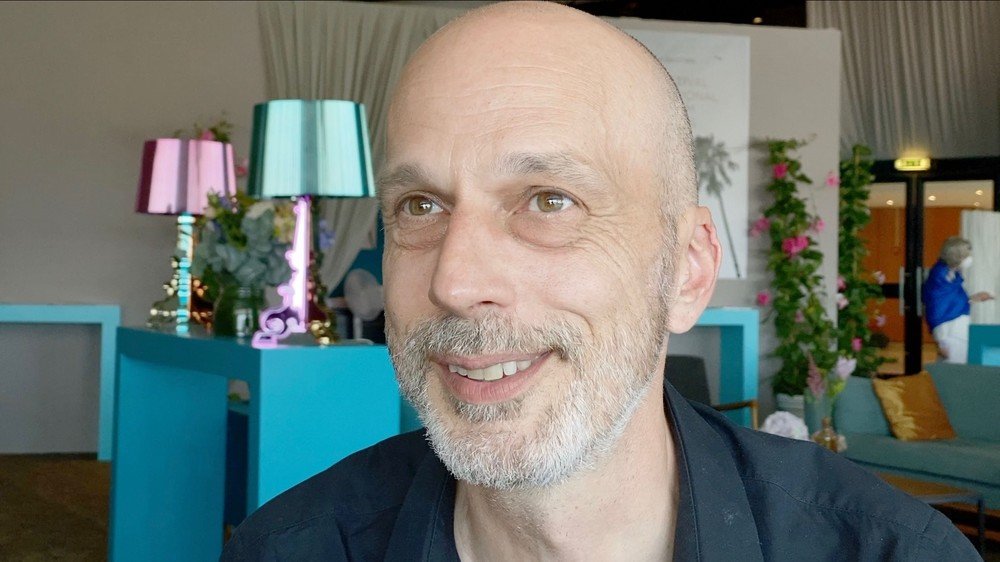
– The Viennese funding agency has allocated €4.5 million in its first funding round of 2026, supporting eight features, eight projects in development and 16 television productions
Director Sebastian Meise, who has received funding for Empire of Sentiment
The Filmfonds Wien has announced its first round of funding for 2026, allocating €4.5 million to new film and television productions. Eight feature films and eight projects in development received funding commitments amounting to more than €3.56 million. The demand for financial support remains high, with 59 projects submitted, requesting a total of €15.2 million. In the television sector, 37 projects applied for €2.1 million, with 16 receiving funding commitments totalling €994,000.
Among the funded projects is the new film by acclaimed director Sebastian Meise (Great Freedom [+see also:
film review
trailer
interview: Sebastian Meise
film profile]), who returns with the historical drama Empire of Sentiment. The movie follows Jacob Wainwright, an African slave who undertakes a gruelling journey to bring the body of the famous explorer David Livingstone to London, hoping the mission will secure his freedom. The majority co-production is being staged by Vienna-based FreibeuterFilm and London’s House Productions in co-production with The Match Factory and Kazak Productions, based on a script by Meise and Thomas Reider.
Directorial duo Tizza Covi and Rainer Frimmel (The Loneliest Man in Town [+see also:
film review
interview: Tizza Covi and Rainer Frimmel
film profile], Vera [+see also:
film review
trailer
interview: Tizza Covi, Rainer Frimmel
film profile]) return with Hier ist die Nacht dunkel, which follows a former prisoner attempting to rebuild his life under house arrest while caring for his son, only for the fragile stability to collapse when the boy suddenly disappears. The project is being produced by Vento Film from a script penned by Covi.
Johanna Moder (Mother’s Baby [+see also:
film review
trailer
interview: Johanna Moder
film profile]) is developing the drama Blinde Kuh, written by Agnes Pluch, which tackles the ongoing crisis facing farmers while examining the responsibilities of banks, society and politics. The majority co-production is being staged by Vienna’s Monafilm together with Munich-based Tivoli Film. Sebastian Brauneis turns to the life of Austrian boxing legend Hans Orsolics in Hansi, charting the athlete’s meteoric rise in 1960s Vienna before his downfall and imprisonment, and the friendship that ultimately helps him rebuild his life. The film is being produced by Orbrock Filmproduktion from a screenplay by Brauneis and Helmut Emersberger.
Further supported fiction projects include Nicht wie ihr, directed by Pia Hierzegger and based on the novel by Tonio Schachinger. The story follows one of the world’s highest-paid football players, whose seemingly perfect existence begins to unravel when a former love interest re-enters his life. The feature is being produced by Superfilm. Daniel Prochaska’s comedy Italien oder non mio esolo, produced by e&a Film, centres on a once-successful schlager singer who embarks on a fan pilgrimage in a last-ditch attempt to revive his fading career, only for the journey to turn into an unexpected path to self-discovery.
Two documentary features also secured support. Lotte Schreiber’s Unser Haus! follows the filmmaker as she initiates a cooperative housing project in Vienna, exploring alternatives to private property and speculation in order to create long-term affordable housing. Meanwhile, Pavel Cuzuioc’s (Please Hold the Line [+see also:
film review
trailer
film profile]) Außerhalb des Quadrats portrays a psychiatrist in a small Moldovan town who juggles his professional life and a passion for cosplay, using disguises ranging from Sigmund Freud to Darth Vader and Freddie Mercury to reflect on the meaning of “normality” in a society caught between Soviet legacy and a European future.
Eight projects also received development funding. Among them are the comedy series Der Tod ist ein Wiener, written by Carlos Irmscher and Sebastian Kempf, and the espionage series Red Mole – Chasing the Third Man, penned by Thomas Christian Eichtinger. Among the feature films, directors Sudabeh Mortezai (Joy [+see also:
film review
trailer
interview: Sudabeh Mortezai
film profile]) and Ruth Mader (Serviam – I Will Serve [+see also:
film review
trailer
interview: Ruth Mader
film profile]) are preparing their next works – respectively, Stella and Vater und Sohn – while Clara Stern (Breaking the Ice [+see also:
film review
trailer
film profile]) is developing her sophomore feature, Abrissbirne. Klara Rabl is preparing her feature debut, Kill Your Darlings. Two documentary projects in development were also supported: the ballet-focused Unlock the Dance by Gabriele Kranzelbinder and Mirjam Unger, and the biographical documentary Alma Rosé by Barbara Weissenbeck and Susanne Wolf.
In the television sector, two fiction projects received backing. The second season of the series Pflegeleicht continues to follow a group of trainee nurses navigating both professional and personal crises in a hospital that is struggling financially. The supernatural comedy Halbweg, directed by editor-turned-filmmaker Olivia Retzer in her feature-length directing debut, centres on a confrontation between the eccentric new owner of a suburban villa and the ghost of its former occupant.
The majority of the supported television projects are documentaries. Among them are Unsichtbare Heldinnen, which revisits European film pioneers Germaine Dulac, Luise Fleck, Liddy Hegewald and Thea Červenková; Powerfrauen der Renaissance, a two-part documentary about the political influence of Margaret of Austria and Mary of Hungary; and Madame d’Ora – Ikone der Fotografie, which explores the life and legacy of Viennese photographer Dora Kallmus, a key figure in European fashion photography during the interwar period.
