
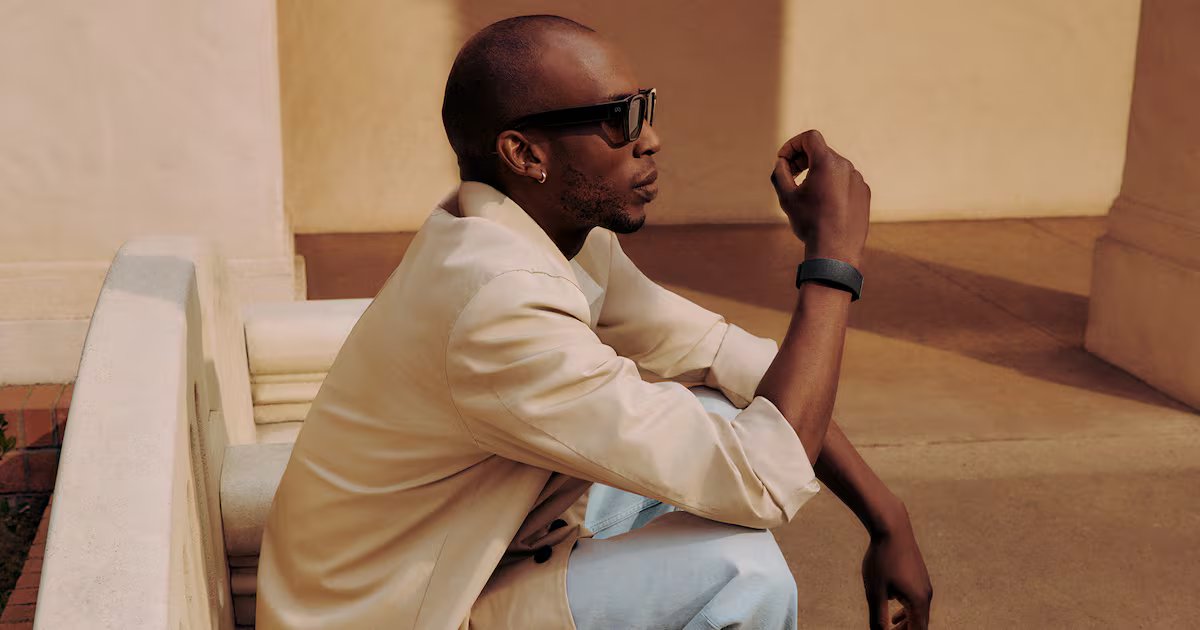
Style-conscious devices equipped with multi-modal AI are set to redefine the wearables landscape in 2026, with smart eyewear emerging as a leading format. The category is projected to exceed $30 billion by 2030, presenting brands with a timely opportunity to partner with technology leaders to unlock high-value consumer use cases and accelerate adoption.
Wearables are the fastest-growing accessory category
Sales of wearables reached $42 billion in 2025, equating to 230 million units, and while small compared to some other categories, it is set to remain the fastest-growing accessory category to 2028. Smart wearables — devices with voice assistants, messaging and other intelligent features — are expected to account for 58 percent of volume by 2028.
Smart watches have propelled the category
Early wearables appeared in the 2000s with GPS devices like Garmin’s ForeRunner 101. The breakthrough in the wearables category came with smart watches, which grew from around 15 percent of the watch market in 2016 to 35 to 40 percent today. Fashion players have also entered the space, with brands like Tag Heuer, Tissot and Louis Vuitton launching their own lines.
However, the performance of other wearables is mixed. Smart bracelets, once 40 percent of the basic activity wearables market in 2016, now account for less than 10 percent. Smart rings , dominated by Oura, which had an 80 percent market share in 2023, are becoming popular — Oura has sold over 5.5 million rings as of September 2025, with more than half of those sold in the preceding year.
Smart eyewear is poised for breakout growth in 2026
Despite several false starts over the past decade, smart eyewear is finally gaining traction as hardware advances and multi-modal AI make them sleeker and more functional. EssilorLuxottica reported in February 2025 that Ray-Ban Meta sales had reached two million pairs and announced plans to increase production capacity to 10 million annual units by the end of 2026.

Eyewear fashion trends and tech advances will accelerate smart eyewear adoption in 2026
Lower consumer prices are set to propel smart eyewear growth. Global shipments of smart glasses rose 110 percent year on year in the first half of 2025, with AI-enabled models representing 78 percent of shipments (up from 46 percent the same period the year prior). Analysts expect sales to quadruple in 2026, supported by lower average prices of $300 to $400 per pair today — about one-third of Google Glass’s original cost in 2014.
Eyewear demand is strong across price points
The broader eyewear category grew 6 percent annually from 2022 to 2025, with sustained 5.2 percent growth projected through 2028. Eyewear is increasingly seen as an accessible status symbol, illustrated by Jacques Marie Mage’s $1,000 frames and the rise of challenger brands offering distinct aesthetics, from Gentle Monster’s bionic designs to Blue Elephant’s grunge style and L.G.R’s travel-inspired look.
Smaller components are enabling more stylish frames, while AI is expanding use cases
Advances in technology have reduced chip size and power use, allowing more compact designs. Style is a critical purchase driver in eyewear, influencing one-third of smart glasses buyers compared with one-fourth of smart watch buyers.
Multi-modal AI now powers image recognition, natural language processing and autonomous tasks, aligning with existing consumer habits — for example, close to 60 percent of Americans use voice assistants. Smart eyewear enables hands-free content capture as well as everyday functions like navigation and communication. It is the only wearable for which AI features rank among the top five purchase drivers.

Three distinct consumer segments are shaping the smart eyewear market
Across use cases, certain smart features will be non-negotiable. Consumers will expect reliable internet connectivity, seamless integration with their existing devices like phones and laptops, and compatibility with multi-modal AI to enable smooth, hands-free operation.
Everyday eyewear will demand lightweight, discreet designs, while sports and technical eyewear will require durability and advanced functionality. Models used in work settings will require a different approach again. For instance, work/enterprise models — such as mixed-reality headsets designed for industries such as manufacturing and design — can be up to 10 times heavier than models designed for everyday or sports. Brands that want to compete will need to find the right balance between design and function.

Partnerships will drive the segment’s growth as interest in smart eyewear rises
Although subscale compared to smart watches, search interest in smart eyewear has seen significant growth in the second half of 2025. With major launches taking place in 2026, momentum is expected to accelerate. Partnerships between tech players and fashion brands will be critical to this growth, likely falling under two models:
Joint ventures with technology players
Meta’s $3.5 billion investment in EssilorLuxottica, Ray-Ban’s parent company, illustrates the power of the joint venture model. EssilorLuxottica contributed styling, manufacturing expertise, brand equity and distribution, while Meta focused on hardware and software. Ray-Ban Meta glasses were the best-selling product in 60 percent of Ray-Ban’s EMEA stores in Q3 2024, according to EssilorLuxottica. Most current partnerships follow this structure, including Google’s deals with Kering, Gentle Monster and Warby Parker. With technology giants such as Samsung and Xiaomi entering the space and introducing AI-enabled eyeglasses, opportunities for new ventures continue to expand.
Brand-led development with tech suppliers
Brands can develop proprietary products by working with hardware specialists. Suppliers such as Qualcomm, Applied Materials, Lumus and Schott are already offering tailored components. This approach mirrors luxury watch collaborations, where Tag Heuer (Intel), Louis Vuitton (Qualcomm) and Montblanc (Qualcomm) partnered with hardware providers to launch branded smart watches. In this model, operating systems are either developed in-house (e.g. Swatch) or integrated with third-party solutions (e.g. Google’s Wear OS).

How should executives respond to these shifts?
Closely monitor adoption of wearables and determine how to engage
Brands must assess carefully if and how wearables appeal to their target audience — staying on top of emerging technology, wearable trends and consumer attitudes through social listening and market data — and prioritise investments accordingly. Authentic engagement in the category is a non-negotiable.
For example, smart eyewear will be an appropriate extension for some brands with the right image, positioning and consumer base, but not all. Instead, some fashion players may be better suited to engaging with other wearables such as smart rings if they have a more luxe, minimalist brand image, or if they already have a jewellery line. Brands must link clear use cases with consumer personas and need cases in their target audience.
Secure strategic partnerships to enter smart eyewear
Fashion and eyewear brands entering smart eyewear must secure strategic partnerships that complement their in-house expertise.
Eyewear players should be first-movers in the category. They can enter joint ventures with tech firms to produce smart eyewear or commission specialist suppliers like Qualcomm or Lumus to support product development.
Fashion brands without a core eyewear business can license their brands to technology leaders such as Meta, Xreal or Google, leaning on their expertise in manufacturing and production as well as their marketing reach.
Elevate wearables through complementary products and services
As wearables become daily essentials, demand for cases, skins, straps and customisation is likely to grow. Fashion brands can extend their influence by creating seasonal and trend-driven designs for both established and emerging formats, including smart eyewear.
Offering in-store personalisation, such as engraving or painting, can further differentiate the experience, drive traffic and create opportunities for cross-selling in other categories.
This article first appeared in The State of Fashion 2026, an in-depth report on the global fashion industry, co-published by BoF and McKinsey & Company.
