
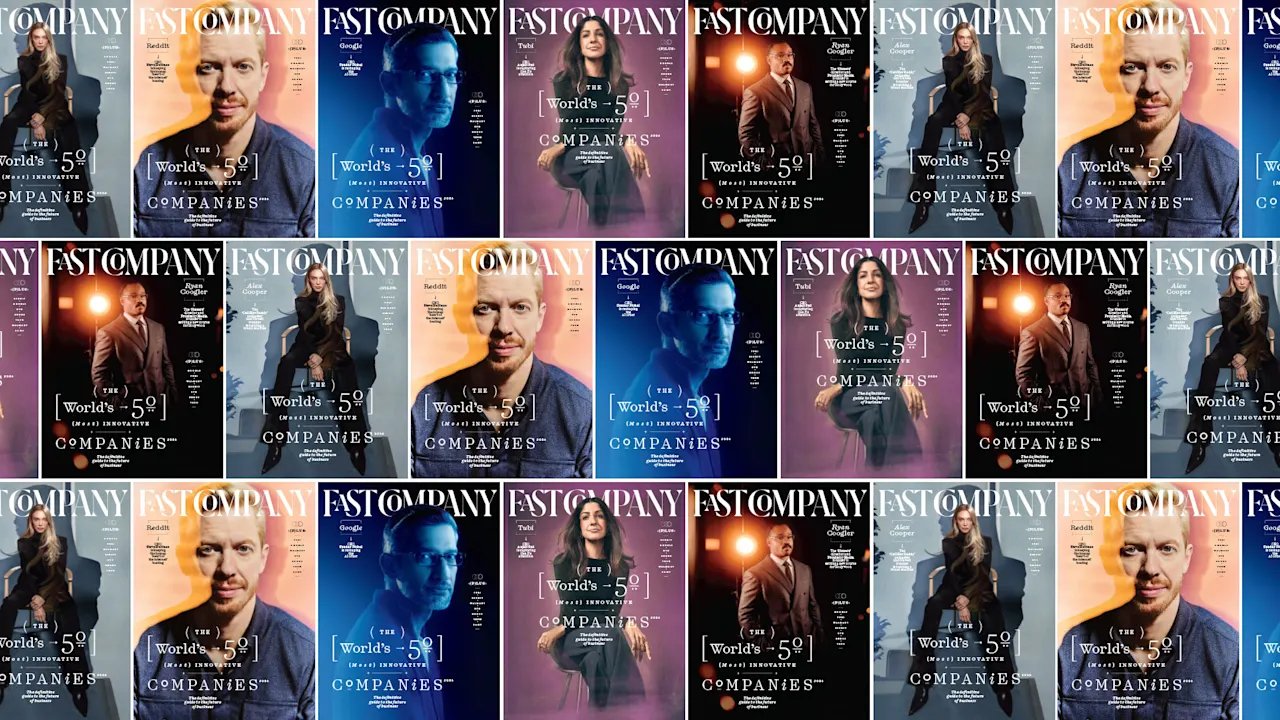
We at Fast Company spend all year, every year, researching and assessing companies. When it comes time to identify the Most Innovative Companies in the World, there are four key factors we consider:
•Innovation. Did the company create something truly original?
•Impact. Did this innovation have a measurable impact on the company and its industry?
•Timeliness. Did the innovation happen in the past 12 months? Or, if it’s older, did it bear fruit during this time frame?
•Relevance. Does the innovation we’re highlighting connect to larger issues facing industry or society?
No company clears the bar unless it meets those criteria. From there, there are patterns that emerge, and discovering them is always my favorite part of the process.
Sometimes they’re obvious, like when ESG or crypto or the metaverse were on the rise, and companies began experimenting with them. Other times, the threads are subtle. They cross industries in interesting ways and tend to emerge later in the process, after we’ve read the applications, done our research, whittled the field down to our category lists (59 this year), and selected the 50 companies we showcase in this issue.
Here are a few themes I noticed in the 2026 edition, expertly overseen by executive editor Amy Farley:
•Infrastructure. See: Google, Nvidia, AMD, Anthropic, Databricks,
Cloudflare, World Labs, Cyera, Chainguard, Horizon3.ai. These are distinct companies with unique products, but they’ve all laid tracks that others can build upon.
•Frontier health and biotech. See: Gilead Sciences, Abridge, eGenesis, Cadence OTC, Cresilon. These companies are creating faster and deeper access to lifesaving treatments and information.
•Culture, taste, and storytelling. See: Proximity Media, Reddit, Unwell, Nintendo, Rimas Entertainment, Day Job, TBPN, Untitled, The Onion, Diplo’s Run Club. In a world increasingly flooded with AI slop, these companies testify to the power of human ingenuity when it comes to bringing people together and inspiring them.
There’s one more pattern I noticed, and I want to end on it because it contains a cautionary element.
There’s a difference between the kind of innovation we celebrate at Fast Company—wholly new products and services that create value for businesses, consumers, and the world—and what economists call “exploitative innovation,” which means squeezing every last drop of value out of existing products in ways that benefit the bottom line but often have negative consequences, especially for consumers and workers. AI magnifies the threat of exploitative innovation in exponential ways.
I can say with confidence that every company on this list demonstrates real innovation. But the truth is, many engage in the exploitative kind too, especially the public companies under intense market pressure to show growth at all costs.
Any company that aspires to make Fast Company’s Most Innovative Companies list in the future should keep a close eye on this delicate balance.
