
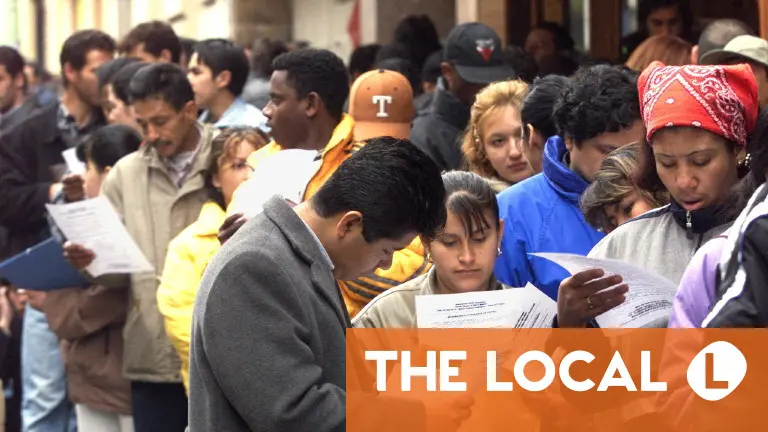
With the application window for Spain’s proposed regularisation of 500,000+ undocumented migrants approaching, unions and immigration office staff have called for greater manpower and resources.
Spanish extranjería (immigration) staff have warned that without extra funding and manpower it will be “humanly impossible” to undertake the amount of casework needed for the proposed mass regularisation of over 500,000 migrants.
This comes after unions previously warned that the regularisation could “collapse” immigration offices in the country, something likely to have a knock-on effect and hinder processing times overall for foreigners for various administrative processes.
Advertisement
The measure, which will grant a one year residency permit to undocumented migrants with clean criminal records who can prove they were living in the country for five months before the end of 2025, will reportedly have a three-month application window beginning in April.
That means that in less than two months, more than half a million foreigners will begin the regularisation process.
READ ALSO: Q&A: How Spain’s mass regularisation of undocumented migrants will work
Spanish media reports suggest this will mean a considerable increase in the workload for local authorities, consulates and immigration offices, which civil servants are increasingly viewing with concern.
Many are now calling for extra resources, claiming that, even before the regularisation process has begun, Spain’s immigration service lacks the resources and manpower to function normally.
“We currently have 1,830 people working in immigration offices throughout Spain. The number of jobs is based on the number of foreigners we had in 2006, and since then immigration in Spain has tripled. We have the staff to deal with just over three million, and we are now at 12 million,” César José Pérez Gómez, CCOO union immigration representative, told Spanish outlet 20minutos.
Immigration paperwork has already skyrocketed in Spain, especially after reforms to Spain’s immigration laws approved last year, which made the requirements for obtaining residency and citizenship papers more flexible for some foreigners.
Pérez Gómez says they now receive about 150,000 new files every quarter, which without sufficient staff has ended up considerably lengthening waiting lists.
In cities such as Madrid, Barcelona, Málaga, Almería and Valencia, reports 20minutos, there are delays of up to six months.
Advertisement
“We say it bluntly: without money, there is no way to cope with the current situation,” Pérez Gómez added, accusing the government of treating immigration office workers as if they were “an inexhaustible and free resource”.
The mass regularisation measure, which is a royal decree and has not yet formally been approved, “has no budgetary or personnel implications,” says the union head.
“It is humanly impossible to do this without more money. The deadlines they have set are very short for us to respond to so many people in such a short period of time. We don’t have the capacity,” Pérez Gómez adds, pointing out that the application window will close on 30 June and that applications must be resolved within a maximum of three months.
“It’s February now, and this starts in April. They want to open Social Security offices, SEPE offices, government offices… but they’ll have to regulate it and tell people how we’re going to do it. Because in the end, we’ll do everything in the last week, rushing around. What is needed here is planning, rather than announcements,” stresses Pérez, who also calls for an improvement to IT systems needed to undertake the administrative task.
READ ALSO: The myths surrounding Spain’s mass regularisation of migrants
