
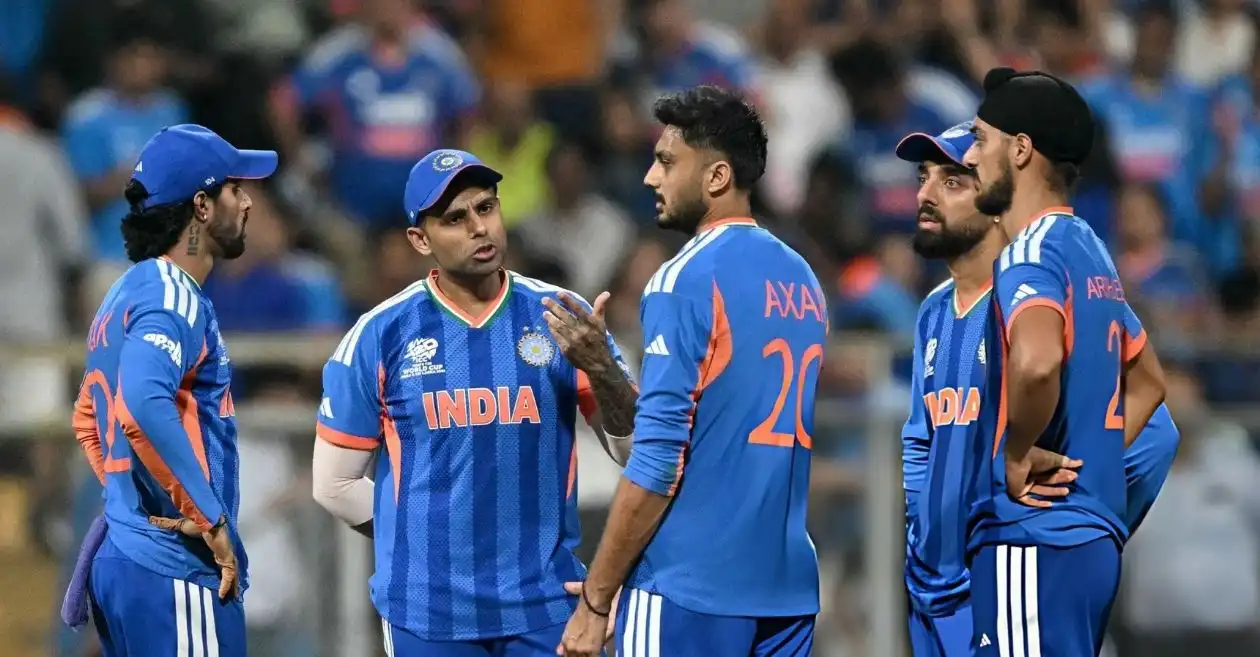
Defending champions India have once again stamped their authority on the global stage by reaching the final of the ICC Men’s T20 World Cup 2026 under the leadership of Suryakumar Yadav. In what has been a dominant and entertaining campaign, India have won seven of their eight matches so far, showcasing explosive batting, disciplined bowling, and fearless leadership.
After taking over the captaincy from Rohit Sharma following the 2024 triumph, Suryakumar has guided the Men in Blue to their second consecutive T20 World Cup final. India will now face New Zealand in the summit clash on March 8, 2026, at the iconic Narendra Modi Stadium in Ahmedabad, with hopes of lifting another global trophy.
India dominate Group A with unbeaten record
India began their title defence in commanding fashion during the group stage, finishing at the top of Group A with four consecutive victories. The team displayed remarkable resilience and adaptability in different match situations.
Captain Suryakumar Yadav rescues India against USA
India’s campaign began with a challenging contest against the USA. The defending champions found themselves in deep trouble at 77/6 after a top-order collapse. However, Suryakumar produced a remarkable innings under pressure.
Playing a captain’s knock, Surya smashed an unbeaten 84 off just 49 deliveries, steering India to a respectable total of 161/9. The bowlers then backed up the effort with a disciplined performance to restrict the USA at 132/8, helping India secure a comfortable 29-run victory. The win set the tone for India’s campaign and highlighted Suryakumar’s leadership from the very first match.
Ishan Kishan and Hardik Pandya power India against Namibia
India carried their momentum into the next game against Namibia, producing a dominant all-round performance. Ishan Kishan and Hardik Pandya led the batting charge with impressive half-centuries.
Kishan’s fluent 61 provided the platform, while Pandya’s explosive 52 ensured India posted a massive total of 209/9. The bowlers then took control of proceedings, dismantling Namibia’s batting lineup and sealing a commanding 93-run win.
India steamroll Pakistan in high-voltage clash
One of the most anticipated matches of the tournament saw India face arch-rivals Pakistan. The clash lived up to the hype, and India emerged as clear winners with a clinical performance.
Kishan once again shone with the bat, scoring a superb 77 that helped India post 175/7. The Indian bowling attack then delivered a stunning performance, dismantling Pakistan’s batting lineup for just 114. The emphatic 61-run victory further strengthened India’s position at the top of the group.
Shivam Dube stars against Netherlands
India completed a perfect group-stage run with a victory against the Netherlands. The match saw Shivam Dube deliver one of the most explosive innings of the tournament.
Dube smashed 66 off just 31 balls, powering India to a formidable total of 193/6. Despite a spirited effort from the Netherlands, India managed to defend the total and secured a 17-run win, finishing the group stage unbeaten.
Mixed fortunes in the Super 8s
After dominating the group stage, India faced tougher challenges in the Super 8s phase. The defending champions finished second in Group 1 but still secured a place in the semi-finals.
South Africa hand India their only defeat
India’s winning streak came to an end against South Africa. Batting first, the Proteas posted a strong total of 187/7, putting pressure on the Indian batting lineup.
India struggled to build partnerships during the chase and were eventually bowled out for just 111. The 76-run defeat was a rare setback for Suryakumar’s side but served as a reminder of the competitive nature of the tournament.
India bounce back with massive win over Zimbabwe
India responded in style in their next match against Zimbabwe. The batting lineup produced one of the highest totals of the tournament, scoring a mammoth 256/4.
Pandya and Abhishek Sharma played explosive knocks, both scoring quick-fire half-centuries. Their aggressive approach left the Zimbabwe bowlers helpless. India’s bowlers then ensured the match remained one-sided as Zimbabwe were restricted comfortably, giving India a dominant 72-run victory.
Sanju Samson shines in must-win clash
The final Super 8 match against West Indies turned into a crucial encounter for India. Chasing a competitive target of 196 at Eden Gardens, India needed a strong performance to secure their semi-final spot.
Sanju Samson rose to the occasion with a brilliant unbeaten 97, anchoring the chase with maturity and composure. His knock guided India to a five-wicket victory and confirmed their place in the knockout stage.
Thrilling semi-final win over England
India’s semi-final clash against England at the Wankhede Stadium turned out to be one of the most thrilling matches of the tournament. Batting first, India delivered a powerful batting display and posted a massive total of 253/7. Samson played a sensational innings of 89, while Dube contributed a quick 43 to accelerate the scoring in the middle overs.
England responded with equal aggression during their chase. Young batter Jacob Bethell produced a magnificent knock of 105, keeping England firmly in the contest. The match went down to the final overs as England threatened to pull off a remarkable chase.
However, India’s experienced bowlers held their nerve in the crucial moments. Jasprit Bumrah and Pandya delivered exceptional death-over bowling, restricting England to 246/7 and sealing a thrilling seven-run victory for India.
One step away from history
With seven wins from eight matches, India have demonstrated why they remain one of the most dominant teams in world T20 cricket. Under the leadership of Suryakumar, the team has blended aggressive batting with strategic bowling, producing match-winning performances throughout the tournament. The defending champions are now just one victory away from securing back-to-back T20 World Cup titles. If they succeed, it will mark another historic chapter in Indian cricket and further cement Suryakumar’s legacy as a successful captain on the global stage.
