
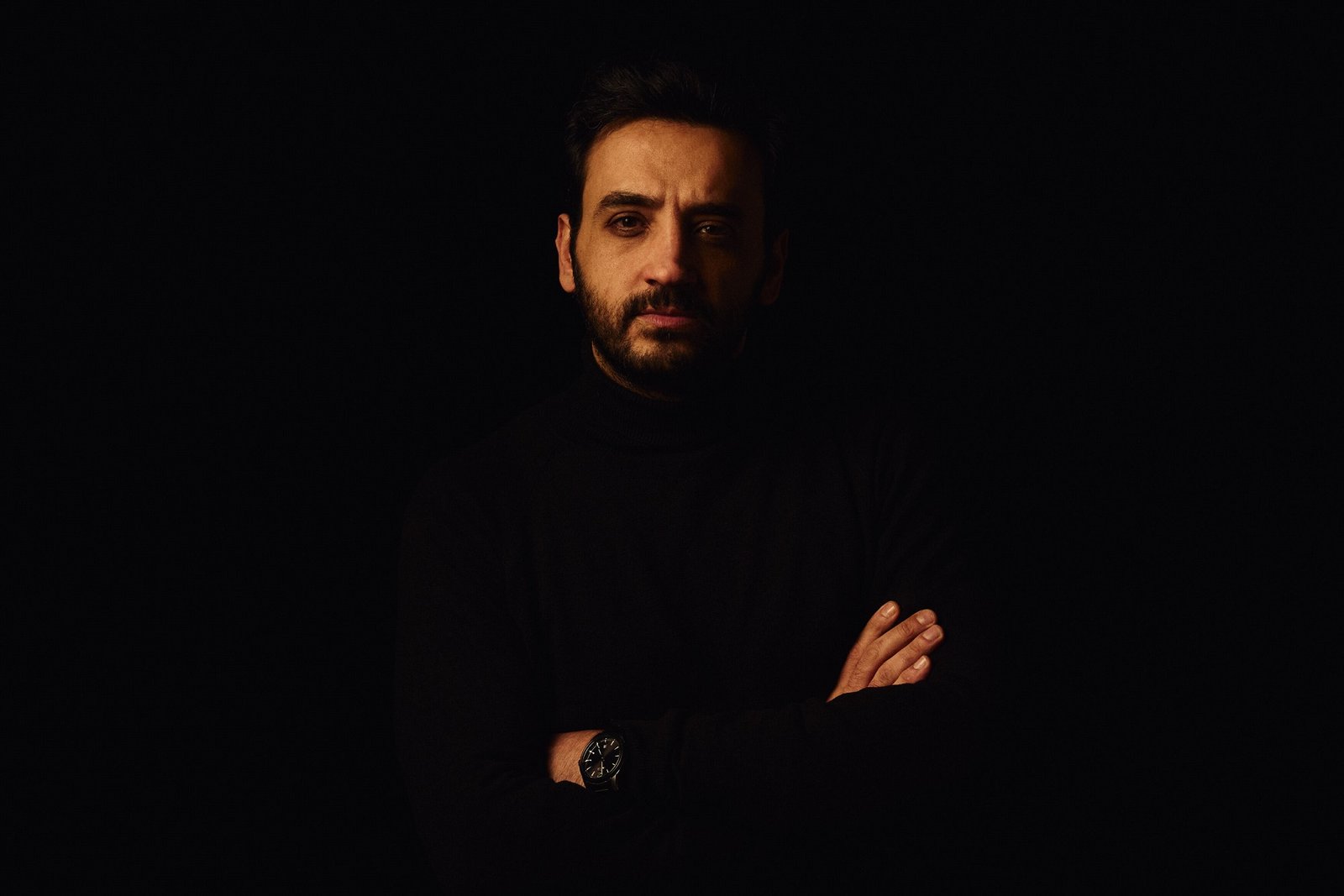
– BERLINALE 2026: The Belgian-Syrian filmmaker discusses his film about his experiences shared with other former inmates of the notorious Saidnaya prison
Recently graduated from INSAS in Brussels after having to leave Syria, where he was imprisoned following the protests that shook the country in 2011, Tawfik Sabouni presents the world premiere of his first feature film, the documentary The Other Side of the Sun [+see also:
film review
trailer
interview: Tawfik Sabouni
film profile], at the 76th Berlinale in the Panorama section. It is an extremely personal, first-person film that recounts his experience shared with other former prisoners of the terrible Syrian prison of Saidnaya. Using a hybrid approach to bring the past to life through the accounts of witnesses invited to re-enact their daily lives in detention, he shows and tells, within the abandoned building populated by the ghosts of the disappeared, the inhumanity at work, but also the brotherhood and solidarity.
Cineuropa: What are the origins of this extremely personal project?
Tawfik Sabouni: I always wanted to show the world what happened inside that prison, to speak for the loved ones who disappeared there; but I wanted to make a film, not a documentary. I was obsessed by the first face I saw there, on the day I was arrested. And by the fact that so many of us had gone through the same experience without even knowing each other. Originally, I planned to shoot in a studio in Belgium with Syrian refugees I had met here. But when the regime fell and it became clear that we could shoot in Saidnaya prison, I felt compelled to do so. So I started looking for the characters for the film. I myself had been detained in that prison, which played a big part in the relationship of trust I was able to establish. Each individual story complements another’s, ultimately forming a single narrative.
You chose to evoke memories through place and bodies, to spatialise them.
Yes, that’s exactly right. Before filming, I met with each of the former prisoners, who told me their stories. And then came the shoot. It was the first time any of us had seen the prison again. And little by little, we began to relive and replay what we had experienced. That was literally the work of memory. Going back into ourselves and sharing. I had an idea of what each person had to say, but the place pushed us to improvise, it brought things back, it triggered our memories.
The setting brings together the protagonists’ present and their past, which resurfaces through words. How did you manage the emotions that go with that?
It was inevitably difficult to deal with, especially since I was on both sides of the camera. With the prisoners, I shared their suffering, their pain, their memories. And then behind the camera, with the crew, I was the director. So the director of photography was really my eyes in front of the monitor. With the protagonists, I certainly had to capture their grief and anger, but sometimes they were the ones who captured mine. They gave me strength. It was important to me that everyone was free to leave if they wanted to, that there were no obligations. Sometimes we stopped filming for a day or two to let things settle.
The film briefly recalls the figures: 177,000 people disappeared in Syrian prisons. And each of your former fellow inmates has their own missing persons in prison, be it a brother, a cousin, or a friend. Is this also a film about all these ghosts?
It is a place haunted by the cries of the men who died in this prison. There is a scene that I cut during the editing process, but which for me shows just how haunted the place is. When we arrived, Mahmoud said: I recognise this smell. Even when the walls are gone, this smell will still be there. Upon entering the building, we could feel all those souls.
You use mannequins in certain scenes to represent the emaciated bodies of prisoners.
The idea of incorporating these mannequins into the narrative came very early on. I wanted to tell our five stories, but also all the other stories; they were like representatives of those stories. And then I wanted to give the viewer an idea of what we prisoners really looked like. What kind of body, what kind of face do you have when you are starving, when many are going to die? These mannequins were our reflections. When we suddenly imagine the guards, it is not a way of repairing the experience, but a demand for justice. Our jailers were never brought to justice; today they live freely, everywhere, perhaps even here. I wanted to show our anger.
What was the biggest challenge with this film, and what was most important to you?
The hardest part was carrying this film on my shoulders for all those years. It was extremely difficult psychologically, at every stage, right up to post-production. It was also very important to me that my fellow cast members, my other characters, weren’t hurt by the experience, that they felt free to leave at any time if it became too difficult, that they felt listened to and supported. As for my goal, it was ultimately to show the viewer what was in my head, what haunts me, so that they could put themselves in my shoes at the time. To release these images from my memory.
(Translated from French)
