
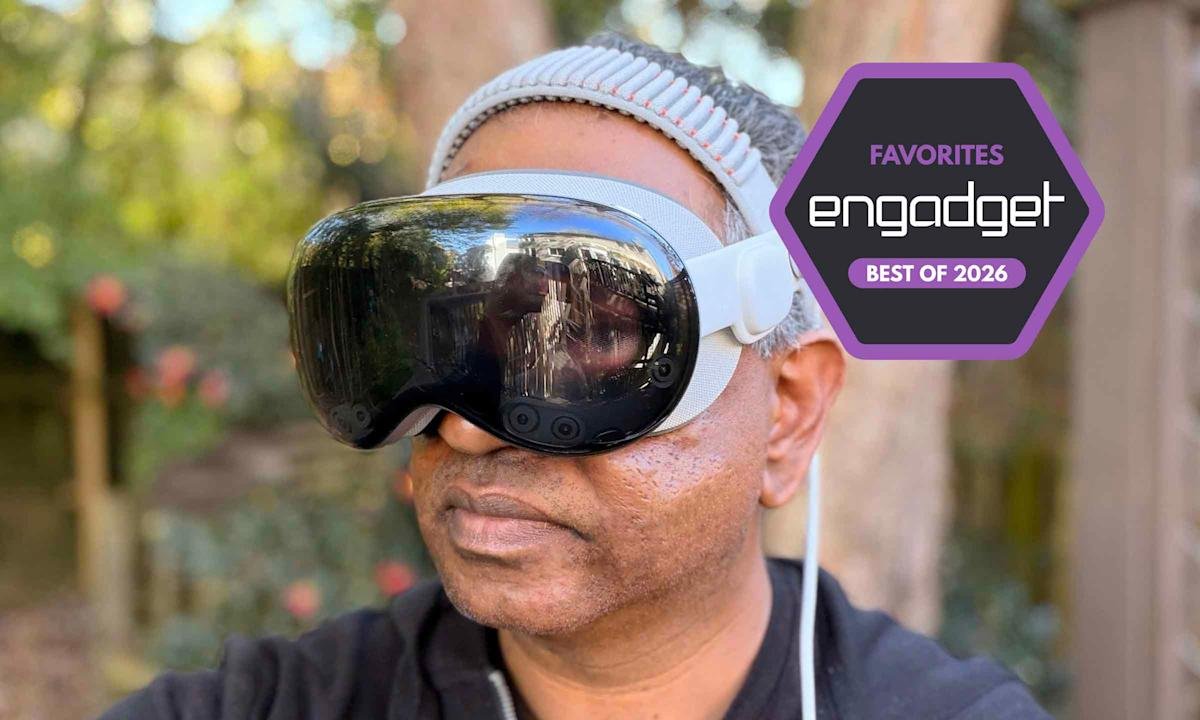
Stepping into VR is about more than strapping on a headset and loading a game. The best VR headsets today are gateways to fully realized experiences, whether that’s gaming, fitness, creative work or simply spending time inside a richly rendered virtual world. As the hardware has improved, so has the sense of presence, with sharper displays, wider fields of view and tracking systems that make movement feel more natural and responsive. The result is VR that feels less like a novelty and more like a platform you can actually spend time in.
That said, not every headset is built for the same function. Some prioritize ease of use and standalone play, while others demand a powerful PC in exchange for higher fidelity. Compatibility also matters more than ever, especially as VR begins to overlap with mixed reality and early smart glasses experiments. Whether you want a simple way to explore virtual spaces or a high-end rig that pushes immersion as far as possible, this guide breaks down the best VR headsets you can buy in 2026 and explains who each one is really for.
Table of contents
Best VR headsets for 2026
Read our full Meta Quest 3 VR headset review
Storage capacity: 128GB | Battery life: 2.2 hours | Field of view: 110 degrees (horizontal), 96 degrees (vertical) | Max refresh rate: 120Hz
The long-awaited follow-up to the Quest 2 is an upgrade in every respect: It’s more comfortable to wear, it has higher quality screens and it has full-color mixed reality cameras, allowing you to see the real world alongside virtual elements. While it’s more expensive at $500, it’s also a far more capable headset than the Quest 2 and the new Quest 3S, with hardware and optics that will keep you happily immersed in VR for years.
The Quest 3 is powered by Qualcomm’s Snapdragon XR2 Gen 2 chip, which Meta says has double the graphics power of the Quest 2. That additional power is noticeable in games like Red Matter 2, which feature updated textures that deliver an experience closer to PC VR. The Quest 3’s new displays run at 2,064 by 2,208 pixels per eye, offering an even better experience than the PlayStation VR2. Its mixed reality cameras also let you easily see the real world, in case you need to quickly answer a text or Slack message. And they enable games that can be built around your room.
What makes the Quest 3 interesting is that it offers more than just solid VR: It also gives you a glimpse at what a mixed reality future could be, blurring the line between the real world and a virtual world. While it’s not as sharp or capable as Apple’s Vision Pro, that’s understandable. And just like previous Quest headsets, you can also plug it into a gaming PC for higher quality VR experiences, expanding its compatibility beyond standalone use.
- Sharp new screens and lenses
- Faster performance
- Mixed reality cameras make it easier to see the real world
- Adjustable for glasses
- More expensive than before
- Only 128GB of storage to start
- No battery life improvements
Devindra Hardawar for Engadget
Read our full Apple Vision Pro M5 review
Storage capacity: Up to 1TB | Battery life: 2.5 hours | Field of view: 100 degrees | Max refresh rate: 120Hz
Apple’s first update for the Vision Pro is basically just a spec bump, but it’s at least a sign that the company hasn’t forgotten about its whole spatial computing endeavour. It’s faster and more power efficient, thanks to the M5 chip, and it also ships with a more comfortable Dual Knit Band that does a better job of balancing such a heavy headset.
With its additional power, the M5 Vision Pro can render 10 percent more pixels than the original model, and it can reach up to a faster 120Hz refresh rate for smoother scrolling. I couldn’t see a major difference in our testing, but I can confirm its Micro OLED screens still look phenomenal. They’re crisp enough for reading text on websites and a mirrored Mac, plus can also scale to extreme heights for stunning Immersive Video content.
Given its high $3,500 price and limited content, though, the Vision Pro is still clearly not meant for typical consumers, with its primary function leaning more toward development and experimentation than everyday VR use. Instead, like the original, it’s basically just a highly polished developer kit for people interested in building visionOS apps. Apple diehards will likely get a kick out of it too, but practically most people interested in AR and VR are better off buying a Meta Quest 3 alongside a gaming PC, especially as lighter smart glasses concepts continue to evolve separately from full headsets.
- Faster M5 chip
- Excellent displays
- Hand and eye tracking work well
- Support for PS VR2 controllers
- Expensive
- Limited immersive video and apps
- Relatively heavy
Photo by Devindra Hardawar / Engadget
Read our full Meta Quest 3S VR headset review
Storage capacity: 128GB, 256GB | Battery life: 2-3 hours | Field of view: 96 degrees | Max refresh rate: 120Hz
The Quest 3S is Meta’s latest entry-level VR headset, but don’t let its reasonable $300 price fool you: It’s also a remarkable achievement for the company. It sports the same Qualcomm Snapdragon XR2 Gen 2 chip as the Quest 3, as well as a healthy 8GB of RAM, allowing it to power the same experiences as its pricier sibling. It also features Meta’s excellent Touch Plus controllers, which deliver solid motion controls, as well as responsive joysticks and buttons.
The only major downside is that the Quest 3S isn’t nearly as sharp as the Quest 3. It features the same 1,830 by 1,920 pixel per eye screen from the Quest 2, while the Quest 3’s screen offers 30 percent more pixels (2,264 by 2,208 pixels per eye), to deliver a sharper and more realistic image.
VR newbies probably won’t notice the difference much though, and that’s what really matters. The Quest 3S is just as comfortable as the Quest 3 to wear, and it can easily access the same apps and games on the Meta Quest Store. There’s no headphone jack either, but its built-in speakers deliver solid enveloping audio for games like Maestro, and you could also plug in a USB-C to 3.5mm adapter, or just pair wireless headphones.
The Quest 3S can connect to gaming PCs over USB-C or wirelessly to play more intense VR experiences, giving it strong compatibility with both standalone and PC-based setups. It can also wirelessly stream your gameplay to Chromecast devices, or to AirPlay devices by mirroring the Quest app from an iPhone. If you’re still holding onto the Quest 2, or an original Quest, the Quest 3S is precisely the inexpensive upgrade you’ve been waiting for.
- Fast performance
- Comfortable to wear
- Excellent controllers
- Large app library
- Older Fresnel lenses lead to artifacts
- No headphone jack
- Average mixed reality cameras
Photo By Devindra Hardawar / Engadget
Read our full PlayStation VR2 headset review
Storage capacity: 128GB, 256GB | Battery life: 3 hours | Field of view: 110 degrees | Max refresh rate: 120Hz
The PS VR2 is one of the best headset we’ve tested. It offers dual 2K OLED HDR screens, effectively giving you 4K quality. It’s one of the most comfortable headsets around. And it has some genuinely refreshing new features, like eye tracking and headset haptics. (Yes, it can literally rock your noggin.) Best of all, the PS VR2 delivers high-quality virtual reality without the need for a $1,000+ gaming PC – all you need is a PlayStation 5, making its core function tightly focused on console gaming.
Now, our recommendation comes with a few caveats. At $550, the PS VR2 is more expensive than the PS5 itself. And it’s unclear how quickly its game library will fill up. The initial run has only a few exclusives, like Horizon VR and Gran Turismo 7, and we haven’t seen many new titles since then. But it’s still the easiest way to experience high-end VR, and it’s a major upgrade over the original PS VR.
- Excellent OLED displays
- Comfortable fit
- Headset haptics feel immersive
- Sense controllers are solid
- Incredibly high launch price
- Limited new titles
- Long term development is suspect
Photo by Devindra Hardawar / Engadget
Read our full Valve Index VR kit review
Storage capacity: N/A | Battery life: 7 hours | Field of view: 108 degrees | Max refresh rate: 120Hz
Valve’s Index kit remains one of the best high-end solutions on the market that provides a truly immersive VR experience. For $999 you get the Index headset, Valve’s finger tracking controllers and two SteamVR base stations. While we’ve seen higher-resolution headsets arrive in the last two years, it’s still a very solid option, with a 1,440 by 1,600 pixel resolution, an eye-watering 144Hz refresh rate and a massive 130-degree field of view. I’d gladly lose a few pixels for the Index’s smoother and more expansive screen, which are still far beyond most other consumer headsets.
As a SteamVR product, the Index requires installing two sensors at opposite corners of your room, which limits its compatibility but enables extremely precise tracking. And of course, it’s wired to your PC. But that clunkiness is worth it for the higher refresh rate and more accurate tracking, especially if you want the deepest possible sense of immersion in a virtual world. Sure, it’s not as easy to use as the Quest 3S, but at this price range, we assume you’ll suffer a bit of inconvenience to get a truly high-quality VR experience.
Valve’s finger tracking controllers are fantastic as well, with a convenient strap that locks them onto your hands. They make playing Half-Life: Alyx feel like a dream. It’s unfortunate that other VR games haven’t fully taken advantage of the finger tracking though.
- 144Hz refresh rate with a 130-degree field of view
- Excellent finger-tracking controllers
- Stellar performance
- Requires installing sensors in your room
- Wired design
Photo by Devindra Hardawar / Engadget
Read our full Bigscreen Beyond VR headset review
Storage capacity: N/A | Battery life: 2 hours | Field of view: 102 degrees | Max refresh rate: 90Hz
Essentially an upgrade for the Index, the Beyond is a unique spin on a VR headset from Bigscreen, with a function that prioritizes comfort and visual fidelity over convenience, the developer of a popular app for watching video in VR. It looks more like an oversized pair of goggles than a massive VR headset. The $999 Beyond is the lightest VR option we’ve ever seen (it weighs a tad more than a deck of playing cards), and its Micro-OLED screens are sharp and offer near-perfect contrast. Unlike LCD screens, black can look genuinely black with the Beyond.
The downside, though, is that the Bigscreen Beyond is expensive. It’s $999 on its own if you’re just upgrading a Valve Index setup. If you’re starting from scratch, though, you’ll also need to buy two Steam VR base stations and a pair of Index controllers. That adds up to a whopping $1,578.
The Bigscreen Beyond also requires a custom face cushion, which is built from a 3D facescan when you place your order. Unfortunately, that makes it harder to share than other headsets. There’s also no room for glasses, since it’s so slim. You can buy prescription lens inserts from Bigscreen for an additional fee. And of course, you’ll have to live with a cable tethered to your PC, there’s none of the freedom of the cordless Meta Quest headsets.
For all of its complexity, though, the Bigscreen Beyond delivers the most immersive PC VR experience I’ve ever seen. Since it’s so light, you can easily wear it for hours. Together with its glorious screens, it’s the best option for VR enthusiasts who don’t mind dealing with cost and complexity for true immersion.
- Incredibly light and comfortable
- Sharp and bright Micro-OLED screens
- Works alongside existing Valve Index accessories
- Expensive
- No built-in audio
- Still exhibits artifacting like other VR headsets
How we test VR headsets
I tend to judge candidates for the best VR headset on a few basic criteria: Ergonomics, immersion and controls. It’s not that hard to shove a mobile display into a plastic headset and strap some cheap elastic headbands onto it. But it takes real design skill to craft something that’s well balanced, includes a supportive headstrap, and doesn’t feel uncomfortable after 30 minutes.
My test for ergonomics is fairly simple: How long can I wear a headset until I start to feel discomfort? For the most ergonomic devices, like the Quest 3, that could easily be an hour or two. But heavier PC hardware often feels cumbersome after just 15 minutes — you won’t find those kinds of devices in our list of the best VR headsets.
Immersion, meanwhile, comes from having high resolution screens with fast refresh rates, like a 120Hz refresh rate, helping users feel fully present inside a virtual world. Field of view is also a major element, as it describes how well VR screens can cover what you see. A narrow FOV makes it feel like you’re peering through a pair of binoculars, which limits your sense of “presence.” The best VR headsets aim for a wider field of view, helping virtual environments feel more natural and fully surround you.
A wide field of view, on the other hand, can make it seem like you’re actually flying over the globe in Google Earth. We look at a few popular video games, like Superhot, Beat Saber and Pistol Whip, on every headset to judge how immersed we feel and how enjoyable the gaming experience is overall.
The best controllers fit naturally in your hands and offer accurate tracking. The industry has basically adopted the design of Meta’s excellent touch controllers, but we’re also seeing intriguing leaps forward like Valve’s finger tracking gamepads. We judge controllers based on how easy they are to hold, how they hold up to sweaty gameplay sessions and how easily headsets can track their position in space.
However, it’s important to look at a virtual reality headset’s specs as a whole, including compatibility with your existing hardware and the kind of experiences you plan to use it for. Depending on what you’re looking for in yourVR headset, you’ll want to consider factors like your PC’s CPU and graphics card if you plan to use the headset to play the best VR games. You might not need a super powerful PC, but you should check the minimum requirements for the headset you’re looking to purchase. If you’re not looking to invest in a VR headset solely for gaming, features like head tracking allow you to explore your environment just by simply moving your head in the simulator. This often results in a more immersive and realistic experience.
Other VR headsets we’ve tested
HTC Vive Focus Vision
The Vive Focus Vision is a sleek premium standalone VR headset that can also deliver solid PC VR. But it’s also running aging hardware, it’s riddled with software issues and it’s expensive compared to the Meta Quest 3.
Meta Quest Pro
As great as the Meta Quest 3 is, the Quest 2 is still a very good entry-level VR headset, and it’s worth considering if it’s on sale below its current $250 list price. The Meta Quest Pro, on the the hand, is an expensive boondoggle best ignored.
HTC Vive Pro 2
Outside of Meta’s hardware, the HTC Vive Pro 2 remains a fantastic PC headset, but it’s far more expensive than the Valve Index, which is more comfortable and offers better audio.
VR headset FAQs
How do VR headsets work?
At the most basic level, a VR headset is simply a high quality screen that you’re holding up to your face. For a wired headset, the actual work of rendering a game is done on either a PC or game console. For completely wireless devices, like the Meta Quest 3, that work is handled right on the headset. They rely on either external sensors, or sensors built into the headsets, to map your physical space. While you can use a traditional gamepad or keyboard and mouse in VR, they typically use motion tracking controllers to immerse you in their 3D environments.
What VR headset is best for full body tracking?
While we’re still waiting for a truly great haptic VR bodysuit to arrive, you can still achieve accurate body tracking with most Steam VR-compatible PC headsets. The Valve Index and HTC Vive Pro 2 both rely on room-tracking sensors that can map your body more effectively than the built-in sensors on competitors. You can also add HTC Vive Trackers to wrist and leg straps, as well as belts, for even better coverage. The Meta Quest 3 doesn’t have any easy body tracking solutions, but you can add Vive trackers when it’s plugged into your PC to mimic a Steam VR headset.
Only a few experiences, like VRChat, take advantage of full body tracking at the moment. Currently there aren’t any body tracking solutions for the PlayStation VR and VR2, but we’re intrigued by the company’s Mocopi body trackers, which were really announced in Japan.
What VR headsets are better than Oculus?
Oculus is the previous name for Meta’s VR hardware. Currently, Meta only supports the Quest 3, Quest 3S and Quest Pro, all of which are wireless headsets. As we explain above, PC VR headsets can generally achieve better quality virtual reality, since they rely on more powerful graphics hardware.
What VR headsets work with Xbox?
Currently, Microsoft’s Xbox consoles don’t support any VR headsets.
Recent updates
November 2025: Updated to include the Apple Vision Pro M5.
April 2025: Updated to include review scores for our top picks, where applicable.
November 2024: Added the HTC Vive Focus Vision to the “others we tested” section.
October 2024: Updated our “best cheap VR headset” top pick to be the Meta Quest 3S.
