
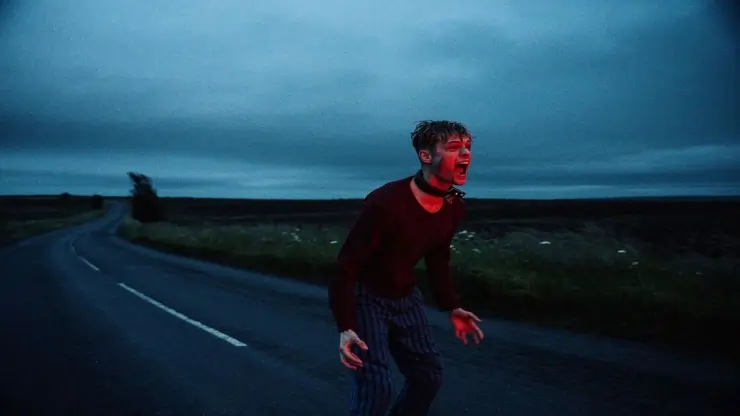
A fabulous cast illuminates this dark comedy fable, where the dystopian moral reformation of A Clockwork Orange meets the underhanded social experimentation of My Fair Lady.
Social media shitbag and serial car thief Tommy (Anson Boon) is living his best life, hoovering up narcotics, stubbing out cigarettes on kids’ faces and wanking openly in women’s toilets. However, he has caught the attention of the tyrannical disciplinarian in a toupee, Chris (Stephen Graham), and his emotionally stagnant wife Katheryn (Andrea Riseborough). The bizarre couple kidnap this bouncer slapping mongrel from the manosphere, and chain him in their basement like Bub the zombie from Day of the Dead. They attempt to integrate Tommy into their excruciatingly twee family dynamic of hideously over-happy youngster “Sunshine” and a glum sex worker called Rina on the run from violent pimps.
Bombarded by amateur public education videos, Ray Bradbury novels, tropical forest relaxation tapes, family movie nights involving hawks, savage beatings and lectures on social responsibility, Tommy plots his escape from enforced gentrification. Jan Komasa’s dark thriller uses an absurdist methodology to frame its kitchen-sink realism and a filter of cruelty to accentuate its social commentary. If you extrapolate its core themes, then we are left with a stark determination that, however extreme the deranged couple’s modus operandi may be, it’s preferable to that of the narcissistic rats that writhe in the rancid sewers of social media and infect our world with a plague of misogyny, violence and entitlement.
There is no doubting that Tommy is a nasty little turd. However, Chris and Katheryn seem to be obsessed with rehabilitating him not for his or society’s good, but for their own twisted agenda. Their son “Sunshine” is a quivering wreck of awkward grins and puppy dog pleasing, a broken testament to his parents’ degenerate infatuation with family as a conduit for perfection. Outwardly, the couple seem kind and righteous, but ultimately, they are living a lie beyond delusion where codes of conduct are defined only by their desire to feel valid. Yes, they offer sanctuary to their troubled cleaner, but as an absorption into the saccharine filling of their apple-pie ideology, not as altruistic protection.
The film fails to close plot holes tightly enough to achieve a hermetically sealed conviction, but it more than makes up for it in its devastating normalisations of abuse. The sequence where they anesthetise Tommy to take him on a birthday outing to the countryside is a masterclass in surrealist satire. Still ensnared by a neck manacle and dressed in lurid attire, he joins the family barbecue feast, seduced and homogenised by the paradoxical wholesomeness of his assimilation.
The Good Boy wears cultural touchstones proudly on its chloroform-soaked sleeve, everything from classical composers to a curt dismissal of Jane Austin as well as the contemporary afflatus of toxic influencer revenge pictures and urban feel-bad British horror. Yet it seldom feels derivative, and always entices debate with nuanced progressions in Tommy’s numbing journey towards redemption, or revenge. The ending is as utterly preposterous as it is brilliant. Intoxicatingly ridiculous, and joyously unexpected, it bookends the film perfectly and compounds its unorthodox spirit and pervading sense of farcicality and co-dependent fantasising.
Coldly impartial and reverberating with performances by fine actors on top of their game, The Good Boy is a relentlessly fascinating horror drama. Brooding with grim humour it flirts menacingly with psychological coercion, coaxing uncomfortable solutions to unsavoury problems from the shadowy realms of unethical wish fulfilment.
★★★★
Screened at Kinoteka Polish film Festival on March 11th, UK Cinemas from 20th March / Stephen Graham, Andrea Riseborough, Anson Boon / Dir: Jan Komasa / Signature Entertainment / 15
Related
Discover more from
Subscribe to get the latest posts sent to your email.
