
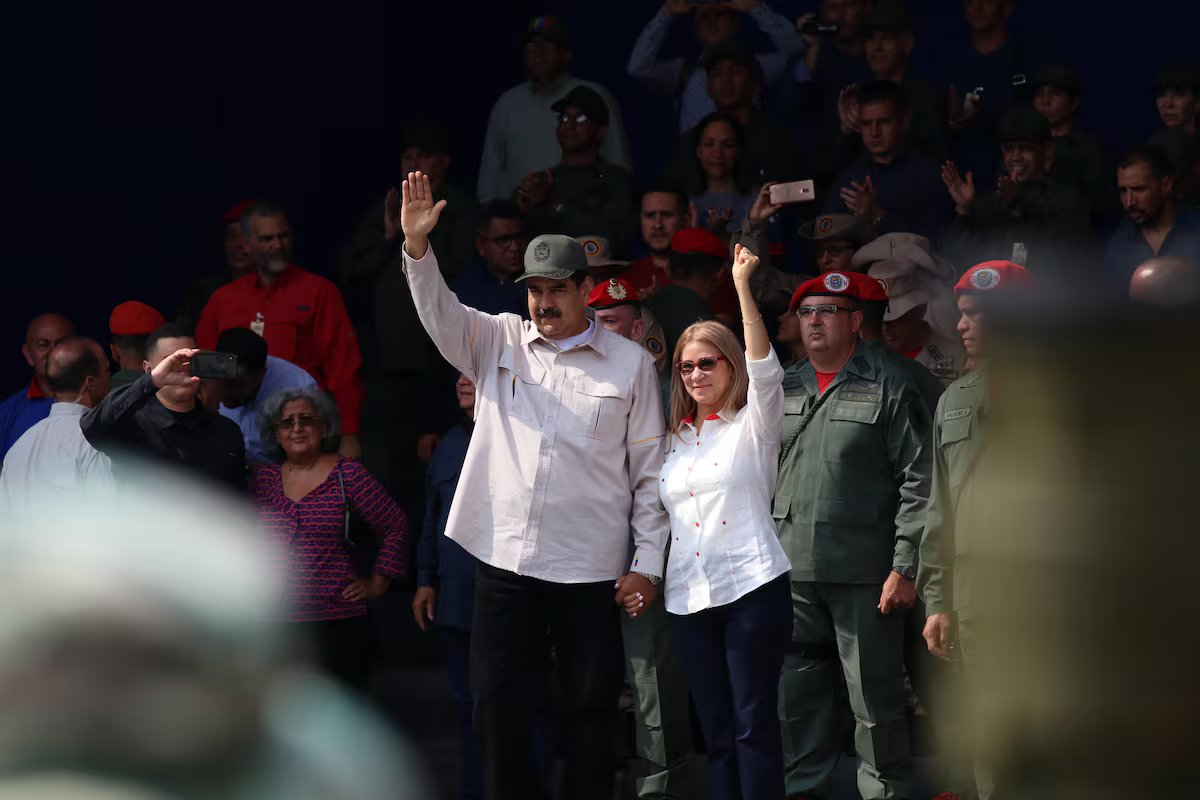
The case of Nicolás Maduro and Cilia Flores is progressing in the Southern District Court of New York. Following the first hearing on January 5, in which the deposed Venezuelan leader pleaded not guilty to the four charges against him related to narcoterrorism (as did his wife), and declared himself a “prisoner of war,” the second hearing took place on Thursday, March 26. The presiding judge, 92-year-old Alvin Hellerstein, rejected the defense’s request to dismiss the case after the Treasury Department’s Office of Foreign Assets Control (OFAC) denied the defendants permission to use Venezuelan government funds to pay for their defense.
Both Maduro and Flores declared themselves unable to afford their lawyers, and are demanding that the Venezuelan state cover the bill, arguing that this is stipulated by their country’s legislation. Based on this argument, both the prestigious Barry Pollack (Maduro’s lawyer, known for securing the release of Julian Assange, the founder of WikiLeaks) and Mark Donnelly (Cilia Flores’s lawyer) maintained that the U.S.-imposed freeze on their legal representation violates the defendants’ constitutional right to choose their own counsel, and asserted that the only solution to this problem was the dismissal of the case, which Allerstein has denied, pending the magistrate’s offical confirmation of his decision.
“Venezuelan law does not establish an obligation for the state to pay the fees of private lawyers representing individuals criminally accused in legal proceedings,” explains Venezuelan lawyer Nizar El Fakih, who was present at Maduro and Flores’ first court appearance. “What it does establish is the obligation to provide legal representation or to cover the costs of legal representation in cases where ‘the rights, assets, and patrimonial interests of the Republic’ are affected. For its part, U.S. law does not recognize the right of an individual criminally accused in federal court to access public funds from their country of origin to cover their lawyers’ fees.”
The prosecution emphasized that the OFAC expressly prohibits the use of funds from a sanctioned entity to pay the legal fees of another sanctioned individual. However, the agency issued a license in January authorizing payments from the Venezuelan government to the lawyers of Maduro and Flores, but this was revoked hours later. Prosecutors clarified that the licenses were issued due to an “administrative error.”
Pollack and Donelly have used every argument they can find to circumvent the sanctions against their clients. In one of their motions, they mention that OFAC has authorized the use of sanctioned funds from a foreign government to pay attorneys’ fees. While it’s true that the agency has allowed the governments of Russia, Syria, and Iran to pay their lawyers for the legal defense of their nations or state entities in U.S. court cases, it has never allowed it to pay the lawyers of individuals.
Given this situation, Maduro and Flores will have no other option than to accept the court’s appointment of a lawyer, but it will be up to Judge Hellerstein to decide or determine the procedure to follow.
The accusation
While the first indictment against Maduro dates back to 2020, the preceding investigation has been ongoing for more than 10 years, involving the work of several prosecutors in New York and Florida and international prosecutors. This is how the Department of Justice issued the second indictment against Maduro, and now against Flores.
Maduro is accused of three counts of conspiracy to commit narcoterrorism, importing cocaine into the United States, and possessing machine guns and destructive devices, and a fourth charge of possession of those weapons. Flores, a former president of the Venezuelan National Assembly, faces the same charges as her husband, with the exception of the fourth.
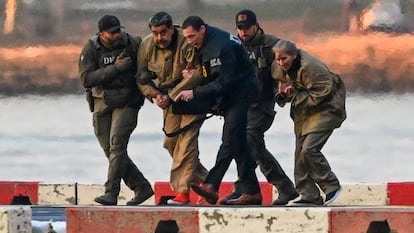
“It is not unlikely that they will be sentenced to life imprisonment. It has happened in the past. The first charge against Maduro (narcoterrorism conspiracy) carries a mandatory minimum sentence of 20 years in prison. The second (conspiracy to import cocaine) carries a minimum sentence of 10 years and a maximum sentence of life imprisonment. The range is broad, but undoubtedly, both defendants could spend the rest of their lives in prison. Although it is still too early to know for sure,” El Fakih says.
Discovery phase
These first three months of the legal process have focused on the discovery phase, in which the parties begin to learn about the opposing side’s evidence. The prosecution is beginning to reveal the first pieces of evidence against the defendants, while Maduro and Flores’ lawyers begin preparing their defense.
“In these high-profile cases, public opinion always interprets the trial differently than the proceedings in the courts. Maduro’s defense will try to win the court of public opinion by presenting motions that, while they know they have very little chance of success in court, can gain traction among the population and the international community,” El Fakih comments.
No bail or immunity
In Maduro’s case, bail is unlikely. The same is true for Flores. In this regard, the court is evaluating the risk of flight and the seriousness of the charges. Both have been accused of federal crimes related to matters of U.S. national security and interest.
The principle of immunity does not apply, nor does the manner in which the accused were captured and brought before the courts. In the United States, the perception of the legitimacy of a foreign government is the exclusive purview of the Executive Branch, and Maduro is not recognized as a legitimate ruler by the White House.
Links with Clíver Alcalá and Hugo Carvajal
The first indictment against Maduro links the case to Hugo Chávez’s former aide, Clíver Alcalá, and former military officer and ex-head of Chavista intelligence, Hugo “El Pollo” Carvajal. Both are part of the criminal network that the Department of Justice presents as its case theory. The prosecution maintains that Maduro did not commit these crimes alone; he did so accompanied by several individuals. This latest indictment also mentions Nicolás Maduro Guerra, the son of the deposed president, Diosdado Cabello (current Minister of the Interior and Justice), Ramón Rodríguez Chacín (former Minister of the Interior), Cilia Flores, and Héctor Rusthenford Guerrero Flores, better known as “El Niño Guerrero,” who is believed to be the leader or co-leader of the Tren de Aragua criminal gang.
So far, all those involved in this case have been captured or have turned themselves in to the authorities. Alcalá surrendered to the Colombian government in March 2020, was extradited to the United States that same year, and sentenced to 21 years and six months in prison in 2024. The narcoterrorism charges were dropped, but he pleaded guilty to helping facilitate the movement of weapons and ensuring the passage of cocaine shipments destined for the United States.
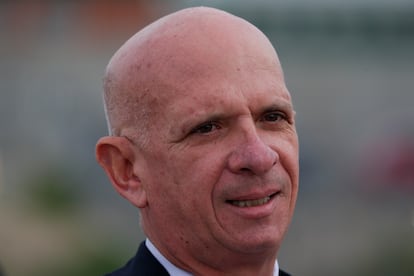
Carvajal was extradited from Spain on July 19, 2023. He pleaded guilty on June 25, 2025, to drug trafficking and narcoterrorism charges, and his sentencing hearing has been pending since the end of October last year. “The postponement of ‘El Pollo’ Carvajal’s sentencing may suggest that he is cooperating with the justice system in exchange for a reduced sentence. The prosecution could have new evidence against Maduro,” El Fakih notes.
Maduro and the Cartel of the Suns
The Cartel of the Suns is mentioned in several sections of the prosecution’s indictment; however, within the prosecution’s case theory, the way in which the charges are framed and how the degree of involvement of each defendant is determined may vary.
“The prosecution is optimizing the case’s narrative to face a jury that will determine guilt beyond a reasonable doubt. But we still don’t know if we’ll reach the trial phase. If the strength of the evidence leads the defendants to plead guilty, we won’t see Maduro and Cilia face a jury,” El Fakih explains.
Sign up for our weekly newsletter to get more English-language news coverage from EL PAÍS USA Edition
