
There were a litany of smartphones on hand at Mobile World Congress (MWC) in Barcelona, some with interesting twists, and others with intriguing and stunning results.
MWC is a show that, in my opinion, highlights just how isolated and stagnant the North American mobile market is. Real innovation is coming from the East, not the West, and while some of the ideas below are wacky and conceptual, most are products either just launched or coming to market.
Leica Leitzphone powered by Xiaomi
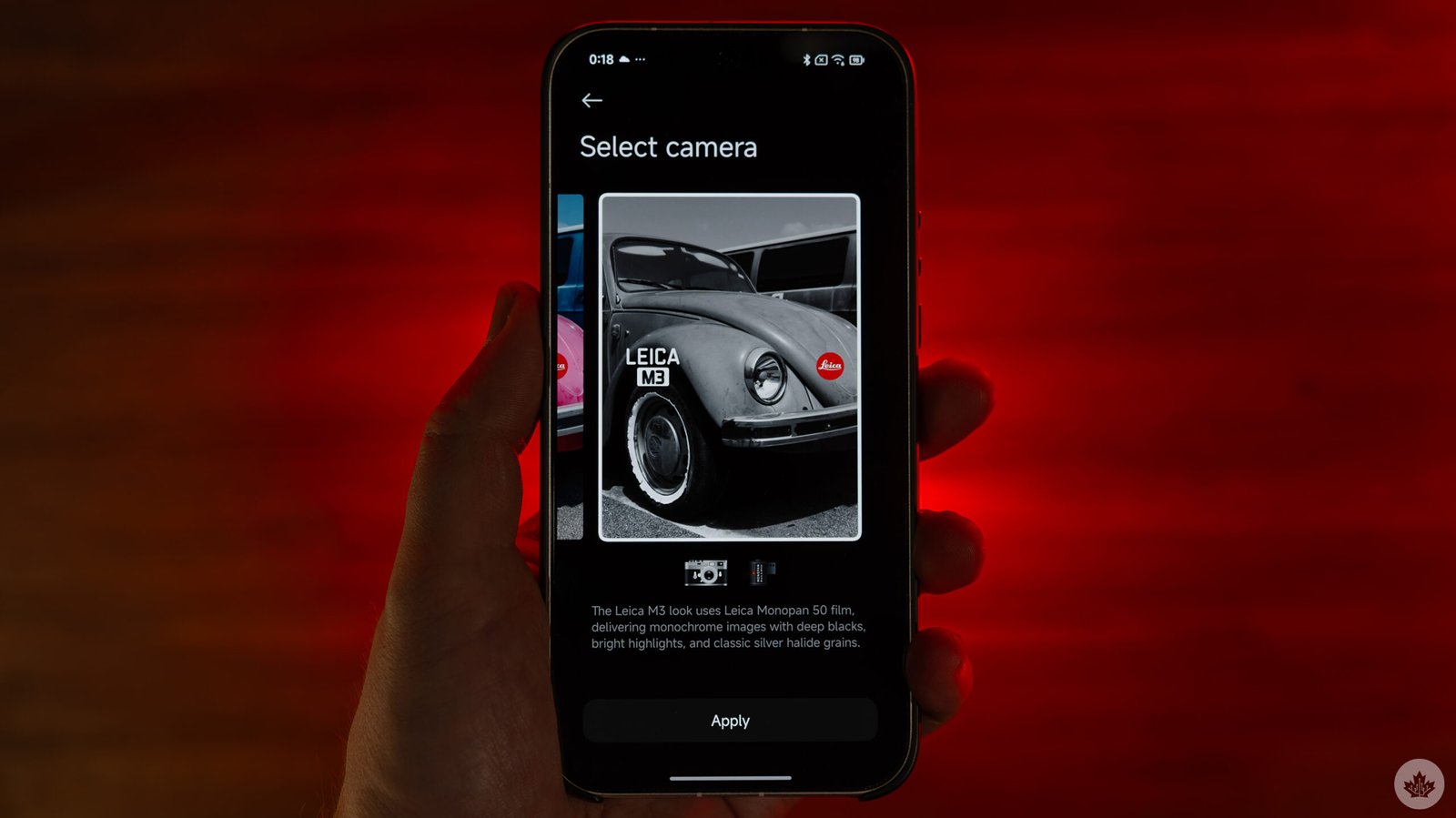
The Leitzphone is almost a refashioned Xiaomi 17 Ultra, sharing nearly all of the same hardware, only it sports a slightly different design and Leica-inspired user interface that includes special modes paying homage to classic Leica cameras, like the M9 and M3. These, along with a deep selection of exclusive Leica Look filters — some nodding directly to early 35mm film aesthetics — add personality and creative flexibility you won’t find on the 17 Ultra, much less anything from the Big Three in Canada and the U.S.
That also goes for the rotating Camera Ring, which brings a tactile, lens-like control to key shooting parameters. Both the phone itself and the included case have the ring, and you can set it to control different aspects, say, exposure for Photo mode, and zoom for Video mode. Every mode in the interface can have its own settings.
Shooting with the Leitzphone myself in Toronto and Barcelona, it’s obvious that this is a camera that happens to be a phone, rather than the reverse. Results aren’t only spectacular in some cases, they produce results that really do feel like they derive from Leica’s legacy. It’s also a pricey one at €1,999 (about C$3,173.41).
Motorola Razr Fold
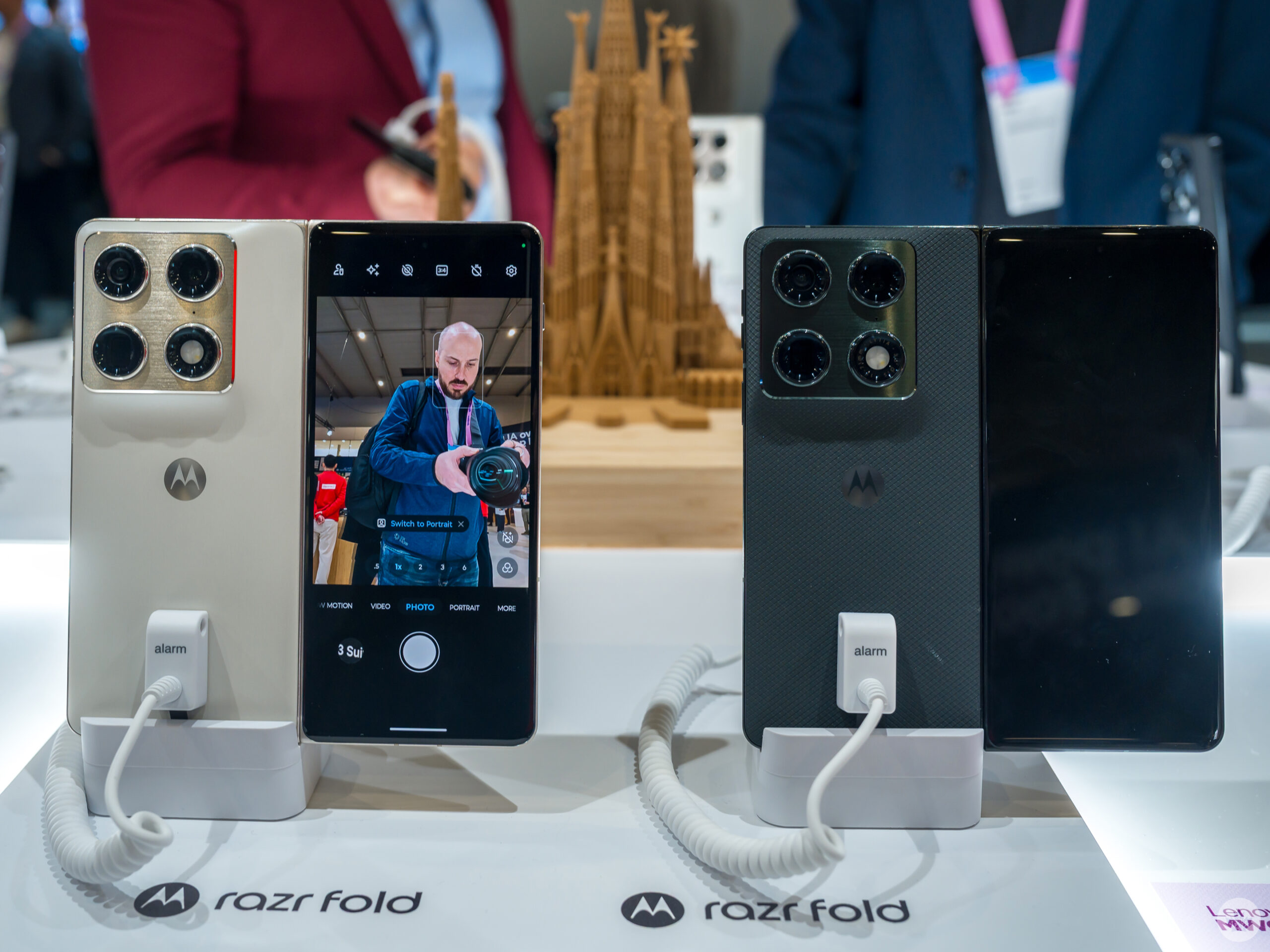
The new Razr Fold is a book-style foldable, marking a notable expansion for the Razr brand beyond the flip clamshells they’ve come out with for years. The 6.6-inch external screen is pretty vibrant, while flipping it open reveals a large 8.1-inch internal 2K LTPO display. Both feature high refresh rates and support for Dolby Vision, and the hinge feels both sturdy and flexible all at once. It weighs in at around 240g, measuring roughly 4.6mm when open and 9.9mm when closed.
Under the hood, it runs on the Qualcomm Snapdragon 8 Gen 5 chipset with up to 16GB of RAM and storage options ranging between 256GB, 512GB and 1TB. Its 6,000mAh silicon-carbon battery supports 80W wired charging and 50W wireless charging, which are quite good figures for a foldable like this.
Apparently, Motorola is also positioning the Razr Fold as a competitive camera, led by a 50MP Sony LYTIA 828 sensor for the main lens, plus 50MP sensors for the telephoto (3x optical zoom) and ultra-wide lenses as well. The front cameras are 32MP for the cover display and 20MP for the inner one. Video capture maxes out at up to 8K at 30fps or 4K at 120fps.
Motorola is promising up to seven years of Android and security updates. It won’t come cheap, though, with pricing in Europe set at around €1,999 (about C$3,173.41). It’s coming to North America this year, though the timeframe remains unclear. Special editions, including a FIFA World Cup 26 Collection with exclusive design touches and perks, are also part of the launch lineup.
Tecno Camon 50 Ultra 5G
As a mid-range phone, the Tecno Camon 50 Ultra 5G comes with a camera‑focused intent that leans heavily into AI features. It sports a 6.78‑inch curved AMOLED screen with 1.5K resolution and 144Hz refresh rate, running its HiOS overlay on top of Android 16. The MediaTek Dimensity 7400 Ultimate chipset firmly places the device in mid-range performance, paired with up to 12 GB of RAM and up to 512GB of storage.
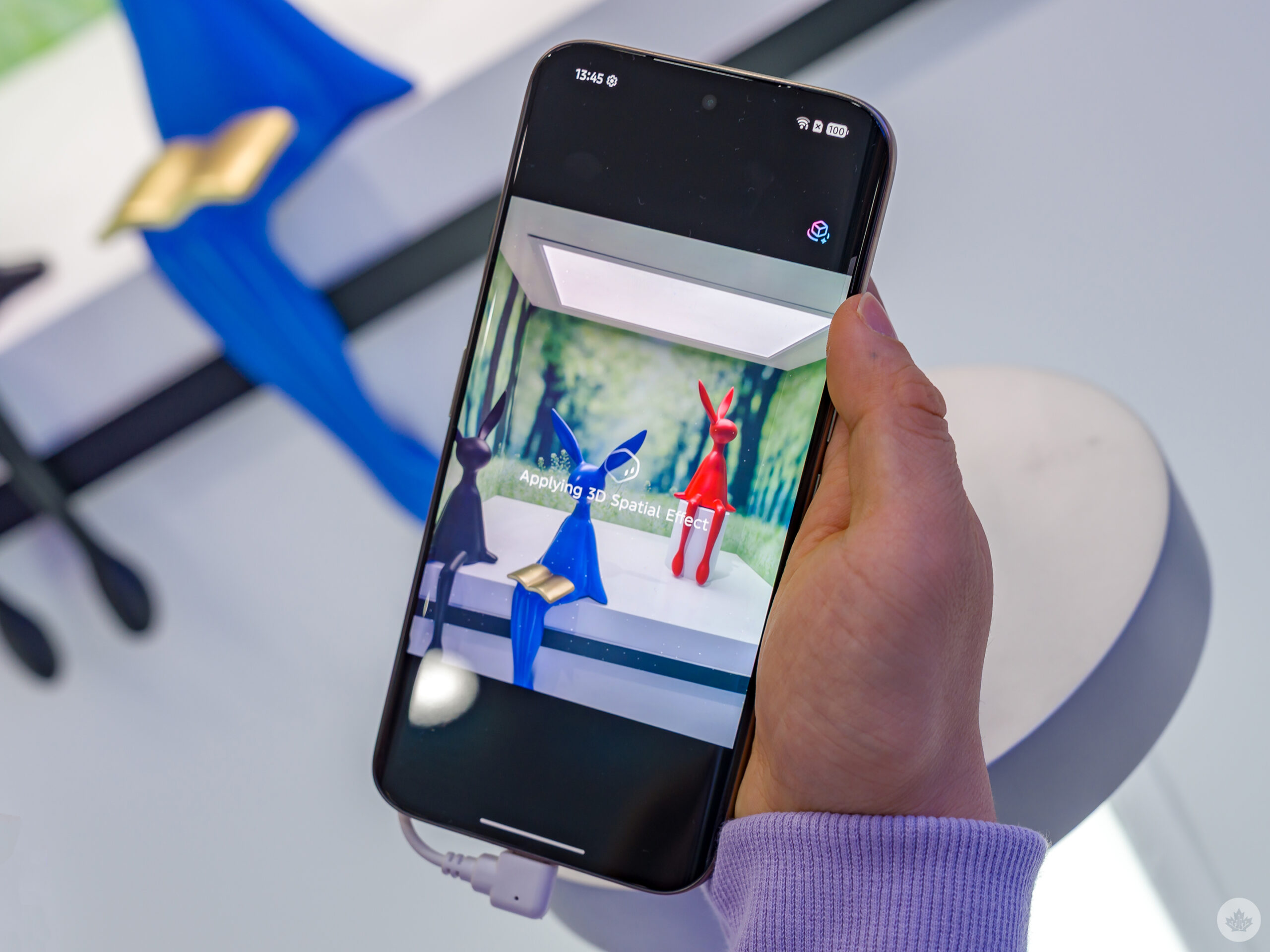
The rear triple camera setup is led by a 50MP Sony LYT‑700C main sensor with optical image stabilization, along with a 50MP telephoto lens (3x optical zoom) and 8MP ultra‑wide. The interface is chock-full of AI-driven settings and features, including AI Art Gallery, which can reimagine your photos into works of art from the likes of Monet, Picasso, Van Gogh, or stylized for anime, abstract and glass art. There are even modes for 3D photos and an AI image-to-video generator.
Shooting with it myself in both Toronto and Barcelona, the phone gave me a solid initial impression for its expected US$350 (roughly C$477.29) price tag, even if the AI features sometimes feel overdone or gimmicky. Others are surprisingly useful, especially when viewing the broader suite to include the Ella voice assistant.
The 6,500mAh battery is big for a phone in this range and includes 45W wired fast‑charging support. Tecno promises several years of Android and security updates, plus additional cloud storage.
Tecno Modular Magnetic Concept
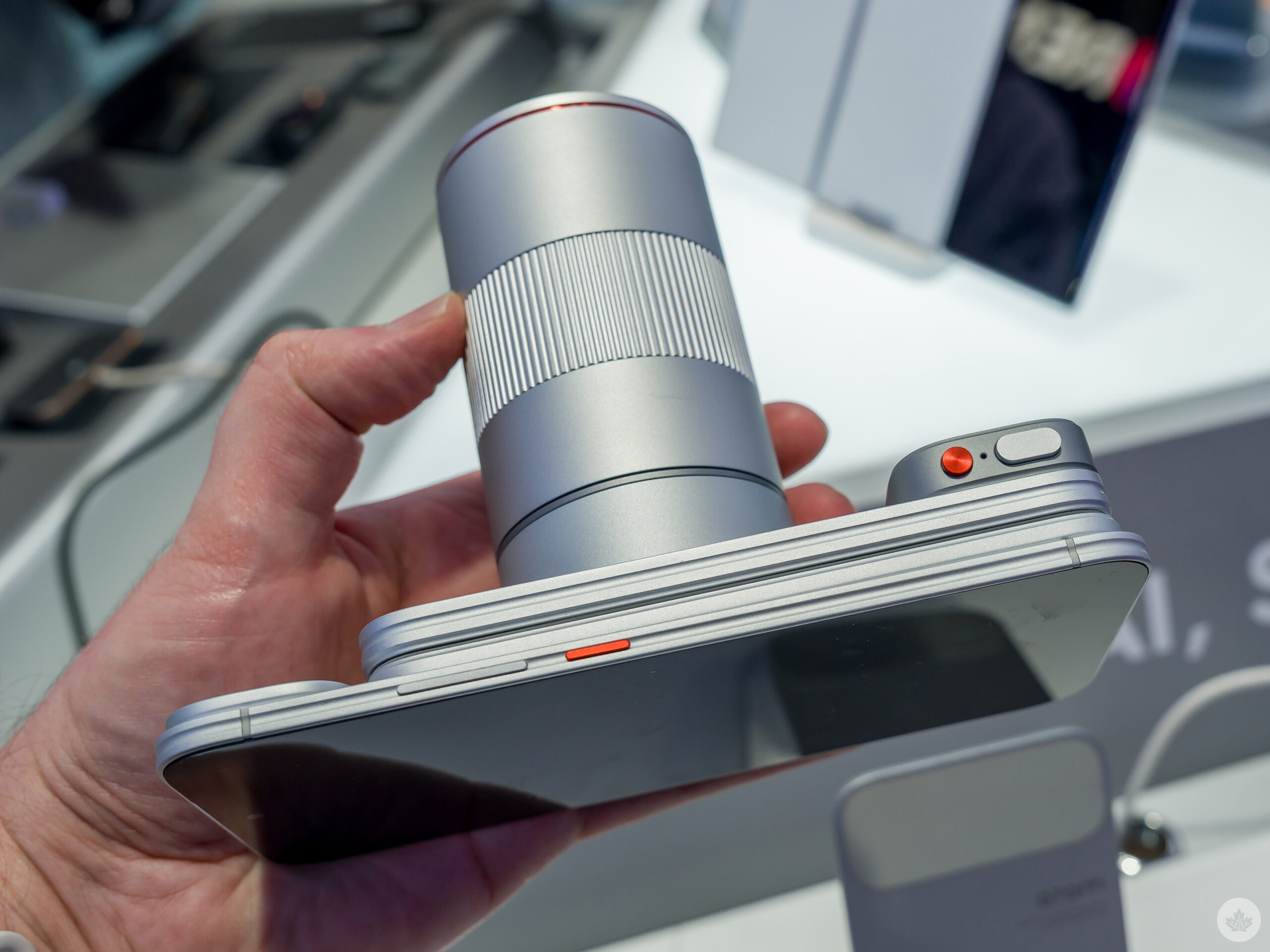
Tecno describes its Modular Magnetic Interconnection Technology as a “phone that grows on demand,” built around a stackable magnetic system on the back of an ultra-thin handset. While still firmly a concept, the idea feels like a nod to Motorola’s defunct Moto Mods for the Moto Z line.
To offset the inevitable bulk of stacking modules, the base phone is super thin at just 4.9mm, so it only has a 3,000mAh battery and a single rear camera inside. Two prototype styles, the Atom and Moda editions, use pogo pins for the various add-on components supplemented by wireless links like Wi-Fi Direct. The ecosystem includes everything from a full-on Telephoto Lens with its own image sensor and controls (Hasselblad Moto Mod, anyone?) and action camera, along with a periscope telephoto extender for the phone’s rear camera, battery packs, storage, microphones, and even a game controller.
This concept’s stackable nature gives it broad latitude. For instance, you could stack two batteries in the back to get 9,000mAh, then put a camera and microphone on top of those. The batteries are even thinner at 4.5mm. Tecno is positioning the system as a way for users to tailor a single device to very different needs, whether that’s photography, endurance, connectivity, or gaming. Fascinating as it is up close, there’s just no guarantee it will ever ship.
Honor Robot Phone
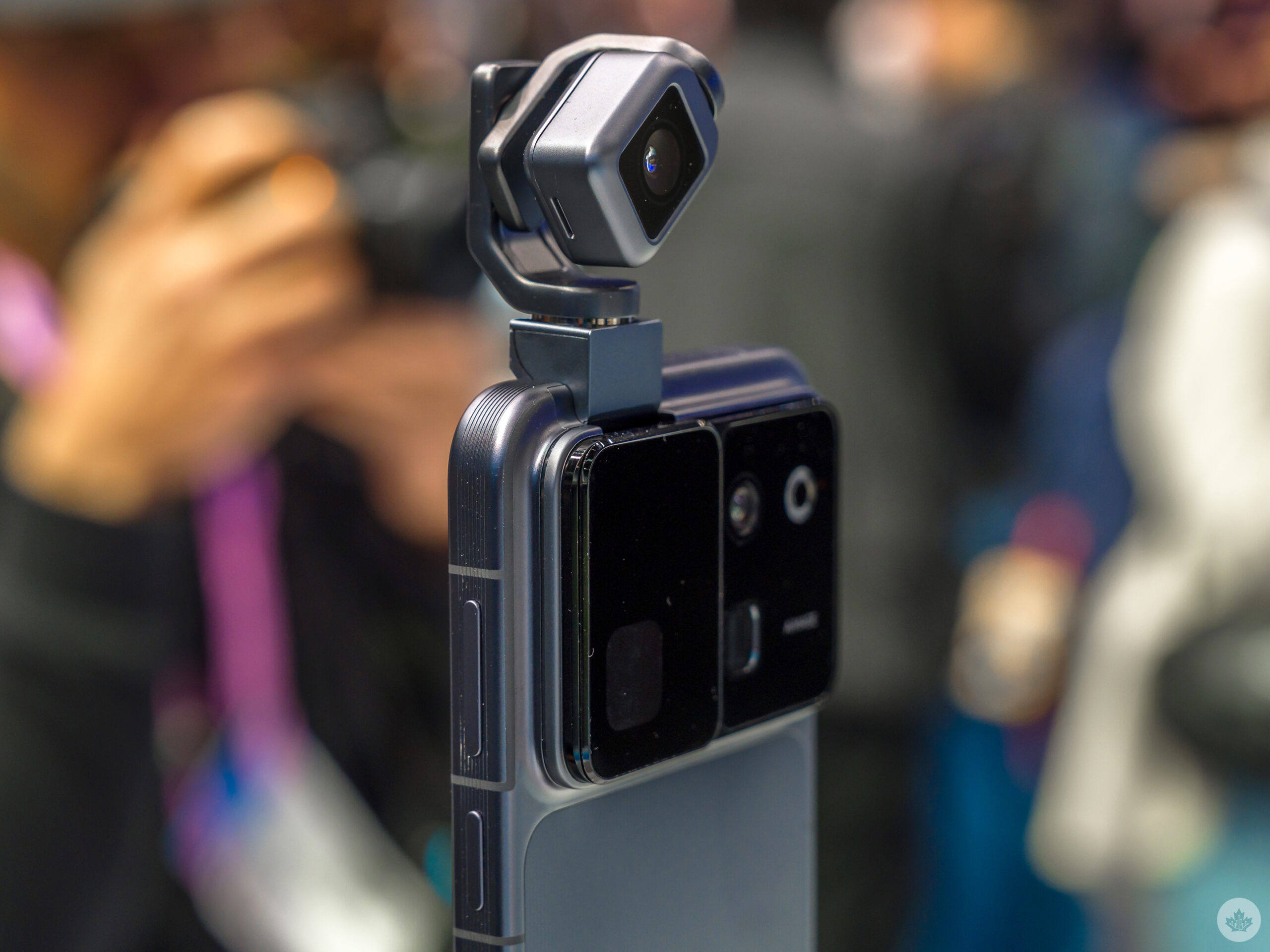
Honor’s Robot Phone is truly something else when seeing it up close. It’s built-in, AI-driven gimbal physically moves, tracks subjects, and responds to voice commands. Honor frames it as a “new species of smartphone” with plans to launch in China first before a likely global release (not in Canada) sometime after.
A miniature motor powers the robotic camera, mounted on a three-axis, 4-DoF (four-degrees-of-freedom) gimbal capable of full rotation. The camera uses a 200MP sensor and supports AI-based subject tracking for both selfies and outward-facing shots, along with features like automated pans, spins, and stabilization modes designed to keep footage smooth even during fast movement.
Voice interaction gives the camera a sense of personality where it can comment on scenes, acknowledge crowds, and even nod, shake, or “dance” to music. While the video potential is clear, I can’t report on anything related to still photography for this unusual device.
Vivo X300 Ultra
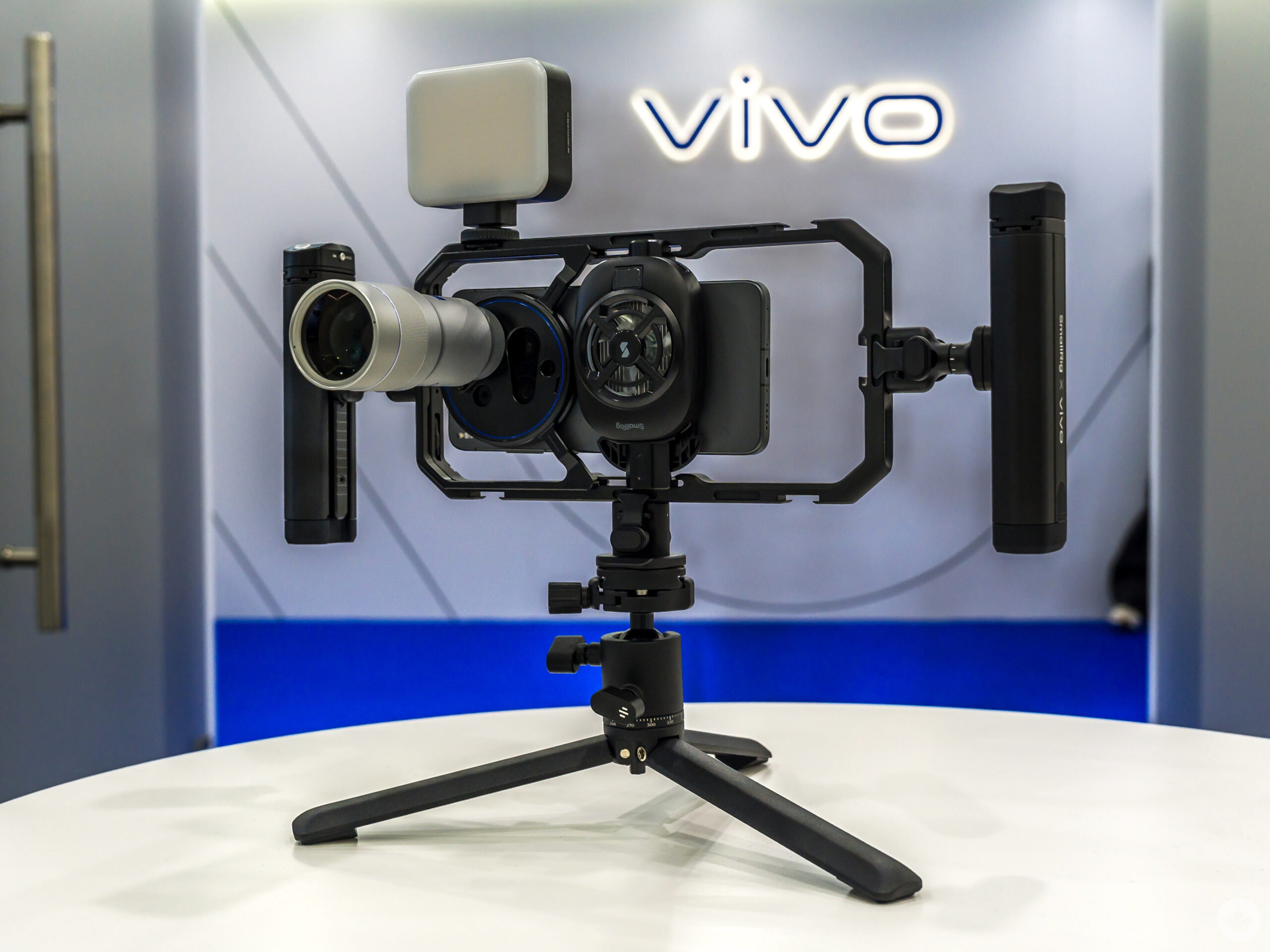
Vivo only talked about video at MWC for the upcoming X300 Ultra, where it’s clearly evident the brand wants to take on all comers on the video side, intending to position it merely as something closer to a “pocket cinema camera.”
There won’t be a “hero lens” here, as all three rear lenses will be treated as equals. Vivo confirms support for 4K 120fps 10-bit Log recording across all focal lengths, with optical image stabilization on every camera and no crop when shooting in OIS-only mode. A new Pro Video app will borrow from professional cinema cameras, complete with tools like shutter angle control, advanced monitoring, histograms, audio levels, and ACES-certified Log for seamless colour grading in industry-standard workflows.
Users will be able to load custom look-up tables (LUTs) for on-device monitoring, convert footage directly to Rec.709 or HDR formats, and complete edits entirely on the phone. Vivo claims up to 15 stops of dynamic range, subject tracking up to 4K 60fps, and smooth lens switching while recording Log video. Based on the footage I saw, this phone has the potential to make the iPhone look completely ordinary by comparison.
Part of it is there’s hardware to complement all this. First, there is an interchangeable telephoto lens extender with 400mm optical focal range (the previous 200mm lens is also compatible since it uses the same mount). Then there’s the modular rig system for videographers, set up with physical controls, Bluetooth connectivity and a cooling fan to prevent thermal throttling.
Apart from saying still photography “will be better” in the X300 Ultra, the focus at the show was entirely on video — and only with certain details. It’s not clear yet what the specs are. What is confirmed is that the device and system (lens, rig) will be launching both in China and global markets Vivo already operates in. You could end up with one in Canada should you be willing to import it.
TCL NXTPAPER 70 Pro
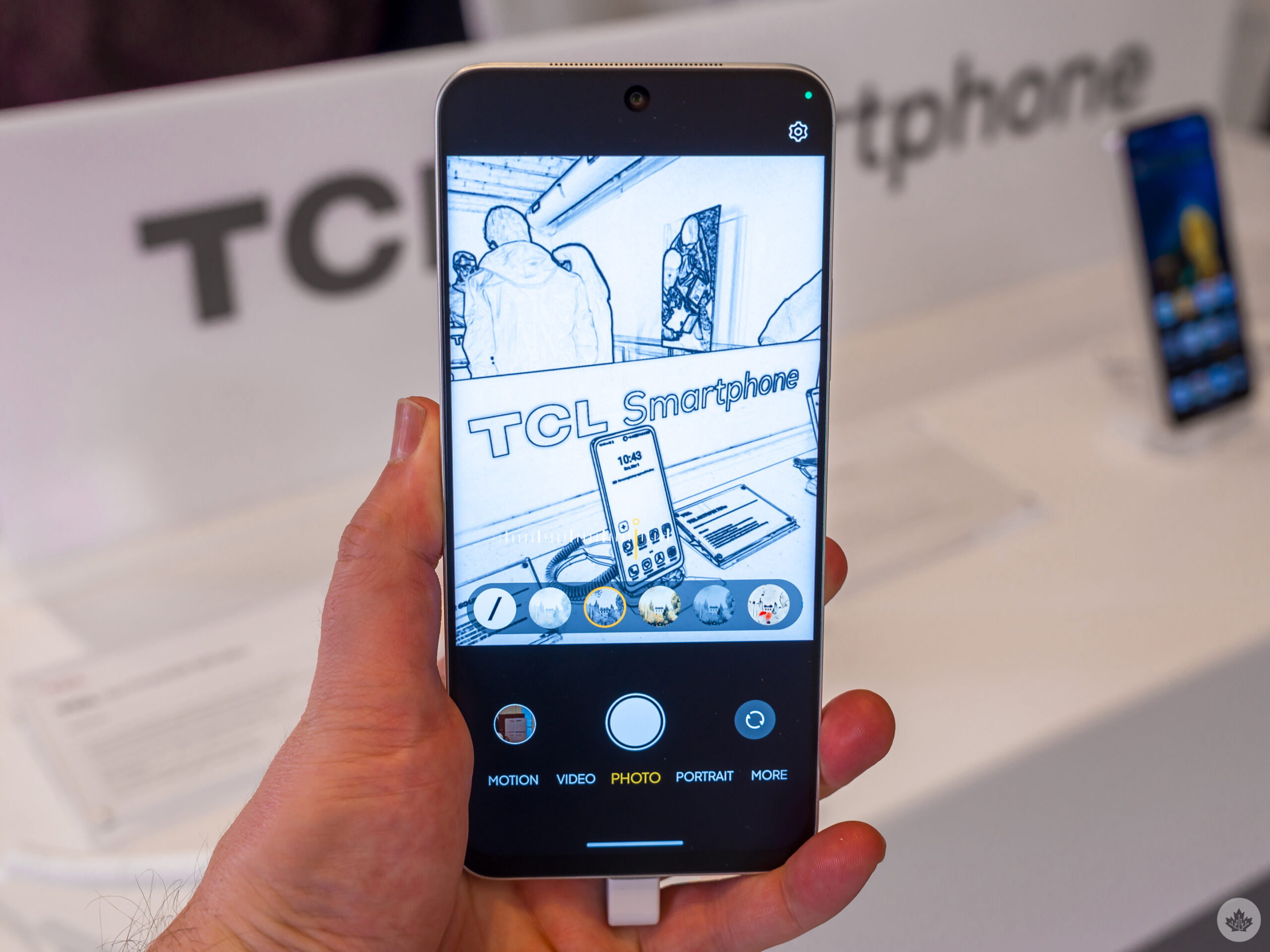
TCL already unveiled the NXTPAPER 70 Pro at CES, but it’s still a noteworthy phone because it is coming to the U.S. (Canada is a “maybe”) and looks different from everything else due to the screen tech. It’s still NXTPAPER 4.0, so it lacks the NXTPAPER Pure version that offers full colour support (16.7 million colours) and a 120Hz refresh rate, including support for the T-Pen stylus. Currently, that tech is only on TCL’s new Note A1 NXTPAPER tablet.
NXTPAPER is unlike any other display, and I personally like it for books, comics and graphic novels. The reduced glare also makes it easy to read such things in brighter sunlight. The screen is brighter than past models, though it can’t match the nits the best IPS and OLED displays can produce. The trade-off is there’s far less blue light exposure here compared to those panels.
As a mid-ranger that tries to stay as close to $0 as possible, TCL says it’s trying to offer a lot of bang for the buck. Its MuseFilm in-house image processing adds some cinematic appeal to some shots from the camera, while certain modes, like sketch and watercolour, make both photos and video look interesting from a creative standpoint.
