
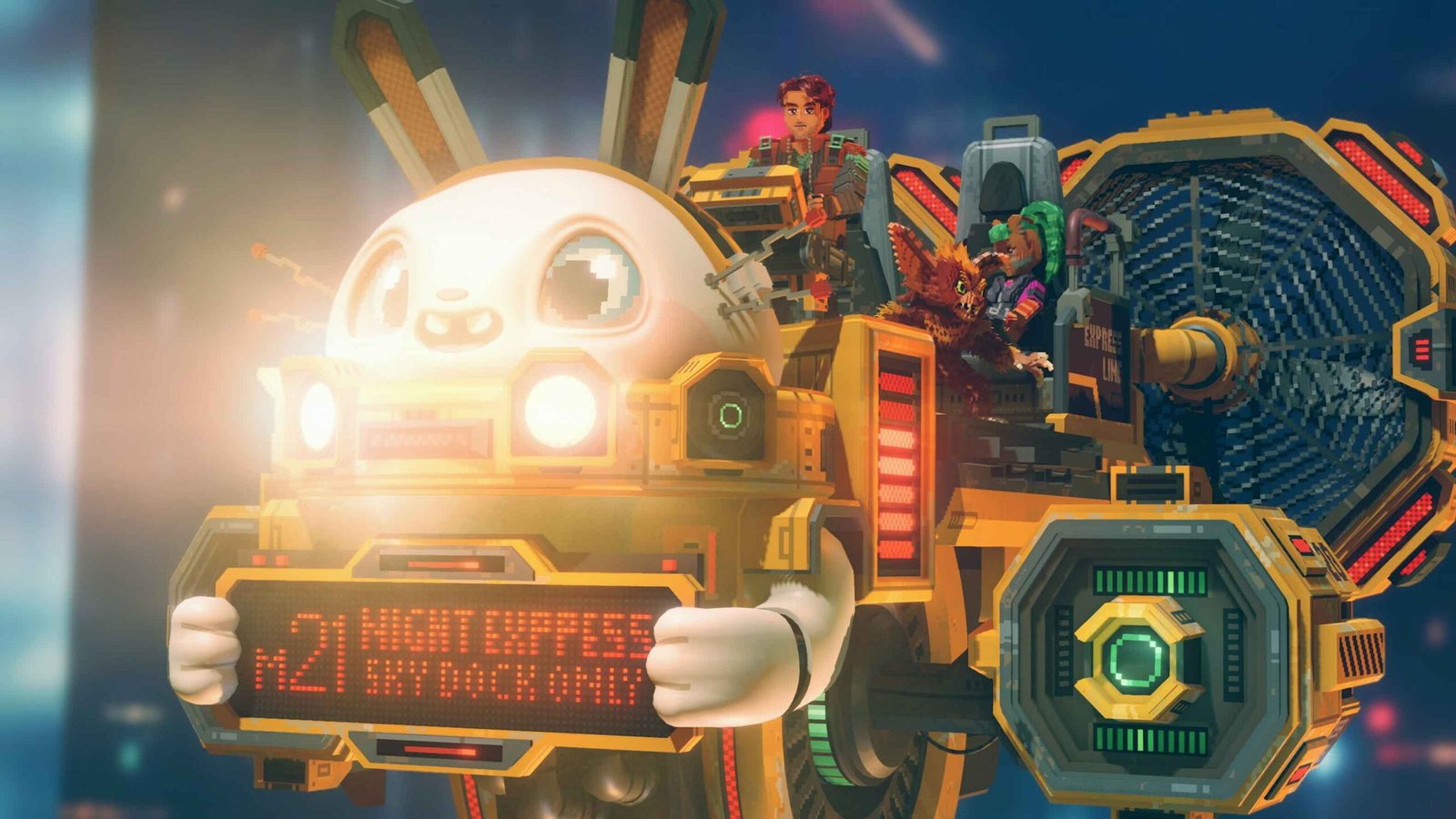
In 2021, Toronto-based indie developer Cococucumber released Echo Generation, a sci-fi retro-inspired turn-based RPG.
It quickly garnered strong critical acclaim from fans and even former Xbox bosses Sarah Bond and Phil Spencer. After venturing into the world of action-RPGs with 2023’s Ravenlok, Cococucumber is trying its hand with its first-ever sequel, Echo Generation 2. The new game, which takes place both before and after the events of Echo Generation, follows an ordinary dad who’s stranded in another dimension, forcing him to embark on a dangerous journey to find a way home to Maple Town.
To learn more, MobileSyrup spoke with Cococucumber co-founder and Echo Generation 2 game director Martin Gauvreau. He talked about what the team wanted to accomplish with a sequel, designing the new deck-building mechanics, feedback to a recent Steam demo and the strength of the Toronto indie game scene.
Cococucumber has done all kinds of different games. After Ravenlok, how did you settle on the idea that you wanted to revisit the world of Echo Generation, and by doing that, what you wanted to do differently this time?
Martin Gauvreau: It was decided before we finished Ravenlok. I don’t know if we would have made Echo Generation 2 if we had to make that decision after Ravenlok. To be able to make a game like Ravenlok for the studio is very challenging, and we were not sure we were going to pull it off, because you’re talking about a full 3D environment with a living world and lots of NPCs and real-time combat… for a small team, it’s very hard to pull off. So there was a risk. And after that, we’re like, “Wow, look what we can do!”
But we had to do Echo Generation 2 because we already put that in motion and we already signed some engagements for the production to make this project. So we’re like, “Okay, we’re not the same studio in terms of skill and ambition as when we made the first game, so how can we make Echo Generation 2 an interesting follow-up for us after Ravenlok?” And we couldn’t just go and do more of the same. We had to find something that would be challenging for us. So this is why we decided to expand the universe and the scope and also go further with the visuals, with the battle mechanics.
So in the end, we love this game, and I’m so happy we made it. You have some kind of obligation. It’s a business. It’s hard. And if you commit to something, you have to do it. And I think that it showed us other possibilities in terms of how good something can be but it feels like there’s no end — you can always get better. And we look at other games that really inspired us, and we’re like, “There’s something to do there. There’s some good game mechanics, there’s some good visuals, there’s some good world-building in other games. So let’s try to match those other studios that inspired us.”
You have a demo out now. What’s been some of the feedback that you’ve seen?
Gauvreau: We were, I think, concerned about how people who loved the first game would react, because we took some drastic decisions to change some of what people love. For example, the turn-based combat minigames. It’s still turn-based, but now we went with deck-building, so that was a massive, different core mechanic for your game, and people could have hated it. And I think some people still are like, “Maybe you should have stuck with the first game’s formula.” And it comes from being passionate. If you want to make a game, you need to be passionate about it. And everybody in the studio loves real board games and a lot of deck-building games like Dune: Imperium, and we’re really inspired to try something like this.
And what is fun about deck-building is that you cannot just rely on the same [strategy]. Because we saw some people [in the first game], sometimes they define their perfect attack, or the perfect skill, and they just use that again and again. So [deck-building] forces you to be a bit more creative and have more options to use to fight. And by using deck-building, we also wanted to add an extra mechanic on top of it that would let you, for example, do combos with other party members. And also some of the cards can actually be used in the real world when you explore to change the environment. Some cards are summons, so if you defeat a boss or you find an ally, they can join your party in a card. So they give you cards that, when you play it, they materialize, and they help you in the combat, or they go in the environment and they do certain tasks for you. So that was the first big change, was the deck-building.
And the other one is none of the [original] main characters are in the sequel. We focus on other characters, so the father, some of the scientists in the research centre, and there’s [other] new characters introduced, are our main characters. So people expect to keep playing with the same kids with the same kind of mechanic and will be like, “Where are those people and what is this game now?” So that was our big concern, but we hope that people will like it. And so far, it’s been very, very positive. To go back to the question of the feedback we received… It seems like people enjoy the system we’ve designed, and we already had some feedback on how to keep improving it. So it’s a bit like early access, in a way, having a demo, because you get a lot of people’s feedback, and we had a bunch of cool ideas that we want to include, or just [improve] the user experience. Also, some people felt that the camera was a bit too much when you fight in combat, so we added an option that you can disable that if you don’t want to have a dynamic camera, because we do a lot of crash zooms when we play an attack.
So it’s very exciting, but it’s true that some people might feel motion sickness, so we added an option to disable camera shake and extreme camera movement. So it’s great to already go through that exchange with players so we can refine the game before we release it, because that’s going to be the next big stretch toward completing the game. So the feedback on Steam and on Xbox is very similar, I think it’s around 90 per cent [positive] so far […] I think the people who played are some of the fans who are following us or have been playing the first game, and that’s the most important reaction and feedback for us. First, you know, is the people who are interested in this game. So on the one hand, it’s a confirmation that, “Okay, you made some good decisions, even if they’re pretty drastic, and some ideas to improve it that we’re definitely going to address and work on.”
The first game had this sort of delightful Stranger Things, Amblin vibe — the coziness of the youth coming-of-age story, but there’s also sci-fi horror undertones. This time, you’re going with a father, so it’s a little more mature in that sense, but you still have tone, just maybe amplifying it. What were some of the inspirations behind going down this different route with different characters, a more adult protagonist this time around, amplifying the tone, and doing things a little differently this time?
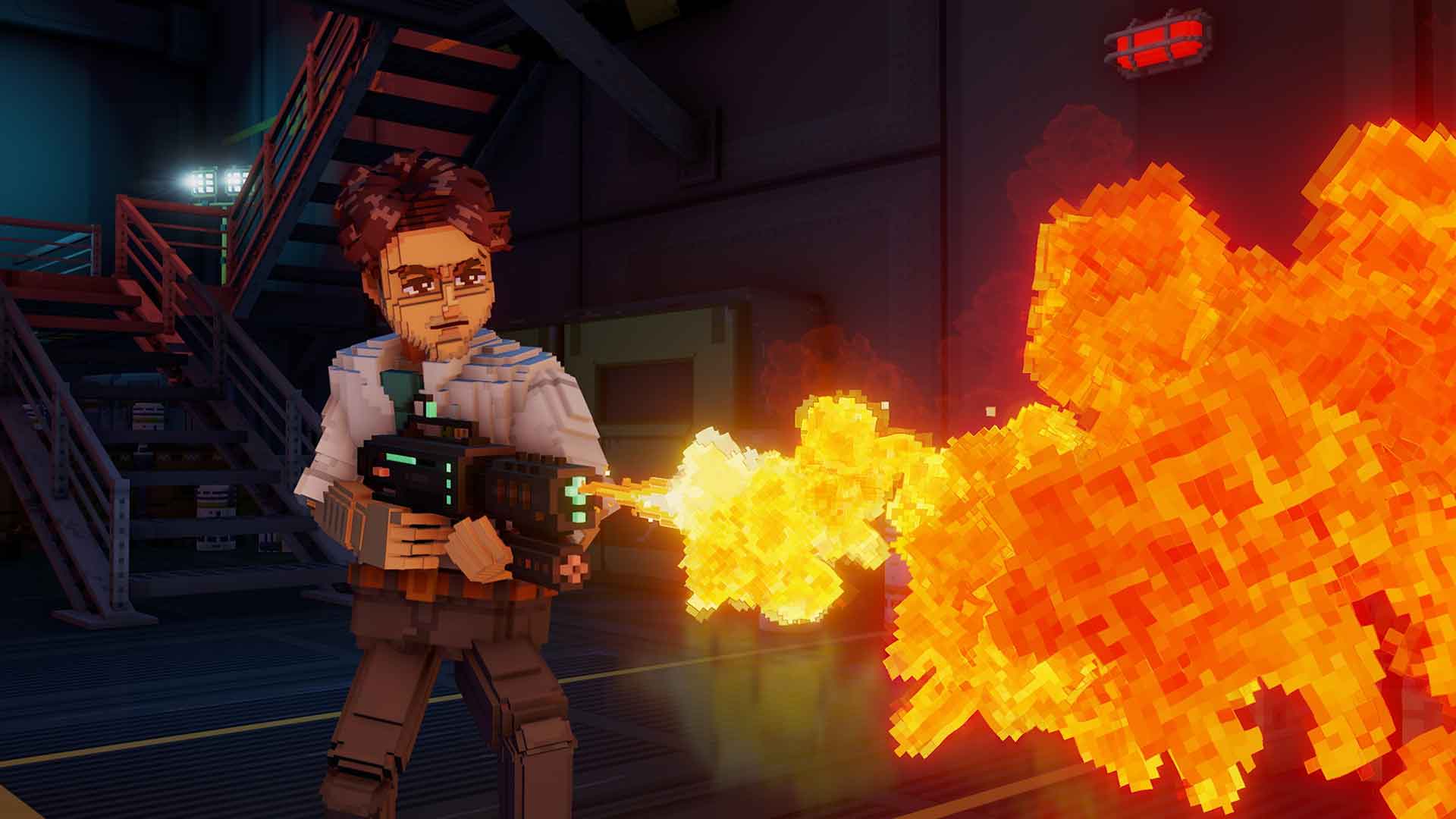
It’s strange, because I think, if I’m not mistaken, that you weren’t playing as a dad in video games until maybe the last 10 years, or so because, very famously, The Last of Us, also God of War, and other games where you play as the dad. It used to be more like the young hero or a veteran. A dad in the sense that not only is it his background, but we see his family. We see him also taking care of people, but also going on an adventure. It’s more accepted to do that, that you could have different types of characters that are the leads. And when we look into how to expand the story, what happened to the dad was the obvious big kind of mystery that could be very interesting to unfold narratively. He disappeared, he’s coming back on a spaceship, so what happened in those years?
And I think we also loved the evil corporation, scientists, research centre, kind of world. So one of the locations that we visited briefly toward the end of the game, now, we visit it first thing. And we expanded it massively, not only in the demo, but also in the game […] So that was one of the anchors to build around, to go with the father and see what happened. But we were also faced with the problem that in the first game, you choose a character, so you have many different kids you could choose. But now, because the cards have an illustration of who’s playing them, we just don’t have the resources, if we have 10 characters, to draw 10 different versions of every card, because we have hundreds of cards. So we needed to have fixed characters, but we solved that by playing different characters throughout the story.
So we start with the sister Ann, then we play with the father, and then throughout the journey, we’re going to play as different characters […] So you’re thrown into a whole different situation with a different character, with different skills and different challenges. And then, at one point, you’re going to be able to choose whoever you want, and on your final stretch of the game, build your own party and choose whoever you want play with and any cards from throughout the game. So it’s almost like you discover different cards, different environments, different ways to play. And at the end, it’s all going to come together, and you’re going to be able to [build] a lot of very interesting and different decks.
Something I love about your games is you have this lovely, voxel-based art style throughout a lot of them. How has that art style and technology evolved over time, and how are you pushing it now in Echo Generation 2?
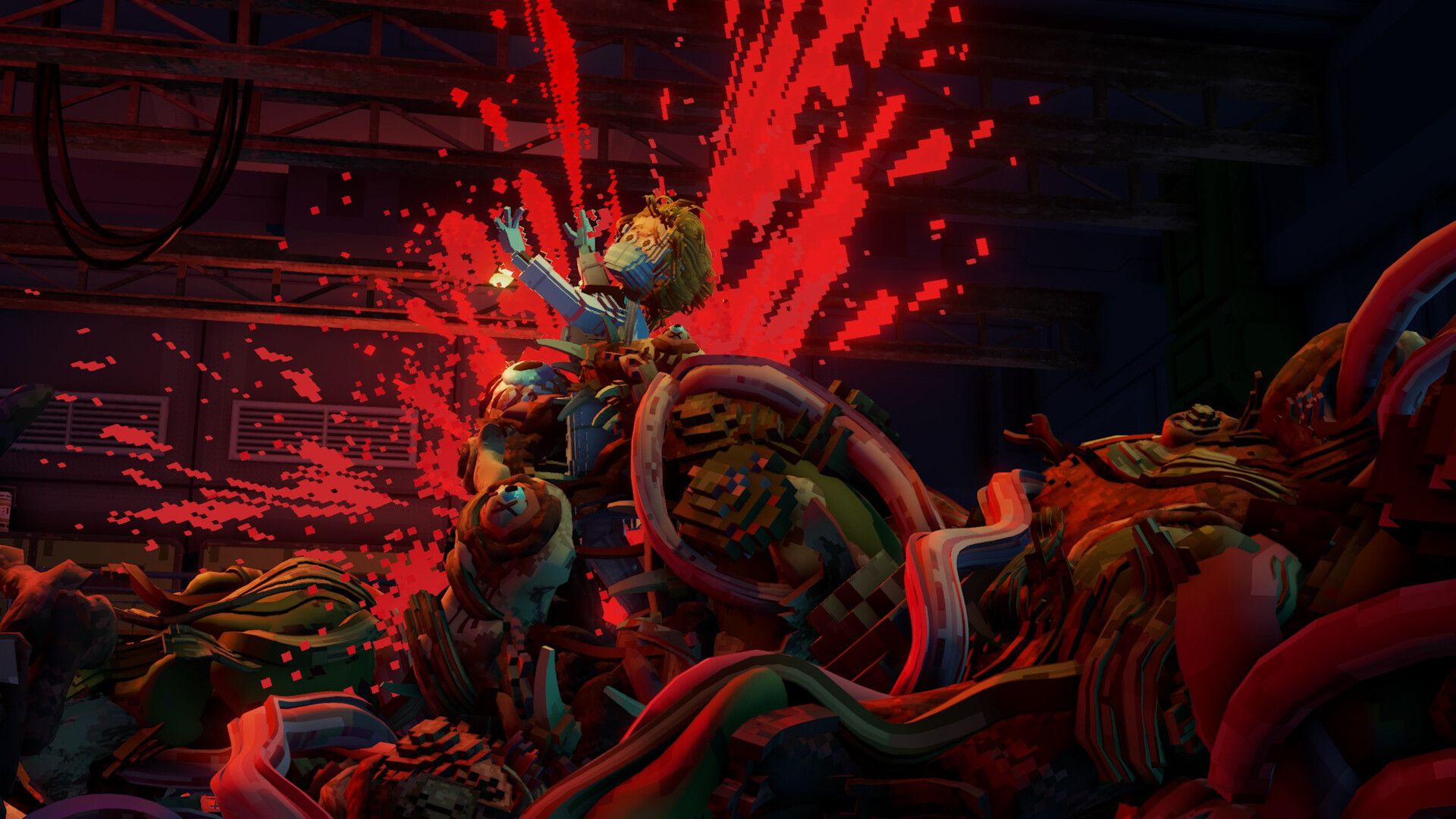
Gauvreau: I guess we just can’t help it. [laughs] So a game is made by a team, and the team [members have] their own artistic way to do things. And a lot of people on our team love to make cute stuff, and they have an amazing sense of colour and imagination for characters. I’m not sure we could do something very scary, even if we tried to. There’s a bit of cuteness always coming into it. [laughs] So part of it, yes, it’s an artistic decision, because we’re making something retro, charming and voxel, but in other ways, it just comes naturally. It’s like if a band is good at playing rock and roll and they make a rock and roll album — it’s just a natural fit. So I think it’s just like how when we decide to make a game, we make a game that we like to do, and include this kind of cuteness in it.
So for the sequel, we tried to go darker and more sinister and scary. Even then, it’s like “scary cute.” It’s interesting. As we saw in the trailer, this monster is chewing up a scientist with blood, but it’s not traumatizing. You look at that, it’s almost fun, and also it’s kind of a weird mix. And probably we’re going to try to push ourselves to go a bit more scary and less cute, but the kind of background, natural vibe, we have is always going to have a bit of that. I guess it’s our style. […] And you think about a movie like Paprika where they mix a lot of different things and it kind of works in its own way. So we just hope that we get to achieve something that also works within its own world-building that makes sense.
You celebrated your 10th anniversary in 2024, so you’ve been making games for a while now. During that time, how would you say the Toronto development scene has evolved? What makes it special?
Gauvreau: Yeah, it’s weird to think it’s been that long already. [laughs] But [it’s] definitely a very strong independent video game scene and a lot of very talented, very passionate people are working here. And what is great about it is that this community is really tight and likes to meet up and exchange and help each other. So I wouldn’t think about making games anywhere else. It’s such a great environment to have the chance to be here. I think one of the sayings is you have to be where the game is. Well, the game is in Toronto. If you think about Canada, it’s definitely one of the main hubs for video games, and especially in downtown Toronto, just a couple of blocks away. So many studios that you can just call, “Hey, let’s go for lunch.” Maybe not as much as before the pandemic, because now people are working remotely. But there is still a very strong presence. Being in a hub has a lot of advantages in the sense that you can meet up and exchange [information] and talk about projects and different things.
And if anything, I feel like the Canadian independent video game scene is just getting stronger every year, and independent games in general. There’s been, strangely, a lot of AAA failures or just misalignment with the costs of production and expected revenue, because the budgets are so big, unless you make a lot of money, then they have to maybe sometimes go through layoffs or shut down studios. And when you look at indies, [we’re] faster, more flexible, more creative, they don’t do the same type of game. Of course, to do something open world with 200 hours and a lot of motion capture, we cannot do that, but to have other, more experimental things that are forgotten by the big studios, I think more and more people are very interested.
If you just look at games like Balatro also, it’s not a AAA big studio game, but it’s extremely popular. And there’s a lot of examples like that. Some of the most hyped games over the last couple of years, and even this year — you look at top 20, 50 most expected games, and a lot of them are actually very small team, independent studios, so it’s great to see that. And a lot of them are here in Toronto, in Canada. [There are] also great studios in Quebec and Vancouver and all across. And you could just be a couple of people. And the tools are so accessible nowadays that, and also the distribution platforms, that it just takes the will and the creativity and a bit the madness to say, “Let’s do something.” […]
So I think the future looks bright for indie, at least for the next couple of years. You never know. It’s always a very moving industry, and unpredictable and past success doesn’t guarantee future success. But in terms of opportunities and creativity, it’s extremely simulating and exciting to be part of it. And already, we’re wrapping up on Echo Generation that we’ll launch this year, and we already have another game starting production right after that. So we’ve been here for 12 years, and hopefully here for many more years. And we’ve still got to have people enjoying our games and supporting us, because none of that would be possible without the players and the fun.
This interview has been edited for language, length and clarity.
Echo Generation 2 is set to launch in 2026 on Xbox Series X/S, PC (Xbox on PC and Steam) and Xbox Game Pass. A demo is also available on Steam and Xbox. An updated version of the original game, Echo Generation: Midnight Edition, is also now available on Xbox consoles, Nintendo Switch and PC. It adds new features like fast travel, enhanced visuals, and support for languages like French and Spanish.
Image credit: Cococucumber
