
The US and India reached a trade agreement cutting tariffs on Indian goods, US President Donald Trump announced, deescalating tensions between the two countries.
Trump said Monday that he would lower his 25 percent tariff on Indian goods to 18 percent after Prime Minister Narendra Modi agreed during a phone call to stop buying Russian oil. Trump is also removing the extra 25 percent duty on Indian goods he applied in response to India’s purchases of crude from Russia, according to officials familiar with the matter.
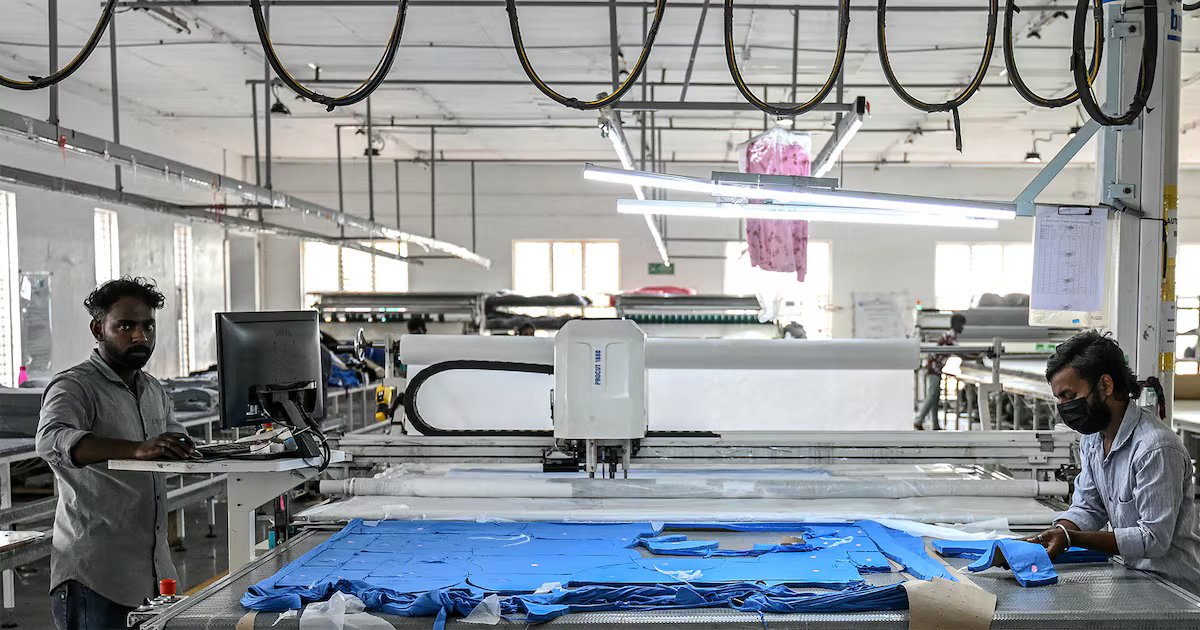
In total, the moves will reduce the overall levies on many Indian goods from 50 percent to 18 percent, representing a significant reduction on textiles, machinery and other goods. The US president said that India will also “move forward to reduce their Tariffs and Non Tariff Barriers against the United States, to ZERO” as well as purchase “over $500 BILLION DOLLARS of U.S. Energy, Technology, Agricultural, Coal, and many other products.”
“Out of friendship and respect for Prime Minister Modi and, as per his request, effective immediately, we agreed to a Trade Deal between the United States and India,” Trump posted on social media. “Our amazing relationship with India will be even stronger going forward.”
Modi confirmed the pact, posting on social media that “Made in India products will now have a reduced tariff of 18 percent.”
India’s benchmark stock index Nifty 50’s futures traded at the Gujarat International Fin-Tec City surged as much as 3.8 percent in thin trading, while the US-listed iShares MSCI India ETF hit session highs and rose as much as 2.4 percent. The rupee rallied in offshore trading, gaining 1 percent against the dollar.
The move offers significant relief for New Delhi, which has sought for months to negotiate a lower rate with Washington. India ships almost a fifth of its total exports to the US and Trump’s tariffs of 50 percent amounted to the highest rate on products from any major trading partner.
The high tariff rate had impacted almost 55 percent of India’s exports to the American market and threatened to unravel its ambitions of becoming a manufacturing powerhouse.
“While devil is in the details, it removes a hanging sword over rupee, equity and rates market,” said Nilesh Shah, managing director at Kotak Mahindra AMC. “Let us hope that it is a win-win deal for both the countries as they have lot to gain through cooperation.”
It wasn’t immediately clear a deal was imminent before Trump and Modi’s phone call. US Trade Representative Jamieson Greer said last Tuesday that while India had “made a lot of progress” on curbing Russian oil buys but “they still have a ways to go on this point.”
Lengthy Talks
India was among the first to open trade talks with the Trump administration, but ties soured after the US president repeatedly claimed credit for a ceasefire between India and Pakistan, an assertion that rankled officials in New Delhi. The tariffs further strained relations.
Signs of a thaw between the two economies emerged after Trump called Modi on his birthday in September, ratcheting down tensions and seeing the countries resume stalled trade talks.
The US president in November said he could visit India next year at the urging of Modi.
India has also taken a number of steps to appease Trump. Oil refiners have scaled back purchases from Russia after Washington imposed sanctions on Russia’s two biggest oil producers in October. More recently, India’s oil minister said state refiners had signed their first long-term deal to import American liquefied petroleum gas.
The deal comes as tariffs weigh on India’s economy. The US is its biggest export market, and the new levies have hurt labour-intensive industries including textiles, leather, footwear and jewellery. The latest trade figures show exports down nearly 12 percent in October from a year earlier, with the trade deficit hitting a record.
The Indian concession signals a meaningful shift in global oil market dynamics. The Asian country had emerged as a key destination for Russian crude after trade flows were reshaped by Moscow’s 2022 invasion, but that pattern is now starting to unwind. Shipments of Russian oil to Indian ports fell last month to around 1.2 million barrels a day, the lowest in more than three years.
The pullback leaves Moscow facing the challenge of placing crude already loaded onto tankers but unable to offload at refineries. The stranded barrels are adding to a growing pool of unsold sanctioned barrels, contributing to an emerging oversupply set to tank oil prices this year.
By Skylar Woodhouse and Shruti Srivastava
