
After the Mexico City International Airport (AICM) re-established its policy of denying ride-hailing apps and unauthorized taxis from operating on the grounds, Uber responded defiantly.
Company officials noted that its lawsuit against the policy has yet to be adjudicated and, last October, a federal judge ordered an end to “arbitrary fines and detentions” until it is resolved. In the meantime, Uber drivers continued to pick up passengers at the AICM this week.
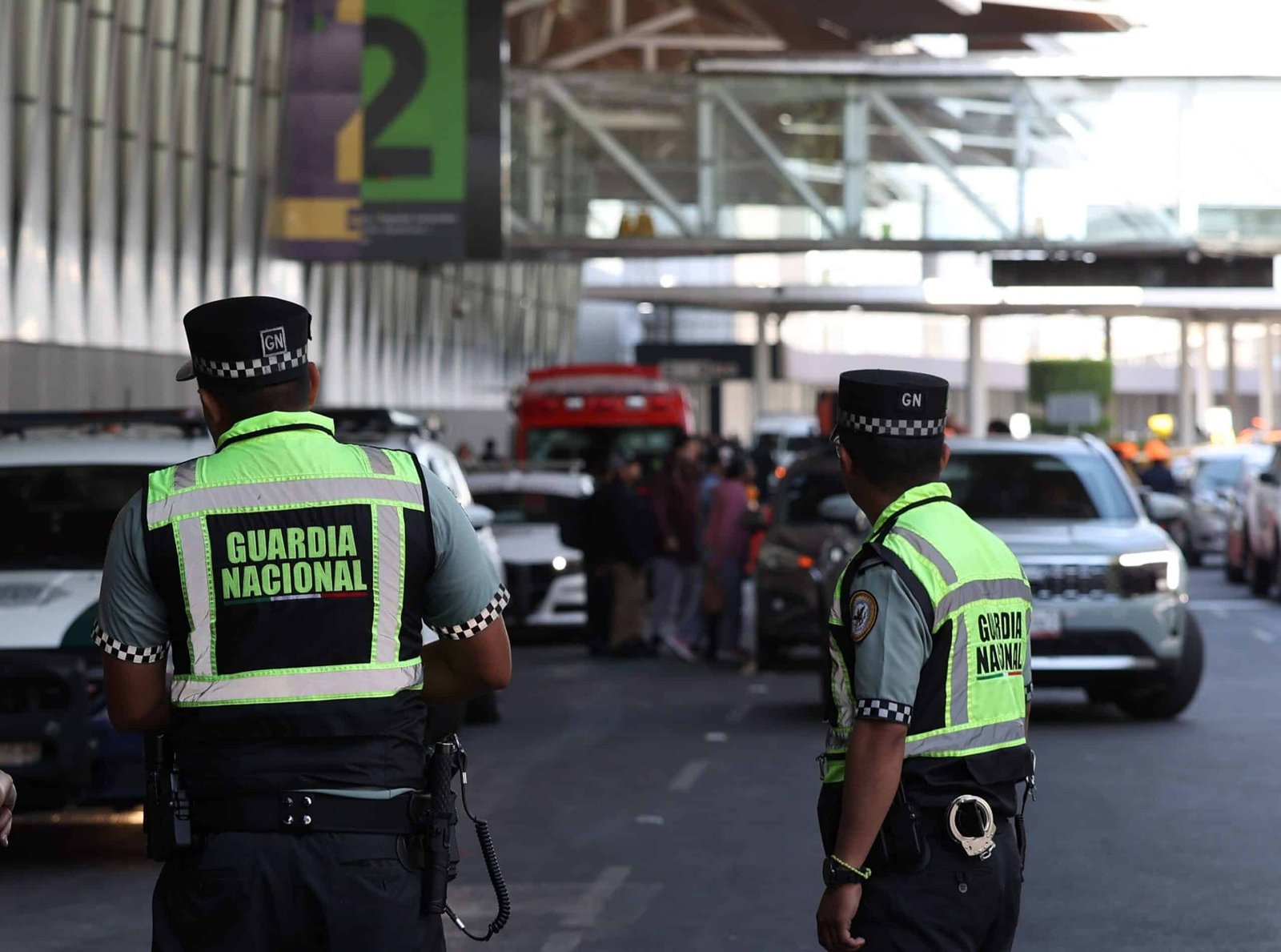
National Guardsmen patrolled the grounds of military-operated airport on Thursday, stopping and issuing warnings to rideshare drivers who arrived to pick up passengers.
“For now, violators are only receiving a verbal warning, a reprimand,” one Guardsman told El Universal. “However, if we notice a repeat offense, the car will be towed to a vehicle impound lot.”
The reimposition of the restrictive policy occurred after dozens of licensed drivers representing the 11 authorized airport taxi companies used their cars to blockade access to Terminals 1 and 2 on Wednesday, snarling traffic and forcing passengers to haul their luggage as much as 2 kilometers to reach their gates.
The airport and the taxi companies insist the judge’s injunction does not allow Uber to operate at airports, it simply prohibits the arrest of drivers and “arbitrary fines.”
Late Wednesday, the Transportation Ministry (SICT) issued a statement affirming that “Uber is not authorized to provide services within the area of the Mexico City Airport and other airports.”

The SICT also said authorities may issue citations to enforce the rule as long as they do so “in accordance with established regulations.”
Uber insists the ruling allows them to freely operate at airports, arguing that the airport authorities could themselves face sanctions for ignoring the injunction.
This week’s action by taxi drivers was prompted by proposed legislation that would allow ride-hailing apps to operate on all federal properties, which the protesters say would threaten their livelihoods.
The new bill aims to level the playing field with regard to insurance and tax regulations, while establishing equivalent controls for all participants — and comes just in time for a flood of World Cup visitors who may prefer familiar apps over Mexican taxi services.
The court case seeks to dismantle the closed market taxi system at airports across the country. Mexico’s regulatory authority has twice taken action against the Marina Airport Group, the Mexico City airport authority, for collusion, fare-fixing and anti-competitive practices.
Taxi drivers announce blockade at Mexico City International Airport
The conflict has escalated since 2022, after the federal government tightened the ban on apps that pick up passengers in federal airport zones, protecting the companies taking advantage of a captive market.
In the meantime, travelers might have to dodge National Guardsmen to board rides booked through digital platforms. Those doing so on Thursday told La Jornada newspaper that Uber fares are significantly cheaper than licensed taxis.
According to financial correspondent Mario Maldonado, licensed taxi services at the AICM cost between 87% and 282% more than Uber, and between 239% and 672% more than DiDi, depending on the destination and the website consulted.
With reports from La Jornada, El Financiero and El Universal
