
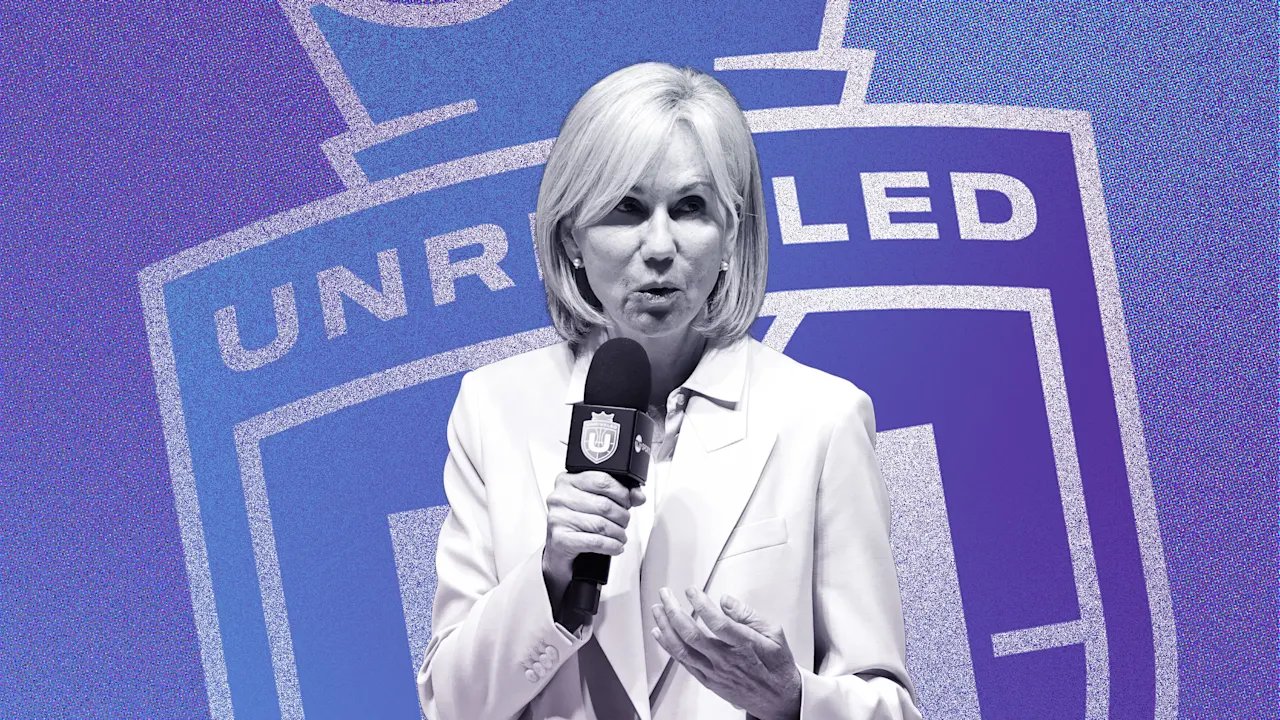
Women’s sports continue to thrive. Record-breaking WNBA viewership, a flood of new brand investment, and now Unrivaled: the women’s basketball league built by players, for players. Commissioner Micky Lawler pulls back the curtain on what it really takes to launch a high-stakes sports startup in the full glare of the public eye. The question is no longer whether women’s sports can compete. It’s how fast they can grow.
This is an abridged transcript of an interview from Rapid Response, hosted by the former editor-in-chief of Fast Company Bob Safian. From the team behind the Masters of Scalepodcast, Rapid Responsefeatures candid conversations with today’s top business leaders navigating real-time challenges. Subscribe to Rapid Responsewherever you get your podcasts to ensure you never miss an episode.
I first came upon Unrivaled last year around this time. I’m a basketball fan, but other 3-on-3 leagues didn’t really connect for me. But Unrivaled, it grabbed my attention right away. The format, the players, the model of playing in one location in Miami, adopting what the WNBA did during the pandemic bubble, it’s fun.
You felt what I felt when I first heard about it. I loved it from the start. I could see it, I could feel it. And what’s not to like about the name, Unrivaled?
And the timing for the league when it came out was great. It was just as the Caitlin Clark mania was surging, although I know Caitlin hasn’t competed on Unrivaled. But women’s leagues overall were accelerating, the WNBA, the NWSL. How much did that timing matter for you?
Look, I’ve spent a lifetime working in professional sports, and in particular in tennis, most of it in women’s tennis, and so I could see the momentum. And sometimes the world has a way of working in mysterious ways, because the timing was also perfect for me, having just retired from the WTA.
Were you into basketball before this? I mean, your life was obviously tennis, so that was where your time and your energy was focused.
When you work in sports, it’s your microcosm, so I was very familiar with the opportunity of women’s basketball, and I always loved it. When my kids played sports, basketball was my favorite season because it’s so much fun to watch. And I did play in high school, very badly, so basketball was not entirely foreign to me, but it’s like you lived in San Francisco and now you’re moving to New York. It’s the same country, but it’s two very different cities. Does that make sense?
Yeah. Part of Unrivaled’s appeal for the players is financial. WNBA salaries remain modest. Players generally have to look for other paying gigs in the off-season. It’s why Brittney Griner went to Russia. You’re offering sort of an alternative to going overseas. Your salary pool isn’t enormous, but there are other benefits, including equity. This is part of the selling point to the players is the financial opportunity, and I guess the vibe in Florida where Unrivaled happens.
As a professional athlete, when you are competing six months of the year, you need to have another source of competition. Income, yes, but also competition. You need to stay sharp, you need to stay in shape, you need to keep working on your craft, on your game. So both Breanna and Napheesa are mothers, and for them it was increasingly difficult to go overseas for three months, and also for their own brand exposure in the market. So we looked at this as a way to really build the entire ecosystem of women’s basketball and support what clearly is a very interesting league, which is the WNBA.
SAFIAN: Yeah. You’re separate from the WNBA, right?
LAWLER: Yes. Yes.
But as you say, you travel in these concentric circles with players and media partners and sponsors. How do you approach that relationship?
Well, we have 54 WNBA players here in-house, so our approach is to really deepen the focus on players, getting them into the public eye. And so, we hope that this is all very, very positive and good for the environment in which the WNBA operates. So the relationship is complimentary.
You’re deep into Unrivaled’s second season. The playoffs start February 28th, the end of the month. The business of the league keeps evolving. More sponsors, more facilities, more teams. You added the 1-on-1 tournament mid-season, took the league on the road to Philadelphia, and the semi-finals will be right near me at the Barclays Center in Brooklyn. This sort of business roadmap, how does it compare to your efforts growing the WTA? How much do you look at and focus on, what’s the lowest hanging fruit, what’s easiest to get versus long shot plans?
At the WTA, you have a structure where owners, tournaments, and players sit on the same board. There’s a 50/50 ownership. The players, they’re not contracted by the WTA, so they are self-employed and they have their own commercial rights. So the tour has to try to elevate the whole thing with limited assets, getting to a point that perfects the pressure on the players, not overstressing them, but you also have to answer to players number one to 250. And the number one is going to play many more matches. But in any case, it’s a lot to juggle.
Over here you’ve got a clean slate and you’re giving players real equity from the start. So the players were very, very fast to understand that the more Unrivaled grew, the better for them from every angle. The more that they could participate in telling brand stories, the more their own story would be relevant. So it’s completely different because you don’t have to argue about the value of social media like we did with the WTA many years ago. We need to change the media requirements from a post-match interview to giving some time to the social side. In tennis, that took a long time. Here it’s front and center.
They want to be doing it.
They understand the holistic side to the business, that it’s not just about being a phenomenal basketball player. You have to be good at social. You have to serve the press, serve all your fans, create an environment that is community. If I had any doubt that this was going to work, well, that was quickly gone because of the intensity of the fans and the intimacy. Sephora Arena is a place where you come to be very happy and entertained, and you see just stellar performances.
The players are aware that it’s a start-up, but they’re also aware that everything goes to serve them. We are highly, highly focused on making sure that they have everything that they need. Having two player founders in Breanna and Napheesa, we know they need a glam room. They need, of course, a weight room. They need training, and a very good training room and a training team. The best childcare. Saunas. Infrared for inflammation and recovery. I can’t do it justice.
I loved the 1-on-1 tournament that happened.
Yeah.
When you go to the players and you say, “Hey, what about doing a 1-on-1 tournament?” Are they like, “Oh, that’s great. We play 1-on-1 against each other all the time,” or are they like, “Oh, I don’t know. It’s more work for me”?
Both. You have the players that shy away from it a little bit, but once they play, they’re all-in. And it is, again, the crowd was so into it. The men talk about it, how much they would love it, and so we did it. And these women, they leave no stone unturned. They fight.
Well, that was part of what I loved about it. They looked exhausted. You could physically see they’re not dogging this. Sometimes in an all-star game, you can tell the players are a little sort of – they’re in it.
Totally in. Personally, in year one I thought, “Oh my gosh, this is starting to look like a tennis tournament. Is this the right place?” But it has been a big success. Players love it.
