
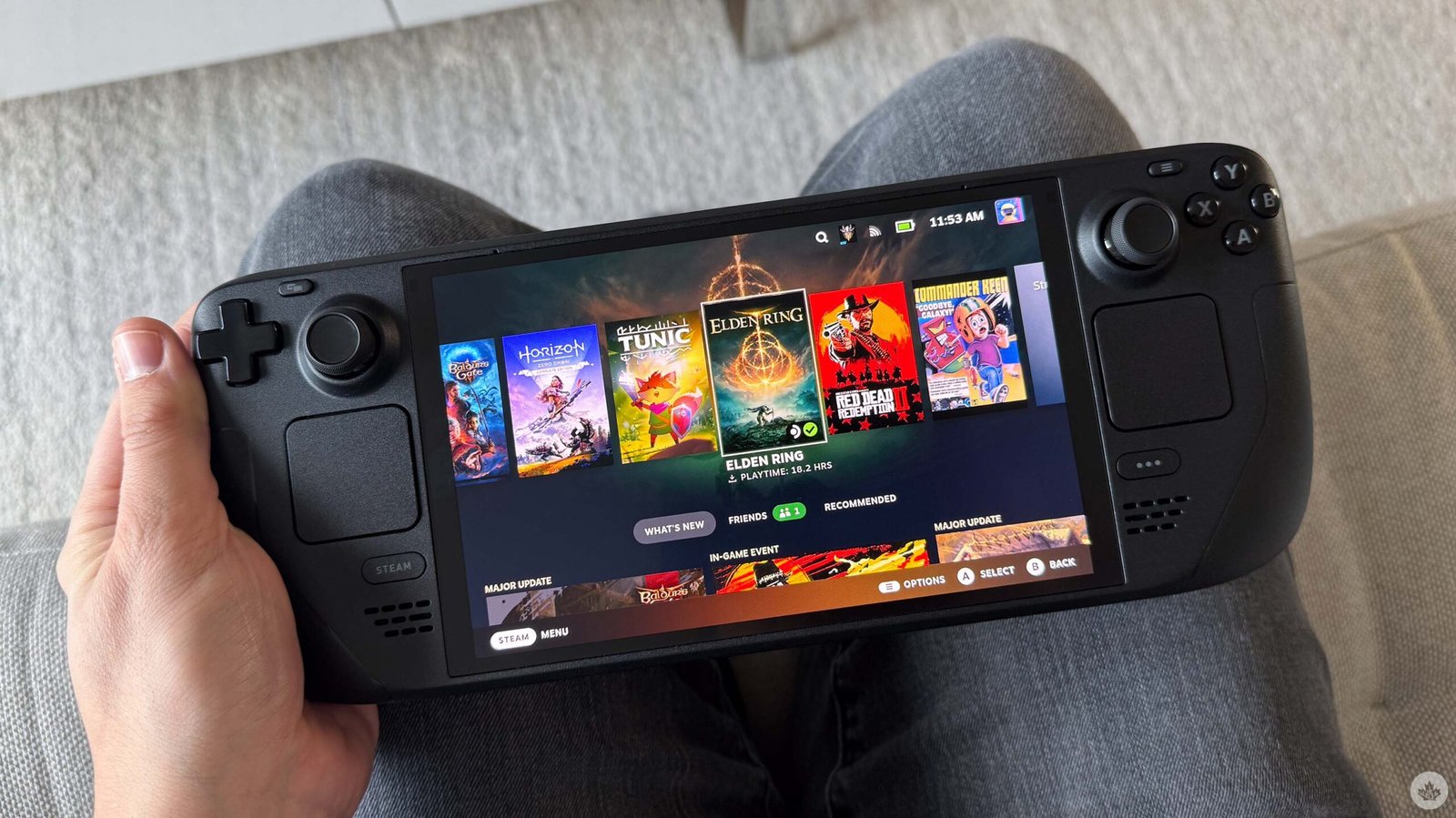
While Valve may have dropped a ton of new hardware yesterday, it didn’t upgrade its hit handheld console. However, multiple publications got invited to the company’s headquarters and have shared why we’re still waiting on the next Steam Deck.
According to a report on Gizmodo, it boils down to Valve wanting to ensure it can achieve a perfect price-to-performance sweet spot. We’ve seen numerous other handhelds emerge in the past year or so that offer more power than the Steam Deck, but they achieve this by drawing more power, which can result in subpar battery life. Even the Nintendo Switch 2, with all the weight of Nintendo’s custom Nvidia chip, can only last about 30 minutes longer than the first Steam Deck when playing AAA games like Cyberpunk 2077.
It is impressive that the Switch 2 can last longer and provide higher-resolution handheld gameplay than the Steam Deck, but from Valve’s perspective, I imagine that it’s not enough of an improvement to warrant a new handheld. Especially since the Steam Deck isn’t going to sell nearly as much as a Switch, so the company can’t play hardball with a GPU company to get the best deal possible.
That being said, Valve is also trying hard to make sure they can keep the price point the same for the next model, which means the Steam Deck 2 will need to undercut the Switch 2 but over $100 and be as powerful or more. It’s going to be possible, but it will likely take a few more years for mobile GPU/CPU hardware to hit the sweet spot, unless the company does some magic with ARM chips like Apple has done with its M-series.
And Valve is working on using ARM chips. Notably, the new Steam Frame VR streaming headset uses a Snapdragon Series 8 chip, which was the flagship model a few years ago. Perhaps if things go well with that, the company will look towards using more ARM chips down the line. In an interview with IGN, the company said it’s looking for something better than a 50 per cent improvement at the same battery life, so to me this feels like a solution that’s primed for ARM gaming, but is still likely a few years away.
