
Directed by Patrick Hughes, War Machine opens with an unexpected sense of grandeur. A light blue title hangs over a black, star-studded sky – an image that immediately evokes classic science fiction and subtly recalls the vastness associated with films like Star Wars. Yet the title itself suggests something far more grounded: a gritty, conventional army drama. Going in blind only heightens that initial disorientation, and that tension between expectation and reality ultimately works in the film’s favour.
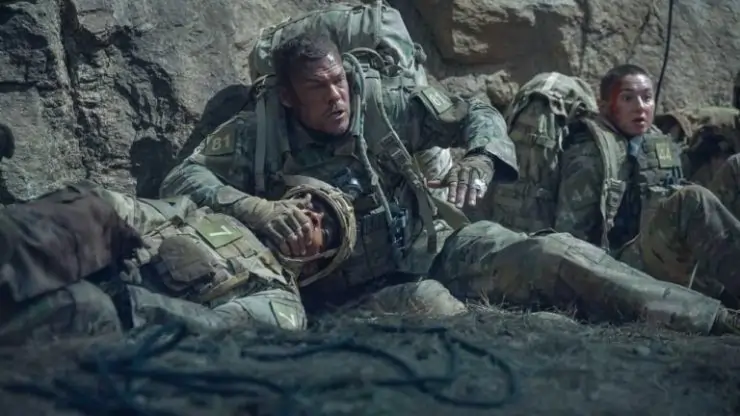
The premise is deceptively simple. The final recruits of an Army Ranger selection course find themselves confronting a deadly force from another world. There are no labyrinthine political subplots or heavy-handed philosophical tangents. Instead, Hughes drops us straight into the wilderness alongside his soldiers and allows the chaos to unfold in real time. The stripped-back narrative gives the film momentum; it feels urgent and immediate, rarely pausing long enough for the audience to catch its breath.
The early camaraderie between brothers, played by Alan Ritchson and Jai Courtney, provides the film’s emotional foundation. Their dynamic feels natural and unforced, grounding the explosive spectacle in something recognisably human. When events inevitably take a darker turn, that warmth makes the loss and violence hit harder. Ritchson, in particular, carries much of the emotional weight. His portrayal of a soldier battling grief and PTSD – completing the programme he and his late brother once dreamed of finishing together – adds surprising depth. He convincingly balances the image of an almost literal “war machine” – physically imposing, disciplined, relentless – with flashes of vulnerability that reveal the psychological toll beneath the surface. The exploration of men’s mental health is handled sincerely and without melodrama, which makes it all the more effective.
Stephan James offers a compelling counterpoint as a more emotionally transparent member of the squad, tempering the testosterone-heavy dynamic with loyalty and heart. His presence adds texture to the group and prevents the ensemble from becoming one-note.
Visually, War Machine is striking. The sweeping, immersive cinematography captures vast green landscapes that occasionally recall the naturalistic beauty of The Thin Red Line. The contrast between serene wilderness and sudden extra-terrestrial terror heightens the film’s impact. The visual effects are crisp and polished, rendering the alien threat both tangible and formidable rather than cartoonish. Meanwhile, the harrowing, drum-led score maintains a relentless tension, driving the action forward and mirroring the soldiers’ escalating panic.
Admittedly, the script leans into familiar tropes, and many of the narrative beats are predictable. The central mystery surrounding the alien machine – where it came from, why it arrived, and how it reached Earth – remains largely unexplored, which may frustrate viewers looking for deeper world-building. Yet something is refreshing about a film that understands its identity. It doesn’t overreach or pretend to be more profound than it is. It delivers an action-packed, sci-fi survival thriller with conviction and craft.
At times, it feels like The Incredibles colliding with War of the Worlds – familial devotion wrapped inside large-scale alien warfare. It’s hard-hitting, visually slick and emotionally grounded enough to give its spectacle substance. War Machine may not redefine the genre, but it knows exactly what it wants to be. It’s highly enjoyable, fast-paced and undeniably entertaining – even if it doesn’t quite rise to something truly distinctive or unforgettable.
★★ 1/2
On Netflix from March 6th / Alan Ritchson, Dennis Quaid, Jai Courtney, Jack Patten, Esai Morales, Stephan James, Daniel Webber / Dir: Patrick Hughes / Netflix / 15
