
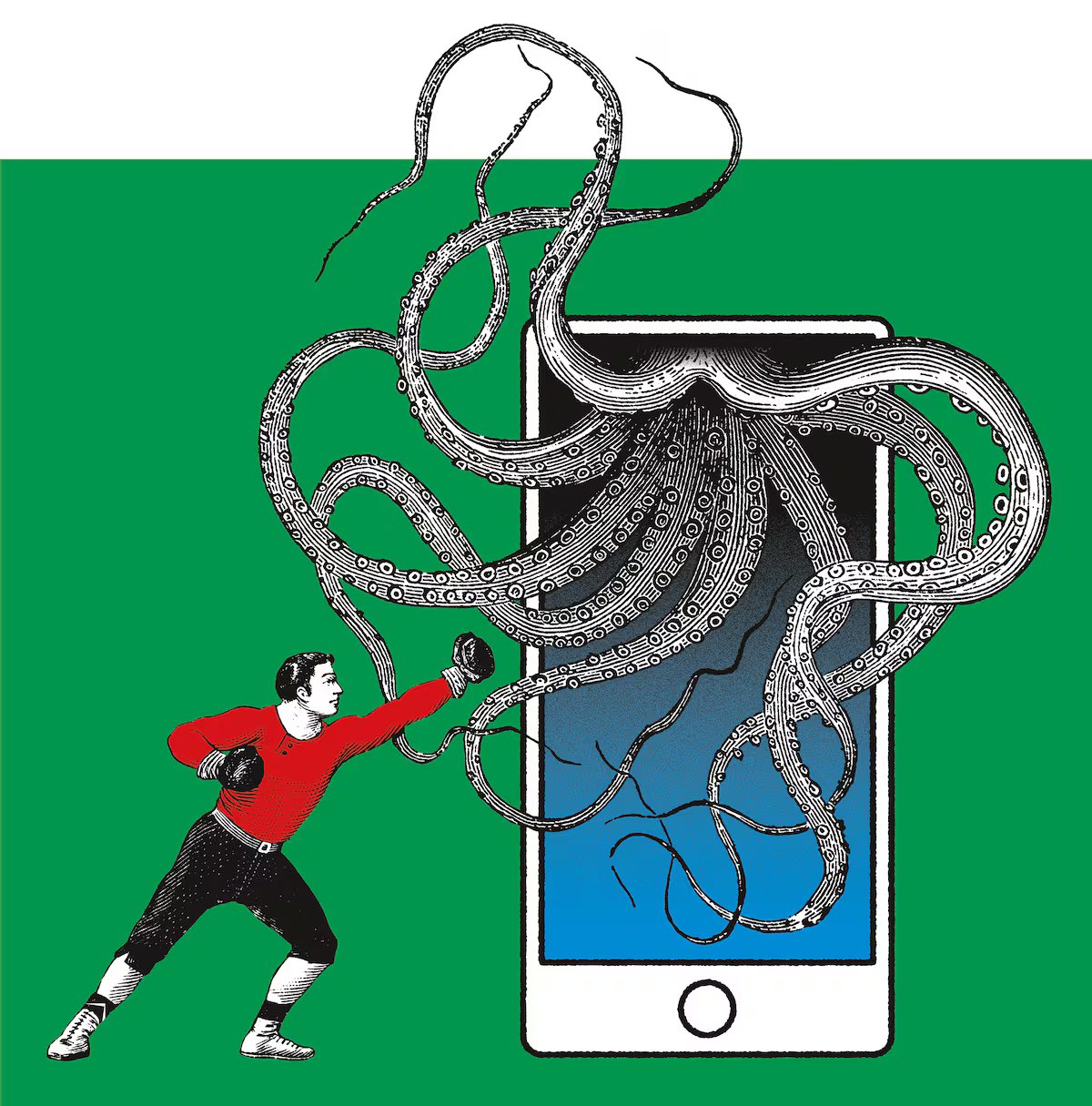
Technofeudalism has accelerated the neoliberal policies of the last 50 years: our jobs are at risk of becoming even more precarious due to the platform economy, and that’s if they even survive the onslaught of artificial intelligence (AI). Social media, once seen as tools at the service of freedom, are now perceived as a threat to democracy. And the owners of large technology companies, such as Elon Musk and Peter Thiel, support the populist authoritarianism of Donald Trump and the European far right.
This is a process that has been brewing for a couple of decades, but it has still caught us all by surprise. Especially those on the left. This is understandable: the right sees social networks as tools and oligarchs as allies, but the left has gone from enthusiasm for the democratizing potential of these instruments to disappointment, above all, due to their algorithmic manipulation.
What can be done in the face of this situation? The response from the left (and not only from the left) to the advance of technopopulism involves three related elements: a vindication of democracy against the power of large corporations, a defense of workers against precarity, as well as a commitment to technological sovereignty, so as to avoid dependence on the United States.
1. Democracy and algorithms
As essayist McKenzie Wark reminds EL PAÍS via video call, “this isn’t your grandparents’ capitalism.” In Capital Is Dead: Is This Something Worse? (2019), Wark writes that control of the means of production has been replaced by control of technology and the laws that regulate information. In this version of capitalism, we work for social media and provide the content, but its owners decide what we see and when we see it. Their model is similar to the “surveillance capitalism” described by Shoshana Zuboff, a philosopher and professor emerita at Harvard Business School. Big Tech – made up of firms such as Facebook and Google – collects vast amounts of data from billions of users, in the hopes of selling us personalized advertising, while predicting our behavior and influencing it.
As a result, decisions about our freedom of information and expression have been left in the hands of non-transparent private companies. This, in turn, affects our public debates, which become subject to the decisions of platform owners and executives, based on their political or economic interests (or both). This has been the case with X: since Musk bought the social network in 2022, its algorithm has been used to promote far-right messages.
One defense against this involves regulating social media, in order to prevent it from unduly influencing our democracies. Some countries, like the United Kingdom, have already announced bans on social media access for those under the age of 16. And, since 2022, the EU has implemented the Digital Services Act (DSA), which requires platforms to improve the transparency of their algorithms and protect minors from inappropriate content and targeted advertising. For example, on February 6, the European Commission demanded that TikTok limit infinite scrolling, noting that the platform’s design fosters addiction among minors. And recently, the Spanish government asked the Public Prosecutor’s Office to investigate Meta, X and TikTok for the creation and distribution of child pornography using AI tools.
The administration of Prime Minister Pedro Sánchez has also proposed a law that expands on some of these initiatives and introduces legal liability for platform executives whose companies publish illegal content. This has provoked an angry response from Elon Musk – who, on X, called Pedro Sánchez a fascist and “Dirty Sánchez” – and from Pavel Durov on Telegram, who attacked the government with an in-app message to all users.
Paloma Llaneza, a lawyer, has doubts about the scope of these measures: in her opinion, many countries have 19th-century legislation for 21st-century problems, meaning that governments are incapable of affecting companies that are headquartered elsewhere. Over the phone, she explains that “the most effective measures are the small and technical ones — not big announcements designed to grab headlines.” For example, tax reforms in Europe to require companies to pay taxes in the countries where they offer services, not just those where they’re headquartered. Llaneza also advocates in favor of holding platform owners accountable for their use, citing the case of Durov after his 2024 arrest in France on charges ranging from money laundering to complicity in the distribution of child pornography. Since then, Telegram has cooperated not only with the ongoing investigation, but also with police in other countries.
But this doesn’t address the underlying problem: much of our public life takes place on social media, where we have to follow these companies’ rules. So, should we abandon these apps and give up on participating in the public debate? In recent years, proposals for decentralized platforms, such as Mastodon and Bluesky, have emerged, offering no recommendation algorithms and giving users more control over the content they receive. In fact, many voices from the left are calling not only on the state, but also on public entities (universities, libraries, research centers, etc.) to invest in, or collaborate with, decentralized social networks based on free and open-source software — with content or servers, for example — while also engaging in other initiatives, such as setting up their own operating systems or browsers, in order to avoid dependence on American companies.
Another question is whether we should have granted these platforms the role of public forums, replacing other spaces for debate and activism. According to economist and trade unionist Bruno Estrada, one of the reasons that the message of left-wing parties isn’t reaching citizens is because they abandoned associations and groups where citizens used to organize to “fight collectively for the resolution of their problems.” Part of the left, he explains via video call, “decided that this was no longer necessary” and that direct contact and activism could be replaced by social media… yet another example of blind faith in a techno-utopia that was a mirage. In his opinion, this has impoverished and limited public debate and collective reflection. There have, however, been a few exceptions, such as the feminist movement and the labor movement, where activism has been maintained outside of social media.
2. The future of work
In a phone call with EL PAÍS, philosopher César Rendueles explains that technology has accelerated a process of liberal globalization and commodification of our society that predates both X and Meta. Therefore, platform capitalism affects not only public debate, but also our entire society, including, of course, employment. Companies such as Uber and Airbnb want to promote “the sharing economy,” a model in which they offer tools to connect workers with potential clients. But these companies don’t “share” with anyone; instead, their workers “engage in freelance versions of previously regulated sectors,” which increases their precariousness and vulnerability, as essayist Douglas Rushkoff writes in Throwing Rocks at the Google Bus (2016).
Regulation is also possible in this area. Furthermore, for the left, this is a key battleground for winning back their traditional voters: the working class. In many Western countries, a sense of stagnation has persisted for decades, compounded by housing crises. Estrada recalls that many of the left’s proposals materialized in a similar way as Swedish social democracy in the 20th century, when there were advances such as the expansion of public healthcare and education, as well as social and labor rights. However, in recent years, economic crises have generated great uncertainty and a frustration of expectations among many young workers, in a context where part of the center-left has aligned itself with neoliberal economic policies.
Therefore, it’s not surprising that some workers see the platform economy as an individualistic solution in a bleak context. Philosopher Stéphanie Roza explains via video call that capitalism wants to convince us that we can all be small-time capitalists and that, when we’re self-employed, “we’re free and have our own small business,” which masks and disguises precariousness. This is especially notable when we remember that many of these workers (like drivers and delivery workers) are immigrants, or the children of immigrants, as documented in her forthcoming book, Marx versus Big Tech (2026).
This situation is compounded by the potential impact of AI, which threatens to destroy jobs in numerous sectors, especially translation and programming. And this is without creating jobs to compensate for these layoffs, aside from precarious micro-jobs, such as data-labeling or fixing bugs. These are hidden, very low-paid jobs, traditionally found in poorer countries, highlighting the shortcomings of a technology that isn’t as artificial as it is often portrayed. A recent example: Mauricio Peña, the chief safety officer at Waymo (a subsidiary of Alphabet, Google’s parent company), has admitted that the firm’s supposedly self-driving taxis require assistance from workers based in the Philippines.
It’s difficult to assess the true impact of AI. Some analysts speak of stagnation or a bubble. But if the worst predictions for workers come true, thinkers like Rutger Bregman and entrepreneurs like Bill Gates propose taxing AI companies and those that replace employees with machines. The goal is to fund a universal basic income that would make paid employment unnecessary, or facilitate reduced working hours.
Rendueles supports decisive fiscal interventions, but reminds us that this cannot be an end in and of itself, but rather part of a process to reclaim our sovereignty as citizens. The objective is for “national parliaments to regain control of their economies, their public spaces and their technology.” Adela Cortina expresses a similar view in her 2024 book, ¿Ética o ideología de la inteligencia artificial? (Artificial Intelligence: Ethics or Ideology?, available in Spanish). The professor of ethics writes that we can influence the technological future through both regulation and the decisions we make as voters and consumers. The final word on what humans create should belong to humans.
3. Technological Sovereignty
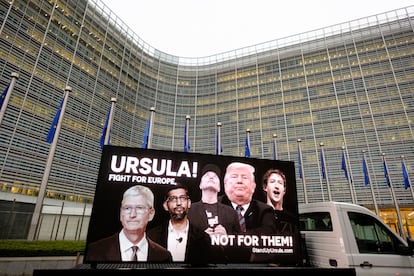
The regulation of AI and technology raises concerns, as some analysts fear it will stifle innovation. American companies can operate with fewer restrictions, while Chinese companies not only enjoy government support, but also experience tight state control over data and content, in a system of authoritarian capitalism that some applaud for its efficiency, but which is incompatible with democratic freedoms. In other words, regulation primarily affects European companies, which are left at a disadvantage. One symptom of this: among the 20 largest technology companies in the world, only two are from the EU (ASML and SAP). It’s not a catastrophic situation, but it’s understandable that memes have been made about how Europe is only a global power when it comes to bureaucracy.
The discrediting of legislation and state interventionism has been compounded by cuts to public services, especially after the Great Recession of 2008. Many workers (and aspiring young entrepreneurs) have been led to believe that the public sector is merely a hindrance. But this image is, at the very least, incomplete: economist Mariana Mazzucato writes in The Entrepreneurial State (2013) that many advances — including the internet, smartphones, jets and countless medicines — became profitable businesses because they received public investment when their success was still uncertain. And that’s not to mention how companies benefit not only from existing public infrastructure — roads, satellites, police security, electricity and telephone networks — but also from public contracts and subsidies. Even the most vocal critics of government spending, such as Elon Musk, have benefited from grants and public contracts, like those signed by Tesla and SpaceX.
Mazzucato proposes an alternative to American technofeudalism and China’s digital dictatorship, arguing that the state should become more involved in nascent ideas when private companies are still hesitant to invest — in exchange for receiving economic benefits. In other words, regulation should be accompanied by public initiatives that are ultimately compensated.
A more traditional idea is offered by Ezra Klein and Derek Thompson in their book Abundance (2025), in which they support the role of the state, but also the need to simplify bureaucracy, in order to foster infrastructure development and scientific research. The challenge lies in how to eliminate obstacles to innovation without sacrificing the protection of workers’ and consumers’ rights.
The left faces a difficult task in a world threatened by war, the climate crisis and the rise of technofeudalism. But, as Rendueles points out, perhaps this is a good time for the left to defend its own political, technological, energy and economic projects. From within the European Union, for instance, this now appears inevitable, because the alternative is becoming a vassal of a hostile and undemocratic American empire.
If this works out, the result may be paradoxical, yet reassuring: the main ally, not only of the left, but of an independent and strengthened Europe, will have been Donald Trump.
Sign up for our weekly newsletter to get more English-language news coverage from EL PAÍS USA Edition
