
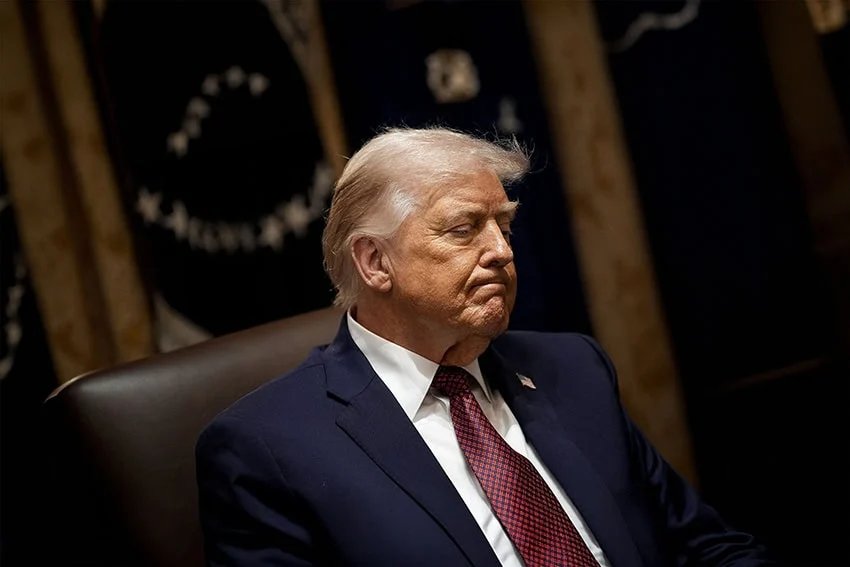
The U.S. Supreme Court ruled 6-3 on Friday that U.S. President Donald Trump improperly used a federal law reserved for a national emergency to impose sweeping tariffs on much of the world, and called the import taxes “unlawfully collected.”
The ruling strikes down many, but not all, of Trump’s tariffs, and will impact U.S. importers more so than countries exporting goods to the U.S.
As a formal trading partner, Mexico was exempt from many of Trump’s tariff but enough applied to cause pain. Among the tariffs affecting Mexico that the Court invalidated were reciprocal tariffs (25% to 50% levies on a variety of goods such as energy exports, automobiles, auto parts, and steel and aluminum products) and so-called fentanyl tariffs (25% tariffs imposed citing cross-border flows of fentanyl as justification).
Trump had established the global tariffs citing authorization under the International Emergency Economic Powers Act (IEEPA), declaring a variety of economic emergencies over issues ranging from fentanyl to undocumented immigration and trade imbalances.
That was the Trump tariff policy’s Achilles heel, and the Supreme Court aimed its spear directly at it.
“IEEPA does not authorize the President to impose tariffs,” read the decision by Chief Justice John Roberts, who added that Trump had improperly asserted “the extraordinary power to unilaterally impose tariffs of unlimited amount, duration, and scope.”
The U.S. Chamber of Commerce immediately called for “swift refunds of the impermissible tariffs,” although it had in mind U.S. importers, rather than the foreign exporters sending to the U.S. goods subject to tariffs. In a statement, it said getting money back “will be meaningful for the more than 200,000 small business importers in this country and will help support stronger economic growth this year.”
However, there remains much uncertainty about whether the decision will require the Trump administration to refund billions in tariff revenue it has collected this year. The majority offered no clarity on the specific practical question of what to do with the money the administration has already collected through Trump’s tariffs.
Trump himself said there are no plans to refund companies that paid for his tariffs because the Court didn’t address that in the ruling. Other U.S. government officials say potential repayments could have devastating consequences for the U.S. economy.
Justice Brett Kavanaugh cited that same concern in his dissent. “The United States may be required to refund billions of dollars to importers who paid the IEEPA tariffs, even though some importers may have already passed on costs to consumers or others.”
The Supreme Court has struck down Trump’s unlawful tariffs, which we’ve been paying for about a year now. This is good news for the American people – and it’s the latest proof that this president, no matter what he says, can be stopped. pic.twitter.com/J95DWVydKt
— Pete Buttigieg (@PeteButtigieg) February 20, 2026
On Wednesday, Sheinbaum had expressed hope that U.S. tariffs of 50% on Mexican steel and aluminum would be reduced, noting that the duties also apply to products derived from those metals.
Still, Expansión magazine reported that despite the Supreme Court ruling the White House retains legal alternatives to sustain revenue collection and trade pressure, suggesting that Mexico is likely to take a “wait-and-see” approach.
For example, Expansión noted that Section 122 of the U.S. Trade Act — an alternative instrument that authorizes temporary tariffs of up to 15% in the event of “large and serious” deficits in the U.S. balance of payments — “allows action without prior congressional approval, but only for a maximum period of 150 days.”
Indeed, hours after the ruling, Trump said he would sign an order to “impose a 10% global tariff under Section 122.”
With reports from The Associated Press, CNN, NBC News, Reforma and Expansión
