
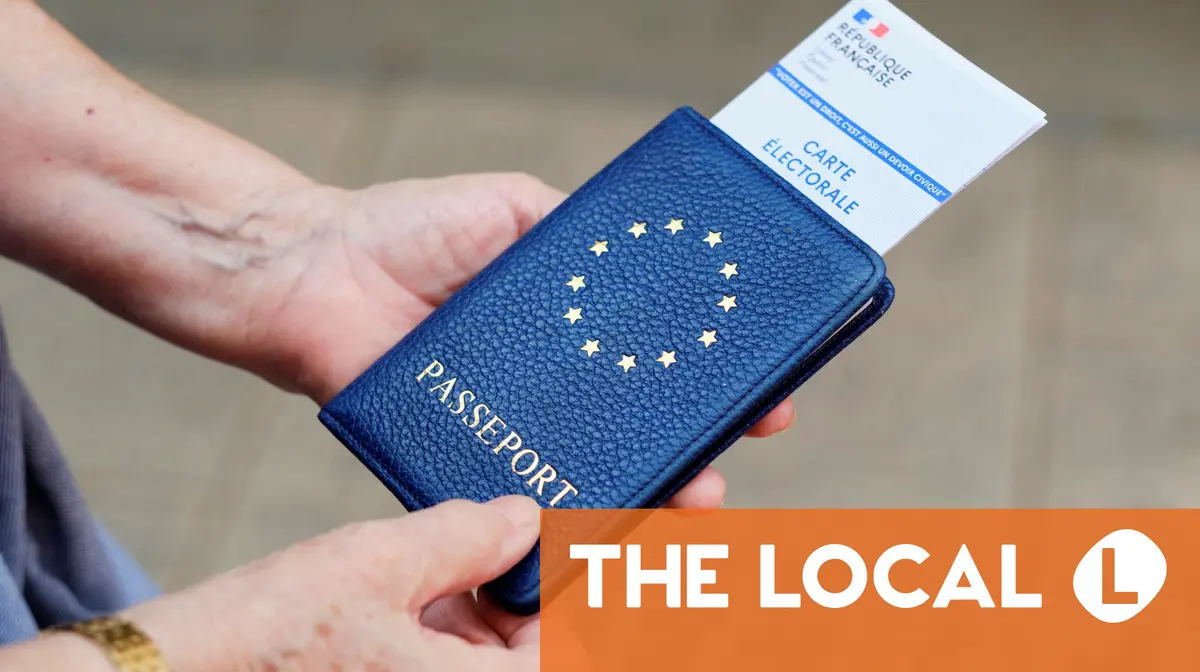
Many countries across Europe have tightened citizenship rules in recent years, but which have the toughest for gaining citizenship in 2026?
With EU and EEA passports conferring the right to work and live freely throughout the bloc, obtaining a new European nationality has been a long-standing dream for many migrants. If you’re one of them, the rules for doing so will depend on where you live.
Gaining citizenship through family or through marriage is possible, but if you don’t have any useful relatives or an EU spouse you’ll be looking at getting citizenship through residency.
From residency requirements to rules on dual nationality, every country in Europe has its own way of tackling naturalisation.
Here’s a run-down of some of the most sought-after European nationalities, how you can go about getting hold of one and how much the basic fee is, not including the certified translation of documents which can easily run into several hundred euro depending on how many documents you need.
Sweden
Sweden currently has some of the most relaxed citizenship laws in Europe, with no language requirement for new Swedes and only a five-year residency period needed to attain citizenship.
For anyone who has been married to or cohabiting with a Swedish partner for at least two years, this can be reduced still further to only three years, although you will be asked to show that you’ve adapted well to Swedish life (through learning the language, for example, but you could also prove this by showing you can support yourself or through the length of your marriage). There is also a quicker process for other Nordic citizens.
This is set to change, however, in June 2026, with parliament set to vote on a law which will almost certainly be approved at the end of April.
Under the proposed new rules, citizenship applicants will need to live in Sweden for at least eight years, with those who cannot prove their identity having to wait for ten years. The fee has also been more than doubled.
People who are partners to a Swedish citizen will be able to apply after seven years, so long as their partner has been a Swedish citizen for at least five years, and they have been living together for at least five years.
Refugees will also be able to apply after seven years.
Under the new rules, applicants will need to prove self-sufficiency through a salary or income from their own business, with the income requirement set at around 20,000 kronor per month.
While Swedish language skills are not currently a requirement for citizenship, this is also set to change from June 6th.
From that date, all applicants will need to prove knowledge of Swedish language (at B1 level for reading and listening and a lower A2 for speaking and writing) and civics (for example through a high school-level civics class). Crucially, the official citizenship tests will not be ready until August 2026 (civics) and October 2027 (language), and the new requirements will be applied to all pending applications from June 6th, even those who applied before that date.
This means that many people stand to have their applications automatically rejected from June 6th, even if they applied years ago.
It is also worth being aware that while the time needed in order to be eligible for citizenship is relatively short, processing time is not. The Migration Agency says applicants should expect an average of 47 months (almost four years) between submitting their application and becoming Swedish.
Readers of The Local have reported the process taking anywhere between a couple of weeks to over three years.
Application fee: Currently ~ €120 (1,500 kronor), set to increase to €250 (2,900 kronor) from June 2026
Length of time living in country: 5 years, set to increase to 8 in June 2026
Language level needed: None (plans to introduce language and culture tests retroactively from June 6th)
Dual nationality allowed: Yes
Advertisement
Germany
A major reform of Germany’s citizenship laws came into force in June 2024. Under the new rules, foreign residents can become German after five years of residence instead of the previous eight years.
Residents are also able to hold onto their original nationality while becoming German, something not possible in many other European countries. This law change to allow dual citizenship paved the way for many people to finally take the plunge and apply to become German.
However, becoming a naturalised citizen still entails a lot of paperwork. If you want to apply for citizenship based on residence, as opposed to by marriage or ancestry, you need to show that you’ve lived in the country legally for at least five years and have B1 level German skills. You also need to pass a citizenship test.
Some people aged 67 and older – such as those from the “guest worker” generation are able to naturalise so without a language or citizenship test – provided they can communicate with the authorities orally without a translator.
In addition to this, you’ll need to prove you can support yourself financially, often with copies of tax returns and/or bank statements and payslips. You’ll also need to complete an application form, and present your valid passport, certified translations of your birth certificate, and proof of valid health insurance.
Application fee: €255
Length of time living in country: 5 years
Language level needed (generally): B1 German
Dual nationality allowed: Yes
Advertisement
France
France has one of the shortest residency qualifying periods. For most foreign nationals, you’ll need to have spent five years in the country, but this can be reduced to two if you have completed postgraduate studies at a French university.
As you might expect, the main criterion for citizenship is successful integration. The French government has, however, toughened up the requirements.
From January 2026, you have to show at least a B2 level of French, regardless of whether you are applying for French nationality based on residency or marriage/family ties.
If you are applying based on residency – meaning you have lived in France a minimum of five years (two years in some cases) – then you must also pass the civics test. The civics test is not required, however, for people applying by marriage.
The civics test will be in addition to the existing integration interview.
Similarly, the government has also changed the income requirements for citizenship, using a much narrower criteria to define a ‘sufficient and stable income’ and tightening up rules on French-sourced income, something many older foreign residents find difficult to satisfy.
The Local has spoken to dozens of pensioners who have been rejected under this rule since May 2025.
Citizenship is also more expensive now. Under the new rules, the timbre fiscal required for applications for French nationality, whether by naturalisation (par décret) or by declaration, for example through marriage or family ties, will rise from €55 to €255 in May.
READ ALSO: EXPLAINED: France’s new income requirements for citizenship
For the applications based on residency, you submit your request directly on the ANEF website. In terms of paperwork, you will at minimum need to demonstrate a valid passport and French residency card, as well as certified translations of your birth certificate and those of your parents, tax returns and January and December payslips from the past three years, a rental agreement or proof of home ownership in France, a clean criminal record and a language certificate.
READ MORE: The ultimate guide for how to get French citizenship
After submitting your documents, you’ll be invited to your interview.
The processing time for applications is quite long. In some préfectures, your application could be processed in as little as 12-18 months, whereas others have reported wait times exceeding three years.
Application fee: €55 (rising to €255 in May 2026)
Length of time living in country: 5 years
Language level needed: B2 French
Dual nationality allowed: Yes
Advertisement
Spain
For most people wanting to become Spanish through the naturalisation route, a ten-year legal residency period in Spain and at least a basic level of Spanish are non-negotiable.
There are some exceptions to this stringent residency requirement, however, for citizens of Spanish-American countries, Andorra, the Philippines, Equatorial Guinea, Portugal, and those of Sephardic origin, who can be fast-tracked after two years, and for refugees, who can apply after five years.
These groups are also allowed to obtain dual nationality, while in most cases new citizens of Spain are required to give up their existing one.
They’ll also have to provide a certificate of at least A2 Spanish from the Cervantes Institute, as well as completing a multiple-choice citizenship test on aspects of Spanish life and culture.
The final part of the process (after the application has been accepted) is to swear loyalty to the King and promise to abide by Spain’s laws and constitution.
Application fee: €104.05
Length of time living in country: 10 years
Language level needed: A2 Spanish
Dual nationality allowed: Only in some cases
Italy
The residency requirement for non-EU nationals to obtain Italian citizenship through naturalisation is a hefty ten years.
To apply, you must also prove B1-level Italian language proficiency, sufficient financial resources, and a clean criminal record.
There are some exceptions: people with an Italian parent or grandparent born in Italy need only three years, and those born in Italy to foreign parents can apply before turning 19 if they have lived there continuously.
Foreign nationals who worked abroad for the Italian state for at least five years face no residency requirement but must meet all other criteria.
Italian authorities have up to 24 months to process applications, extendable to 36 months. Once accepted, you have six months to swear an oath of allegiance to complete the process.
The ten-year wait time for applications via residency looks set to remain in place after a referendum in 2025 on cutting it to five years failed to reach the minimum voter threshold.
Other than residency, the main routes to Italian citizenship are through marriage to an Italian citizen, which has a waiting period of three years, or by proving Italian ancestry, which has no waiting period or language requirement.
Italy drastically tightened the ancestry route in 2025, restricting eligibility to only those with a parent or grandparent born in Italy.
Application fee: €250 for residency and marriage based citizenship applications, €600 for descent/ancestry-based applications
Length of time living in country: 10 years for non-EU nationals; 4 years for EU citizens
Language level needed: B1 Italian
Dual nationality allowed: Yes
READ ALSO: Who is entitled to Italian citizenship by residency and how do you apply?
Advertisement
Austria
At 10 years of lawful and uninterrupted residence, including five years as a settled resident, Austria has one of Europe’s longest standard routes to naturalisation. That makes it a less appealing option for anyone looking for a quick path to EU citizenship. However, some applicants can qualify after six years, including people with B2 German, those married to and living with an Austrian citizen for at least five years, and those who can show sustained personal or professional integration such as long-term voluntary work.
Combined with relatively high fees and the fact that Austria has strict rules against dual nationality, it is perhaps unsurprising that Austria has one of the lowest naturalisation rates in Europe.
If you want to become a naturalised Austrian and think you meet the requirements, you must submit your application in person and provide a range of supporting documents. These can include your passport, birth certificate, proof of address and lawful residence, and evidence of income, though the exact documents required depend on your personal circumstances.
Foreign documents may also need to be translated into German and legalised. Applicants must also show B1-level German, pass the citizenship test, and prove that they can support themselves financially without relying on the state.
You will also need to show that you have no serious criminal record and have what the authorities describe as a positive attitude towards the Republic of Austria.
Austria’s government has also proposed reforms that would tighten the system further, including making B2 German the benchmark and introducing a mandatory citizenship course, but those changes are not yet in force.
Application fee: €163 to apply, plus around €1,202-1,600 if granted
Length of time living in country: 10 years
Language level needed: B1 German
Dual nationality allowed: No
READ ALSO: Five surprising Austrian citizenship rules you should know about
Advertisement
Denmark
Danish requirements for citizenship are some of the toughest in the world and could soon get tougher.
You must meet a number of closely-defined criteria and requirements in order to be eligible for Danish citizenship by naturalisation.
To qualify for citizenship in Denmark, you’ll need to not only have spent almost a decade in the country, but will need to have pretty good written and spoken Danish to boot. While many European countries settle for A2 or B1 language skills, the Danish government requires most migrants applying for citizenship to complete a language certificate known as Prøve I Dansk 3, which equates to B2 Danish.
The criteria and requirements in order to be eligible for citizenship by naturalisation fall into six broad categories based around allegiance and loyalty to Denmark, prior residency, financial self-sufficiency, a clean criminal record, employment, Danish language proficiency and a citizenship test.
Once you’ve got your nine years and know your rugbrød from your flæskesteg, you’ll be asked to sign a declaration pledging allegiance and loyalty to Denmark and Danish society and promising to abide by its laws. You also need to pass a citizenship test with questions about Danish life, culture and politics alongside questions about Danish values.
Once you get through all this and your citizenship application has been approved by the Danish parliament, you’ll be required to attend a ceremony at which you must shake hands with a local official. If you refuse the handshake, you can wave goodbye to your new nationality.
The Danish government is set to consider introducing interviews for certain applicants as part of the process, but this hasn’t, as yet, been put into law.
The fee for submitting an application currently is 6,000 kroner (€800).
It’s worth noting that citizenship has in recent years become a very politicised issue in Denmark.
The Ministry of Immigration and Integration recently placed processing of almost all citizenship cases on hold following the announcement of the general election, which takes place on March 24th.
Application fee: €800 (6,000 DKK)
Length of time living in country: 9 years, reduced in some cases
Language level needed: B2 Danish
Dual nationality allowed: Yes
READ ALSO: Requirements, costs and permits: 6 essential articles for Danish citizenship
Switzerland
Switzerland’s administrative system and bureaucratic idiosyncrasies can make applying for citizenship just a little complicated (to put it mildly).
Ten years is the minimum residency requirement on federal level, but cantons can decide how long an applicant must have been a resident there before being eligible to apply. Some cantons require applicants to have lived there for 8 years.
A campaign is under way however to reduce the residency period that would allow people to qualify for citizenship from 10 to 5 years.
Requirements include language proficiency in the national language of the canton. This generally means at least A2 written and B1 spoken German, French or Italian, but cantons are free to impose higher requirements if they wish.
Applicants also need to show a certain level of integration, be financially secure (i.e. not reliant on state benefits), and show a clean criminal record with no serious offences.
A peculiar aspect of Switzerland’s citizenship procedure is that it goes through the federal, cantonal, and communal levels. But it is the third one that has the most say in whether foreigners can be naturalised.
Applicants are also sometimes asked for specific examples of how they participate in the life of their towns or villages, and what local organisations they belong to.
Being a member of local choirs or volunteer fire brigades is particularly valued, as it demonstrates the willingness to be part of, and contribute to, their local communities.
This may explain why some people who seemingly qualify for Swiss citizenship because they have lived in the country for a long time, speak the language, and are gainfully employed, are turned down by local authorities.
One such example was a British café owner in canton Schwyz, who was denied citizenship after failing to answer a question about the origins of a Swiss cheese dish, raclette.
Another well publicised example was a Dutch woman living in Aargau, whose first attempt to get a Swiss passport was turned down because she complained about the noise of cow bells in her village.
In 2020, an Italian man was denied Swiss citizenship because he failed questions on the test about animals in the local zoo. The decision was however overturned by a federal court.
Application fee: €90 (100 francs) on a federal level or 150 Swiss francs for a couple, plus cantonal fees, which differ from one canton to another
Length of time living in country: 10 years (including three of the five years prior to the application being made)
Residency permit: Only those on a C permit can apply for Swiss citizenship
Language level needed: A2/B1 German, Italian or French
Dual nationality allowed: Yes
Advertisement
Norway
Norway has allowed dual citizenship since 2020, which has led to a surge in the number of applications. To be eligible for this sought-after passport, migrants have to notch up between five and eight years in the country on a valid residence permit depending on their circumstances – although unlike other countries, Norway’s immigration authorities do allow for some periods of absence.
After filling in an online application, you’ll have to deliver a series of documents in person, including a police report certifying “good conduct”. Applicants are told which documents they are required to bring to their appointment with the police.
You are also required to pass the official Norwegian language oral exam at B1 level, as well as passing a one-hour citizenship or social studies test which can be completed in either of the two written varieties of Norwegian (Bokmål or Nynorsk).
READ ALSO: Everything you need to know about Norway’s citizenship exam
Application fee: ~ €555 (N0K 6,500)
Length of time living in country: 6 of the past 10 years with “sufficient income”, five of the past ten years with a Norwegian partner or spouse, or 8 of the past 11 years.
Language level needed: B1 Norwegian
Dual nationality allowed: Yes
