
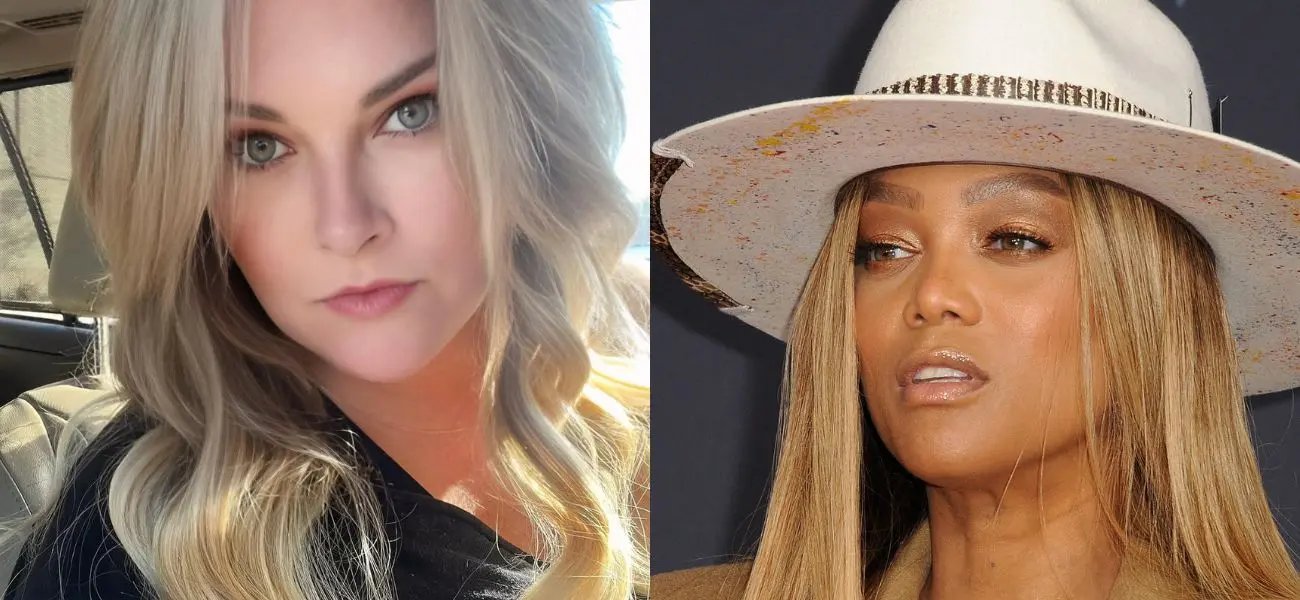
Whitney Thompson is pulling back the curtain on her time inside the “America’s Next Top Model” house, and the picture she paints isn’t glamorous. Ahead of Netflix’s upcoming documentary “Reality Check: Inside America’s Next Top Model,” the trailblazing winner is revisiting the emotional toll, body scrutiny, and behind-the-scenes moments that defined her historic win and nearly broke her along the way.
Article continues below advertisement
Whitney Thompson Says Making ‘ANTM’ History Came With Behind-The-Scenes Struggles
As the first plus-size winner of “America’s Next Top Model,” Thompson made history when she won Cycle 10 in 2008. But behind the milestone moment, she says the experience often felt stacked against her.
Thompson, who was just 20 years old and a size 6 when she entered the competition, revealed that something as basic as wardrobe became a source of humiliation and frustration. She told PEOPLE that not having proper clothes for plus-size contestants “felt intentional,” leaving her feeling singled out rather than supported.
Article continues below advertisement
Thompson Said She Cried In Secret While Cameras Rolled
With cameras rolling nearly nonstop, Thompson said privacy was almost nonexistent, except for one place. “I just pretended like it didn’t bother me, but, and I’m sure most of the girls would do this, I would cry in the shower every day,” she admitted. “Because the shower is the only place that the cameramen couldn’t come, so that was your safe place to release and be like, “Why are they doing this to me?”’
Despite the emotional toll, Thompson said she made a conscious choice not to give producers what they were pushing for, telling the outlet, “I knew that they were trying to poke me and get something out of me, so I just played it cool, like, ‘That’s fine. We’ll just duct tape my dress. No worries.”’
Article continues below advertisement
Whitney Thompson Says Judging Left Her Emotionally Exhausted
While the challenges were tough, Thompson said the judging process itself was even harder to endure. She didn’t mince words when describing the experience, calling it a “nightmare” and revealing just how intense the pressure became. “I took Xanax before every judging,” she admitted. “You’re standing there for eight, nine hours under those hot lights waiting for people to tell you that something is wrong with how you look. It was emotionally exhausting.”
At the center of it all was the show’s creator and host, Tyra Banks, whose panel critiques became a defining and often painful part of the competition.
Article continues below advertisement
Thompson Calls Fashion’s ‘Plus-Size’ Era Fake
Even as the modeling industry began embracing fuller figures, Thompson says the definition of “plus-size” remained rigid and unrealistic. She explained that acceptance often came with conditions that didn’t align with real bodies or real people.
“We would go with our pads to castings and photo shoots, and the padding would make our waist larger, our hips larger, but we’d still have the same jawline, arms and ankles,” Thompson revealed. “You could have a belly, but you still had to have a cut jawline.”
According to Thompson, inclusivity often felt performative, a trend rather than a transformation. as the industry clung to narrow beauty standards under the guise of progress.
Article continues below advertisement
Whitney Thompson Says ‘ANTM’ Fame Cost Her Work
Despite winning “ANTM” and building a successful career afterward, Thompson says the label of “reality TV star” followed her, and not always in a good way.
She explained that in an industry obsessed with anonymity, being recognizable could cost her jobs. “You were buying who I was on ‘Top Model,’” Thompson said. “If a brand wants a girl to just show clothes and they don’t want someone [recognizable in a catalog] because that takes away from their product, then you’re not going to get that job.”
Now, with the Netflix documentary “Reality Check: Inside America’s Next Top Model” set to revisit the franchise’s legacy, Thompson’s reflections feel like just the tip of the iceberg in a much larger conversation.
