
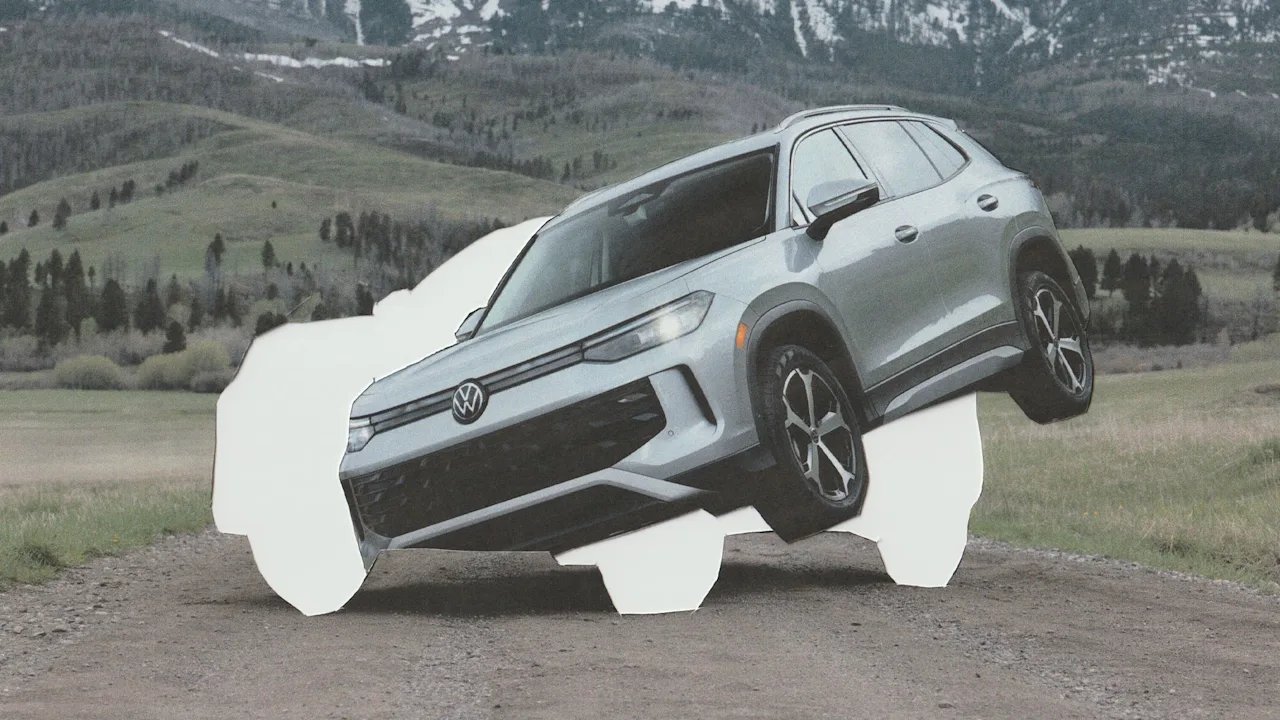
Volkswagen plans to slash 50,000 jobs in Germany by 2030 after reporting a sharp drop in annual operating profit for 2025.
Europe’s largest automaker is more aggressively cutting costs as increased competition in China and hefty tariffs imposed by the U.S. government are likely to make for a more challenging road ahead for vehicle sales. While the German company reached an agreement with trade groups in 2024 to cut 35,000 jobs by the end of the decade, it is now ratcheting up those restructuring plans.
In its annual report released on Tuesday, Volkswagen Group made dozens of references to what it terms a “challenging market environment” marked by “volatile geopolitical and geoeconomic conditions” and increasing competition. The owner of 10 car brands—including the eponymous one, along with Audi, Porsche, Lamborghini, and Bentley—is cautioning that these dynamics are likely to intensify ahead, and is even calling out the Trump administration as one of the sources of uncertainty.
“Growth prospects are also weighed down by continuing geopolitical tensions and conflicts,” the automaker said in its annual report. “Risks stem in particular from the Russia-Ukraine conflict, the confrontations in the Middle East, as well as growing uncertainties regarding the policy stance of the USA and the global increase of geoeconomic measures, which could further exacerbate geopolitical tensions.”
More pointedly, CEO Oliver Blume said in a statement that Volkswagen is now operating in a “fundamentally different environment” that warrants the new course it has set.
“We are facing trade policy barriers, completely changed markets, different regulatory systems,” Blume said on a media call, as Bloomberg reported. “The business model that has supported us for decades in the Volkswagen Group is not tenable anymore.”
U.S. TARIFFS WEIGH ON PROFITABILITY
Higher U.S. tariffs—currently amounting to 15% on imports of European vehicles and parts, 25% on vehicles imported from Mexico, and 25% on mid-size and heavy trucks—cost the automaker 2.9 billion euros ($3.36 billion) in 2025 and weighed on its profitability. Overall, the company’s 2025 operating profit of nearly 8.9 billion euros ($10.4 billion) fell 53% from 2024.
After Europe, Asia-Pacific is Volkswagen’s second-largest market, accounting for nearly one-third of vehicle sales. The company cites more competition in China as a headwind ahead, and indeed, vehicle sales fell about 4.7% in the Asia-Pacific market in 2025. But vehicle sales in North America really fell off a cliff last year, tumbling more than 12%.
MARKET FOR EVS
While Volkswagen has made a big bet on electric vehicles, it has hit a few bumps in the road recently. Last year, U.S. lawmakers terminated federal tax credits of up to $7,000 for customers who purchased new electric vehicles. Meanwhile, Chinese automaker BYD, which surpassed Tesla as the world’s largest EV manufacturer, is eyeing a major expansion into the European market.
As a result, vehicles with internal combustion engines will make up a “large share” of its portfolio ahead, and some models may be offered for longer, the company said in its annual report.
“In this challenging environment, we want to keep our combustion-engine vehicles technologically competitive, continue investing in exciting electric vehicles and the latest software solutions for our customers, and expand our regional presence, particularly in the United States,” Arno Antlitz, chief financial officer, said in a statement.
THE ROAD AHEAD
After reporting a slight dip in revenue in 2025, Volkswagen is forecasting only a modest revenue gain of between 0% and 3% in 2026, which is less than analyst projections.
The company is projecting that the global economy will expand in 2026 at a similar pace as 2025. That said, the Organization for Economic Cooperation and Development has forecasted that global economic growth could slow to 2.9% this year, from a forecasted gain of 3.2% in 2025.
Despite the relatively gloomy outlook offered by Volkswagen, investors were somewhat reassured by the new course the automaker has charted ahead—as VW stock rose about 1.4% in midday trading on Tuesday (though it’s still down nearly 15% this year).
