
Those of you who’ve been reading me for a while now, here and elsewhere, know that I have a keen interest in matters of income stratification and social class.
I grew up in a lower-middle-class household: My parents made it work paycheck-to-paycheck. Most of my clothes as a kid came from a family at our church who had girls slightly older than my sister and me. They were always hopelessly out of style, and one of my most enduring fantasies was being able to pick out my clothes for the day from a department store for free (when we got new clothes, they usually came from Walmart, which, honestly … the clothes there are not that bad).
Growing up not so rich
Any vacations we took were typically to the next city over — Austin, here we come! — for a day or two. We enjoyed some “upper-middle-class” advantages too: My grandmother paid for my ballet lessons and braces, for example. Her brother, my wealthy uncle, paid for our college educations. If it weren’t for that trust fund, I’d very likely be a secretary somewhere in Texas right now.
Basically, we grew up in the 1980s just as Reagan was changing the social contract in a way that made sure some would get to become fabulously wealthy at workers’ expense. (See Michael Moore’s “Roger and Me.”)
But then, here in Mexico, I was plopped into the “middle class” essentially by default, a disorienting change to be sure that I’ve still not completely grown used to. At first, I lived with my boyfriend in a two-room apartment with no bathroom door and an outside sink. We eventually moved to a place with an actual kitchen, and later, when I got a job at an American school, I bought my first car ever — a used standard shift Pontiac Matiz with no power steering. My arms got super strong!
Achieving a better standard of living
Later, the ability to “work in the U.S.” online while living here has essentially allowed me to achieve certain aspects of the American dream that would be out of reach in my own country. I still don’t — and probably won’t ever — own a home, but I do have a (nicer) car. And I rent a pretty nice home. And sometimes I can travel, just for fun.
While I’ve had my share of financial trouble, it’s a lot less than most people could ask for. Currently, for all intents and purposes, I’m leading a pretty upper-middle-class lifestyle. A few key factors may be missing at the ground level, but the veneer gives that effect, at least.
Pretty much all societies are stratified. And while economic and class differences appear in every society, I’ve found the particular shape of them in Mexico to be especially fascinating — and, let’s face it, often maddening.
‘Nosotros Los Nobles’
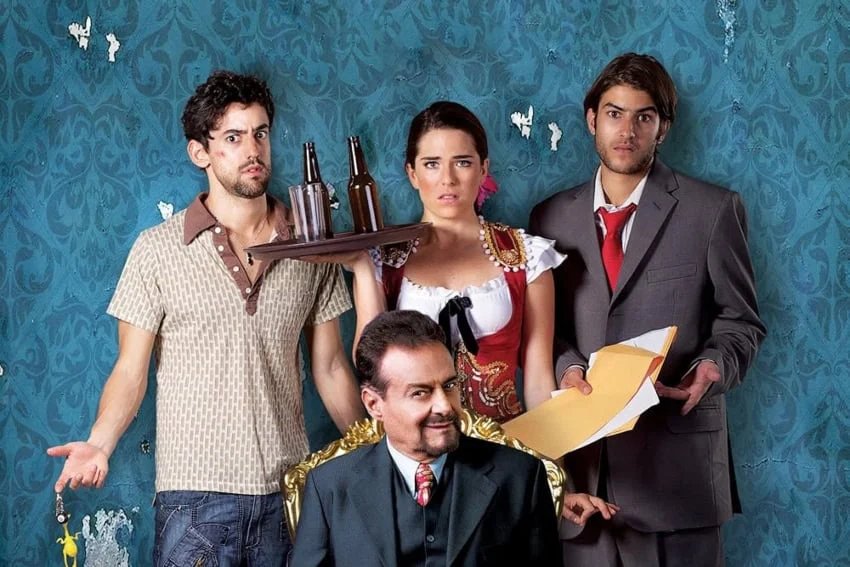
The Mexican movie “Nosotros Los Nobles” has been on my radar for a long time. While I’d seen clips of it here and there, I just now got around to watching the whole thing. It came out the year my daughter was born, in 2013, and, well, you know how hard it is to find leisure time when you’ve got a little kid.
But now she’s 12, so I made her turn off her emotional comfort show, “Bob’s Burgers,” and watch it with me.
“Nosotros Los Nobles” has a pretty predictable plot once you know the premise. It centers around a wealthy family — you guessed it, the Nobles! — with three adult children. The adult children behave as you’d guess adult children who’d had everything given to them might behave.
The patriarch of the family, the owner of a successful Mexico City company, is a serious and ethical hard worker. He looks around at his children: His oldest son, set to inherit the business, is a classic mirrey doofus who thinks he’s a genius. His daughter is a beautiful jerk, the kind who’s mean to waiters and easily insulted. His youngest son is a pot-smoking university student with a habit of seducing his older female professors. He enjoys both denouncing capitalism and being on the winning side of the game.
The patriarch decides something must be done, so he hatches a plan with his business partner. He stages it perfectly: The kids’ phones and credit cards are cancelled. When they arrive home, their cars are taken and the home is foreclosed. In a taxi, they go to an old, decrepit house, and the dad announces that they are broke and will have to get jobs.
With a palanca from their nanny’s nephew, the mirrey starts driving a bus. The princesa begins work as a waitress, and the hippie gets a godín job as a bank teller.
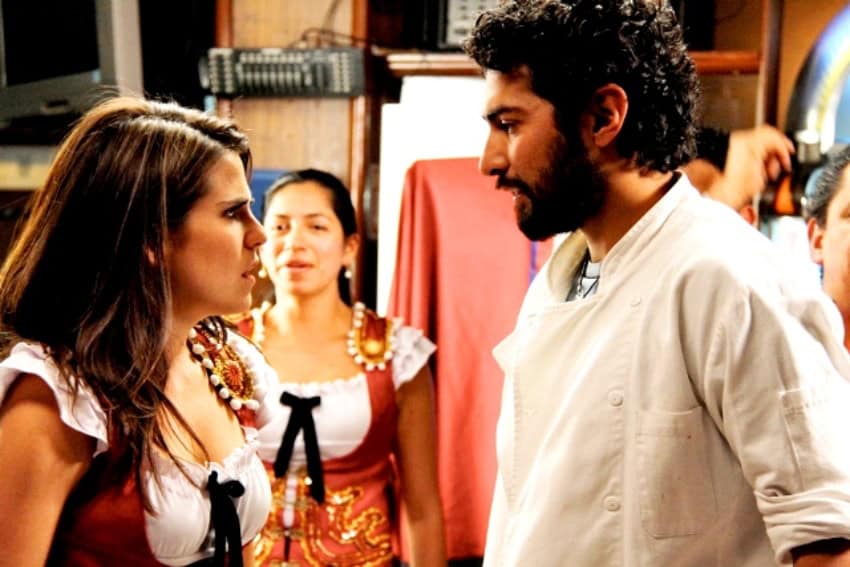
Because this is a somewhat predictable movie, they learn to cope and even sometimes find joy. There are a few happy dinners around their meager meals of tortillas and beans.
I won’t give away any more than that, but if you’re in Mexico, you can watch the movie on HBO.
Teaching the rich and privileged
Watching this hit home for me. Not because I’ve ever lived as this family has, but from my time teaching at an American school in Querétaro.
Most of the students, to be clear, were lovely, thoughtful human beings. Most of them also lived opulent lives compared to the rest of the country (and to me). And just like sheltered and privileged kids all over the world, most didn’t realize how good they had it.
Nearly all had full-time staff working in their homes for the family, and a few even had bodyguards waiting for them just outside the parking lot. Enough of them to make it clear the level of impunity they knew they possessed.
They were the children of the city’s elite. Personally, it was my first time interacting with this strata of Mexican society, and it was hard not to feel both shock and, yes, jealousy; we’d grown up in 100% different worlds, and it was hard to see such privileged people whine and complain about downright frivolities — as all teenagers do, to be fair.

When a kid who could barely write his own name pulled up next to me in a Jaguar one morning, I decided I’d just about had it. I felt, suddenly, that I was also a mere servant employed by these wealthy families who controlled the city. My skills were more intellectual than physical, but my role was clear.
Struggling with a new reality
“Nosotros Los Nobles” did very well, as you can probably imagine.
Collectively, one of our favorite types of stories is getting to watch people who think they’re better than everyone else get cut down to size. I don’t mean, like, physically tortured — see “Nuevo Orden” — but made to struggle like the rest of us.
Watching the characters struggle in their new reality and become better for it will always be a crowd-pleaser. And while this is a very neatly wrapped-up narrative of the upper class versus the working class in Mexico, it’s still informative.
I no longer work at a school for the children of the upper crust. But, amazingly, one of my current neighbors is an ex-student of mine from that school. We grew up in very different worlds, it’s true. And I personally will never quite feel like I “fit in” with the class I’m currently a part of here in Mexico.
But those differences are few when it comes to the human experience. She is lovely and is now a good friend of mine. A breach that felt gigantic before no longer is. Is my newfound comfort a result of my own social mobility or simply a result of growing up?
In the end, “Nosotros Los Nobles” is a “here’s the worst” kind of movie. But “the best” is also out there.
Sarah DeVries is a writer and translator based in Xalapa, Veracruz. She can be reached through her website, sarahedevries.substack.com.
