
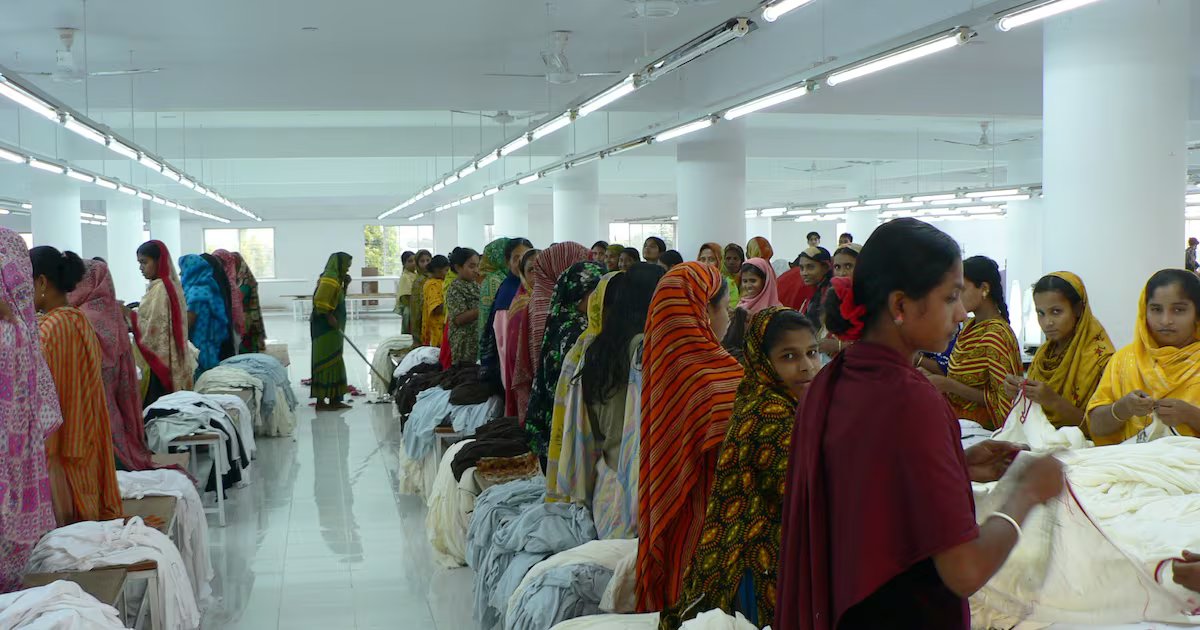
🌏 Asian garment manufacturers are bracing for renewed US tariff volatility. After the US Supreme Court struck down Donald Trump’s ‘reciprocal’ levies, the US president introduced a new global tariff at 10 percent, instead of the 15 percent rate he announced over the weekend, although the White House signalled that the higher rate “will come later,” without specifying a timeline. China and India are among the biggest winners from the court ruling, which invalidated higher rates, alongside Brazil and Mexico. At 15 percent, the new tariff would leave exporters in most South and Southeast Asian countries — including Sri Lanka, Pakistan, Vietnam, Cambodia, the Philippines, Indonesia, Malaysia and Thailand — marginally better off, but it would erode rate differentials that had given some countries a competitive edge. In Japan, South Korea, Turkey and Jordan, exporters would be largely unaffected as the old rate was already set at 15 percent.
🌎 In Latin America, however, exporters would face a higher rate in countries including Guatemala, Honduras, the Dominican Republic, Peru, Chile, Argentina and Colombia. The recent US extension of AGOA should shield African exporters until at least Dec. 31. But even in countries where the new 15 percent tariff amounts to a reduction, business leaders are wary. In Bangladesh, whose previously negotiated tariff was 19 percent, suppliers are worried that ongoing turbulence could prompt US buyers to hold back orders to minimise risk exposure. American “retailers…are likely to import in smaller volumes. Overall exports could actually decline,” stated Bangladesh Garment Manufacturers and Exporters Association president Mahmudul Hasan Babu, describing the latest US tariff move as the “lesser of two evils.” But as Trump seeks alternative legislation to replicate the effect of the tariffs that were just deemed illegal, it is far too early to say where things will settle — or who will ultimately win or lose. [The Business Standard, New York Times]
🇧🇩 Bangladesh garment sector seeks stability after election. The Bangladesh presidential election, which delivered a win for Tarique Rahman’s Bangladesh Nationalist Party “ushers in fresh uncertainty for the country’s $47 billion garment and textile industry,” according to analysis by Ecotextile. “Industry leaders are pinning hopes on the new government to restore political stability after years of unrest, but both BNP and its Islamist allies have also pledged to reduce the economy’s reliance on apparel, raising questions over long‑term incentives for manufacturers.” The sector, which seeks stability and reform from the government, has faced trade instability in the key US market after US president Donald Trump imposed a 37 percent tariff on Bangladeshi imports before later reducing it to 35 percent, then 20 percent and finally 19 percent this month. Bangladesh previously paid roughly 15 percent. “The industry is in a critical condition, and if steps are not taken now, it can be worse,” said Mohiuddin Rubel of Denim Expert Ltd. “The tariff has been a big disaster,” Fazlee Shamim Ehsan, vice president of the Bangladesh Knitwear Manufacturers and Exporters Association, told Reuters, before the US Supreme Court struck down the tariffs on Friday, prompting Trump to replace them with 10 then 15 percent levies. [Business Standard, Ecotextile News, Reuters]
🇷🇺 Brazilian beauty major Natura & Co sells Avon’s Russia business. The São Paulo-based group most famous for its namesake cosmetics brand said it has reached an agreement with Arnest Group to sell the Russian arm of the Avon business for €26.9 million ($31.6 million). The Russian operations of Avon were excluded from Natura’s sale of Avon International, which covered operations in Europe, Africa and Asia, to US investment firm Regent last year for a nominal consideration. Nevinnomyssk-based Arnest, a manufacturer of cosmetics, perfumes and household products, was founded in 1971 when Russia was part of the Soviet Union. In recent years, it reportedly expanded rapidly by buying up local subsidiaries of Western brands that shuttered operations after the Russian invasion of Ukraine. Natura & Co. had offloaded Avon’s Central America and the Dominican Republic business earlier that year to Peru-based Grupo PDC. The US business of Avon, the Anglo-American beauty and personal care brand founded 140 years ago, was not owned by Natura & Co. [Valor International, CosmeticsBusiness.com]
🌍 African designer showcase debuts at London Fashion Week. Brand63Africa, a social enterprise that champions small-batch production, traditional craftsmanship and sustainable practices, presented six fashion brands from Africa and the diaspora including Ghana’s Christie Brown, Nigeria’s Abiola Olusola, Senegal’s Sukeina, Kenya’s Studio Namnyak and The Cloth from Trinidad and Tobago in the Caribbean. The platform was created “to give access and build meaningful, long-term pathways for designers of African heritage to the global luxury market,” said founder Eva Omaghomi, a communications strategist and former adviser to the British royal family. King Charles met with designers from the collective at last week’s event. Tanzania-born Lulu Shabell, founder of consultancy Lulubell Group, oversees the venture’s operations. Guided by a committee including former Condé Nast executive Vanessa Kingori and Industrie Africa founder Nisha Kanabar, Brand63Africa has linked arms with Harrods, where key looks from the designers’ collections will be stocked. [BoF Inbox]
🇨🇳 JD.com launches Joyexpress in Europe to support its e-tailer Joybuy. The Chinese e-commerce giant has rolled out an express delivery service in Europe as part of its Jingdong Logistics unit to deliver products from Joybuy, the company’s e-commerce platform for the region. The same-day and next-day delivery service is set to launch in major European cities in March. Joybuy, which is currently in the beta testing phase, sells items including beauty products and fashion accessories, from both regional and global brands. “We look forward to bringing our industry-leading technology and capabilities to the market and consumers across France, Germany, the Netherlands and the UK, while enhancing our supply chain logistics capabilities in sectors such as electronics, home appliances, fast-moving consumer goods and groceries,” said Axel Eggenwirth, last mile Europe senior director, Jingdong Logistics. [BoF Inbox]
🇳🇬 Nigeria-based pan-African e-tailer Jumia exits Algeria. The online retailer selling everything from fashion and beauty to electronics and food has exited yet another market on the continent, following exits from South Africa and Tunisia in 2024. “In the longer term, these changes to Jumia’s geographic footprint are expected to enhance operational efficiency and resource allocation, enabling the company to focus on markets with stronger growth trajectories and profitability prospects,” said the company in its latest financial report. CEO Francis Dufay previously committed to “breakeven on a loss-before-income tax basis in Q4 2026 and achieve full-year profitability in 2027” by strengthening the firm’s cost structure and sharpening “operational discipline”. Jumia now operates in Egypt, Ghana, Côte d’Ivoire, Kenya, Morocco, Nigeria, Senegal and Uganda. [Techpoint Africa]
🇮🇱 Israeli underwear manufacturer Delta Galil’s sales hit $611 million in Q4. The Caesarea-based, Tel Aviv-listed manufacturer of intimates, activewear, loungewear and denim including products for international licensing partners such as Calvin Klein, Tommy Hilfiger, Adidas, Wolford and Polo Ralph Lauren has recorded sales of $611.1 million, a year-on-year increase of 2 percent. Gross profit was up 5 percent to $263.2 million. Chief executive Isaac Dabah said the company had “successfully navigated the impact of US tariffs, expanded programmes with key global customers and delivered record sales driven by organic growth across most of our channels, geographies, and product lines,” during the quarter and year, while investing in factories and distribution centres “to improve efficiencies.” [BusinessWire]
🇧🇷 Brazil beauty giant Boticario sets world record in perfume marketing stunt. The Brazilian cosmetics and skincare brand used this month’s Recife Carnival as a stage to earn another Guinness World Record. Amid the festivities in the Pernambuco capital, the brand gathered 320 participants for a “perfume relay,” outnumbering previous record holders in Saudi Arabia. The marketing campaign was at least the second world record for the brand, which used a similar approach for an unboxing event in São Paulo in 2024. The brand’s Curitiba-based parent company Grupo Boticario has over 4,000 stores across Brazil, including mono-brand outlets and multi-brand chain Beauty Box, and operations in more than 15 countries. [Ad News Brasil]
🇦🇺 Australian jeweller Lovisa’s sales surge 22.7%. The company reported revenue of just over A$500 million (US$ 352 million) during the first half of the 2026 financial year, with gross profit rising 23.4 percent to A$412.9 million. However, according to Ragtrader, the group’s EBIT was impacted negatively by the “start-up phase of Lovisa’s ‘potential’ second global brand Jewells,” which contributed a $10.8 million EBIT loss. The retailer opened 85 new stores, including six Jewells stores in the UK, during H1 ending the period with a network of 1,095 stores across 50 markets. [Inside Retail]
🇦🇷 Argentina’s second city readies for shopping mall boom. Cordoba, which has a population of around 1.5 million in the city and double that in the metropolitan area, will soon see three new shopping centres built by local developers Dinosaurio, Proaco and Infinito Group. The city’s growing retail footprint for fashion and other categories comes as existing malls expand. Nuevocentro, Cordoba Shopping and Paseo del Jockey have seen brands like Tommy Hilfiger and Decathlon open recently or announced plans for new stores. [La Voz del Interior]
🇮🇳 Indian personal care group Dabur shakes up leadership team. The Ghaziabad-based conglomerate has promoted Mohit Malhotra to global CEO. Former Hershey executive Herjit Bhalla replaces him as the company’s India chief executive. The FMCG firm, which sells products in the haircare, skincare, wellness and food categories, including its namesake brand and Vatika, specialises in ayurvedic, herbal and natural formulations. [Economic Times]
🇦🇫 Alyaf Al-Madina Company opens landmark textile factory in Afghanistan. A new manufacturing facility producing synthetic fibres for textiles has launched in Mazar-i-Sharif, in the north of the country, marking an important step in the development of Afghanistan’s textile manufacturing sector. Company representative Mohammad Yousuf Ghafouri said the project was financed through private capital with local media citing a total investment of $1 million. [Kohan Textile Journal]
🇨🇳 Loewe names Eva Baquedano its China president in Shanghai The Spanish luxury brand has appointed the executive to replace Mark Shorten. Baquedano, who previously held management roles at Mango and McKinsey & Company, joined Loewe in 2019. She was most recently the Singapore-based managing director for Southeast Asia and Oceania . [FashionNetwork]
