
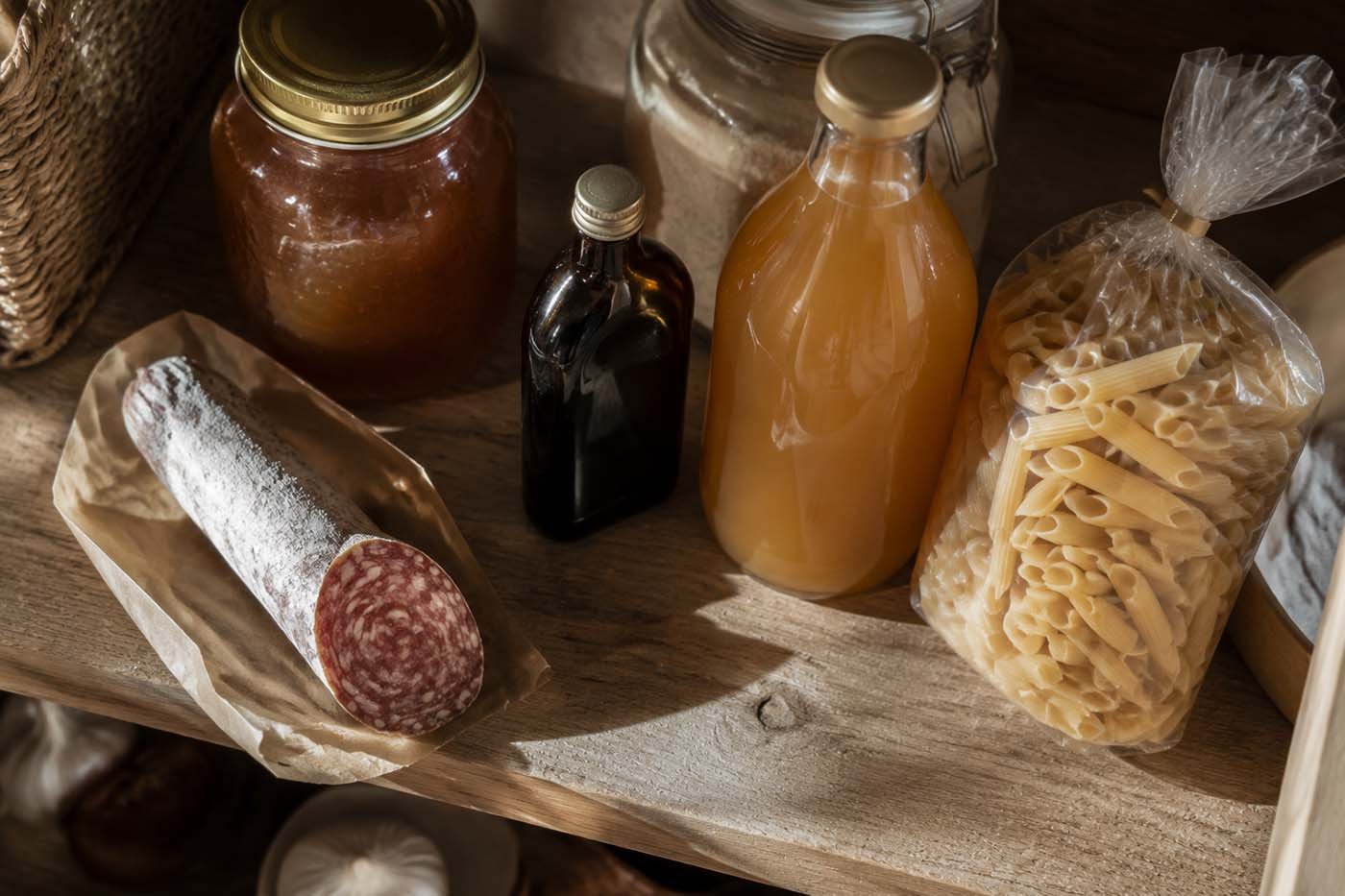
Most of us throw food out earlier than we need to, not because it is actually unsafe, but because “expiration date” and “safety” have gotten mentally merged into one thing. A lot of pantry staples are built, chemically, to resist spoilage almost indefinitely. Sugar, salt, alcohol, and acid are some of the oldest food preservation tools humans have, older than refrigeration by thousands of years, and a surprising number of foods in your kitchen right now are still running on that same chemistry.
Which foods are actually safe to eat long after the best-by date?
The short answer: A specific group of pantry foods stays genuinely safe well past the date on the package: those naturally low in available moisture, or high in sugar, salt, acid, or alcohol, resist the bacterial growth that causes most spoilage. That group includes honey, pure vanilla extract, vinegar-based condiments, dry pantry staples like rice and pasta, and cured, dried, or aged foods like jerky, salami, and hard cheese. Some are safe for years past their printed date; a few, like honey, are functionally safe forever if kept sealed and dry.
This roundup is part of our food storage guide. For the opposite list, foods that spoil faster than their reputation suggests, see foods that spoil faster than you think.
📋 17 Foods Safe Past the Best-By Date: At a Glance
| What makes these foods self-preserving | Low available moisture, high sugar, salt, acid, or alcohol content |
| Longest-lasting food on this list | Honey, functionally indefinite if kept sealed and dry |
| Best-by dates on these foods usually mean | Peak quality, not a safety cutoff |
| Common mistake | Tossing food based on the date alone instead of checking it |
| Where this logic breaks down | Once a preserved food is diluted, exposed to moisture, or opened and left unsealed |
🔑 Key Takeaways
- Water activity, a measure of how much moisture is actually available for microbes to use, is the real reason most of these foods last so long, not just low moisture in general.
- Honey is the most extreme example on this list. The National Honey Board describes properly sealed honey as stable for decades, and archaeologists have found genuinely ancient honey still intact.
- Alcohol content is doing real preservation work in some condiments. Pure vanilla extract is required by FDA regulation to contain at least 35 percent alcohol by volume, which is part of why it does not spoil the way other flavorings do.
- Best-by and sell-by dates on these foods are quality indicators, not safety cutoffs, which is different from truly perishable foods where the date matters much more.
- The moment one of these foods is diluted, exposed to moisture, or contaminated, the preservation chemistry stops working, so “this food basically never spoils” always comes with real conditions attached.
Why These Foods Resist Spoilage
🔬 The Mechanism: Water Activity, Not Just Dryness
Bacteria, yeast, and mold all need available water to grow, and food scientists measure that availability as water activity rather than raw moisture percentage, since some water in a food is chemically bound to sugar, salt, or other molecules and simply is not accessible to microbes. This is the same principle regulators use to determine whether products like beef jerky are shelf stable without refrigeration, and it explains most of what is on this list. High sugar concentration (honey, maple syrup), high salt concentration (cured meats, miso, hard aged cheese), high acidity (vinegar, hot sauce), and high alcohol content (vanilla extract) all work by the same basic move: they tie up the water a food contains so thoroughly that microorganisms cannot use it, even though the food itself is not dry to the touch.
Pantry Staples That Outlast Their Best-By Date
Honey
Honey is the standout on this entire list. Bees reduce nectar’s water content to around 17 to 18 percent and add an enzyme that produces small amounts of hydrogen peroxide, combined with honey’s naturally acidic pH, that leaves almost nothing for bacteria or mold to work with. The National Honey Board describes properly sealed honey as remaining stable for decades, and well-documented archaeological finds have turned up honey thousands of years old that was still intact. Crystallization is not spoilage; it is a normal separation of glucose that a warm water bath reverses. See our full guide on whether honey goes bad for the details, including the one real exception: never feed honey to a child under 12 months, due to a botulism risk that has nothing to do with age or spoilage.
Pure Vanilla Extract
FDA regulation (21 CFR 169.175) requires pure vanilla extract to contain at least 35 percent alcohol by volume. That is a genuinely preservative concentration of alcohol, well above what most microorganisms can tolerate, which is a big part of why vanilla extract doesn’t spoil the way other flavorings do.
Vinegar and Vinegar-Based Condiments
Vinegar’s acidity is self-preserving in the same way pickling relies on acid to keep food safe. Apple cider vinegar, hot sauce, and Worcestershire sauce all lean on this; cloudiness or sediment over time is usually harmless, not a sign of spoilage. Our guides on apple cider vinegar, hot sauce, and Worcestershire sauce go deeper on each.
Pure Maple Syrup and Soy Sauce
Pure maple syrup’s shelf life comes from the same high sugar concentration that preserves honey, and an unopened bottle can sit in the pantry for a long time before it is opened. Soy sauce lasts thanks to high salt content and its own fermentation process, staying stable well past a printed date.
Dry Goods That Outlast Their Reputation
White Rice
White rice has had the oil-containing bran and germ layer removed during milling, which is the part of a grain most prone to going rancid. What is left is mostly starch with very little available moisture or fat, which is a big part of why white rice lasts so long in a sealed container. Brown rice does not get the same advantage, since its intact bran layer still contains oils that can turn rancid over time.
Dried Pasta
Dried pasta is milled the same way, low moisture, low fat, which is why a box of pasta past its date in the back of the pantry is usually still fine. Texture, not safety, is what eventually declines.
Baking Soda, Cornstarch, and Brown Sugar
Baking soda is a stable mineral compound that does not spoil the way food does; it can slowly lose leavening power, which is a baking-performance issue, not a safety one. Cornstarch has almost no moisture for anything to grow in. Brown sugar hardening into a brick is a moisture-loss problem you can fix with a slice of bread or a damp paper towel overnight, not a sign it has gone bad.
Fermented, Cured, and Salt-Preserved Foods
Beef Jerky
Properly dried commercial jerky is deliberately brought down to a water activity level too low for bacteria to grow, the same principle covered in the mechanism section above, which is why it can sit unrefrigerated on a shelf for months. See our full breakdown of whether beef jerky goes bad, including the one thing that does eventually catch up with it: fat turning rancid, a quality issue rather than a bacterial one.
Dry-Cured Salami
Traditional dry-cured salami’s long shelf life comes from salt, drying time, and often a protective mold rind, a preservation method that predates refrigeration by centuries. A whole, uncut dry salami can be remarkably forgiving compared to sliced deli meat.
Miso Paste
Miso is a fermented, salted soybean paste, generally around 10 to 12 percent salt by weight, and that combination is why miso paste keeps so well in the fridge, well beyond what most opened condiments manage. USDA guidance treats miso’s best-by date the same way it treats other shelf-stable fermented foods, as a quality marker rather than a safety cutoff, and miso producers themselves describe it as a preservative food specifically because of its salt content. Lower-salt varieties, like white or dashi-flavored miso, have less of that protection and should be watched more closely than a traditional red or barley miso.
Parmesan and Other Hard Aged Cheeses
Hard cheeses like Parmesan are aged specifically to drive out moisture and concentrate salt, which is why Parmesan holds up so much longer than a soft cheese does. USDA guidance on food mold specifically treats hard cheese differently from soft cheese or bread: a small surface spot can be cut away, at least an inch around and below it, without discarding the whole block, as long as the knife stays out of the mold itself.
Canned Goods
An intact, undamaged can is one of the longest-lasting storage formats there is. USDA states that most canned food remains safe indefinitely as long as the can has not been exposed to freezing temperatures or heat above 90°F, and hasn’t rusted, bulged, or been dented along a seam. Quality, not safety, is what eventually declines in a can that has sat for years; high-acid foods like canned tomatoes tend to lose flavor and texture faster than low-acid vegetables or meats.
💡 The Exception That Applies to All of These
Every food on this list stays stable because of a specific chemical condition: low available water, high sugar, high salt, high acid, or high alcohol. The moment that condition changes, moisture gets introduced, a jar gets diluted, a seal breaks, the food is exposed to air for an extended period, the preservation stops working and normal spoilage rules apply again. A wet spoon in the honey jar, a torn jerky bag left open for weeks, or vinegar diluted into a lower-acid sauce all reset the clock. Trust the chemistry, but only as long as the conditions that created it are still intact.
| Food | Why It Lasts | Typical Shelf Life |
|---|---|---|
| Honey | Low water activity, acidity, hydrogen peroxide | Indefinite if sealed and dry |
| Pure vanilla extract | 35%+ alcohol by FDA requirement | Years, minimal quality loss |
| Vinegar and hot sauce | High acidity | Years past best-by |
| White rice, dried pasta | Very low moisture and fat | Years in a sealed, dry pantry |
| Beef jerky, dry-cured salami | Low water activity from drying and curing | Months unrefrigerated, sealed |
| Miso paste, hard aged cheese | Fermentation and high salt content | Months to a year, refrigerated |
| Canned goods, intact can | Sterile, sealed environment | Safe indefinitely if the can is undamaged |
Frequently Asked Questions
Does honey really never go bad?
Pure, properly sealed honey is about as close to “never spoils” as food gets. The National Honey Board describes it as stable for decades, and genuinely ancient honey has been found still intact. The one real exception is not about spoilage: never feed honey to a child under 12 months, due to a botulism risk unrelated to how old the honey is.
Why does vanilla extract last so long if other flavorings do not?
Alcohol content. FDA regulation requires pure vanilla extract to contain at least 35 percent alcohol by volume, a genuinely preservative concentration, which is why it holds up far longer than water-based flavorings.
Is it safe to eat these foods past their best-by date?
Usually, yes, for the foods on this list specifically. Best-by dates on shelf-stable, self-preserving foods are about peak quality, not a safety cutoff. Judge them by appearance, smell, and texture rather than the date alone.
Why does white rice last longer than brown rice?
Milling removes the oil-containing bran and germ layer from white rice, leaving mostly starch with little fat to go rancid. Brown rice keeps that layer for nutritional reasons, which also means it has a shorter practical shelf life.
Does crystallized honey mean it has gone bad?
No. Crystallization is a normal, reversible separation of glucose that happens naturally over time, especially in cooler storage. A warm water bath restores it to liquid without affecting safety or flavor.
Why does brown sugar turn into a hard brick, and is that a sign it has spoiled?
It is moisture loss, not spoilage. Brown sugar’s softness comes from molasses retaining moisture, and that moisture gradually evaporates in a dry pantry. A slice of bread or a damp paper towel sealed in the container overnight will usually soften it back up.
Can these foods ever actually go bad?
Yes, once the specific condition that preserves them is disrupted. Introducing moisture into honey, leaving a jerky bag open for weeks, or diluting vinegar into a lower-acid mixture all remove the barrier that was keeping microbes out, and normal spoilage risk returns.
Should any of these foods be refrigerated anyway?
Some benefit from it for quality, even though most do not need it for safety. Once opened, soy sauce and miso paste hold their flavor longer refrigerated, and hard cheese keeps better cold once cut. Sealed, unopened honey, vanilla extract, vinegar, rice, and pasta are all fine at room temperature.
Is it true that salt never expires?
Plain salt is a mineral, not an organic food, so it does not spoil in the way food does. Iodized salt can very slowly lose iodine potency over long periods, which is a nutritional consideration rather than a safety one.
Why does dry-cured salami not need refrigeration the way sliced deli meat does?
Dry-cured salami goes through weeks or months of salting and controlled drying specifically to bring its water activity down low enough to be shelf stable, the same principle behind jerky. Sliced deli meat retains far more moisture and was never processed to reach that same stability.
Does a little mold on hard cheese mean the whole block is ruined?
Not necessarily, and this is genuinely different from soft cheese or bread. Hard, dense cheeses like Parmesan have little moisture for mold to spread through, so a small surface spot can often be cut away with a wide margin around it. Soft, high-moisture cheeses do not get the same benefit of the doubt.
Are homemade versions of these foods just as shelf stable as store-bought?
Not automatically. Commercial producers verify water activity, salt concentration, and processing steps with equipment most home cooks do not have. Homemade jerky and homemade infused vinegars, for example, deserve more caution and often belong in the refrigerator or freezer rather than the pantry.
Do canned foods really last forever?
Close to it, if the can itself is in good shape. USDA states most canned food stays safe indefinitely as long as the can hasn’t been exposed to freezing or heat above 90°F and shows no rust, bulging, or dents along a seam. Quality is a different story: high-acid foods like canned tomatoes tend to fade in flavor and texture well before a can of low-acid vegetables or meat does.
This article summarizes general food safety guidance from USDA, FDA, industry sources, and the site’s own individual food guides linked throughout. It is meant to help you make an informed decision, not to replace your own judgment. The shelf life ranges described here are typical, not guarantees, since actual results depend on the specific product, its ingredients, and how it was stored. Regardless of a food’s general reputation for lasting a long time, if it shows any sign of mold, sliminess, an off smell, or unusual texture, discard it.
Further Reading
Better Living may earn commissions through affiliate links and may occasionally feature sponsored or partner content. If you make a purchase through our links, we may receive a small commission at no cost to you.
