
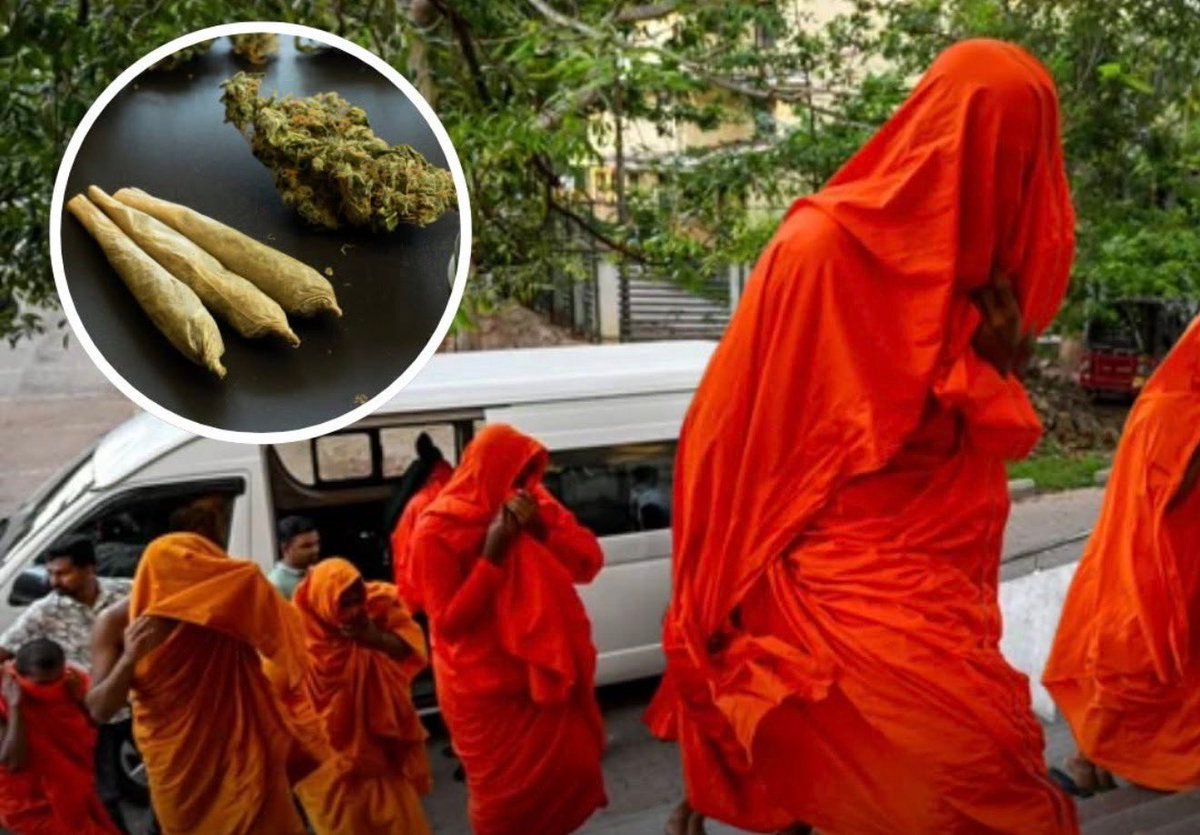
Twenty-two Buddhist monks found themselves in handcuffs at an airport security checkpoint after authorities discovered 242 pounds of marijuana hidden in their luggage. The shocking arrest has sent ripples through social media and raised serious questions about the intersection of religious life and criminal activity.
The incident came to light when @DailyLoud shared the news on social media. The post quickly gained traction with over 2,300 likes and 226 retweets. Users expressed disbelief at the stark contrast between the monks’ religious vows and their alleged involvement in drug smuggling.
Airport security made the discovery during routine luggage screening. The massive quantity of marijuana – nearly a quarter ton – suggests this wasn’t a small-scale personal use situation. Federal authorities haven’t released details about where the monks were traveling from or to, but the sheer volume indicates potential large-scale distribution plans.
The arrest creates a jarring contradiction with core Buddhist principles. Buddhism traditionally emphasizes mindfulness, compassion, and avoiding harm to others. The religion’s Five Precepts specifically prohibit actions that cloud the mind, which would include drug use and distribution. Many Buddhist communities also stress simplicity and detachment from material wealth.
This isn’t the first time religious figures have been caught in drug-related crimes, but the scale and number of people involved makes this case particularly striking. The fact that 22 individuals were traveling together with such a large quantity suggests an organized operation rather than individual poor judgment.
Social media reactions ranged from shock to dark humor. Some users expressed disappointment in seeing religious leaders allegedly involved in illegal activities. Others made jokes about the irony of the situation. The story’s viral spread shows how quickly news travels when it involves unexpected contradictions.
Buddhist communities around the world will likely distance themselves from this incident. Most legitimate Buddhist organizations maintain strict codes of conduct for their members. Ordained monks typically take vows of poverty and are expected to follow both religious law and civil law.
The legal consequences for the arrested monks could be severe. Federal drug charges carry heavy penalties, especially for quantities this large. Each individual could face years in prison if convicted. The case also raises questions about how the group managed to coordinate such an operation and whether other people were involved.
Law enforcement agencies haven’t released the monks’ identities or their specific Buddhist tradition. Different Buddhist schools have varying organizational structures, but most would consider this type of activity a serious violation of religious principles.
The incident highlights ongoing challenges in airport security screening. Despite technological advances and training programs, criminals continue attempting to smuggle drugs through transportation hubs. This case shows that even people in trusted religious roles can be involved in illegal activities.
Social media attention on the story continues growing. The combination of religious figures, drugs, and the large quantity involved has made it particularly shareable content. Many users have expressed surprise that such a coordinated effort could involve so many religious practitioners.
As the legal process unfolds, more details will likely emerge about how this operation worked and whether additional people were involved. The case serves as a reminder that criminal activity can happen in unexpected places and involve people from all walks of life.
The monks’ arrest represents a significant fall from grace for individuals who had presumably dedicated their lives to spiritual practice and helping others. Whether they’ll face additional consequences from their religious communities remains to be seen, but the damage to their reputations appears irreversible.
