
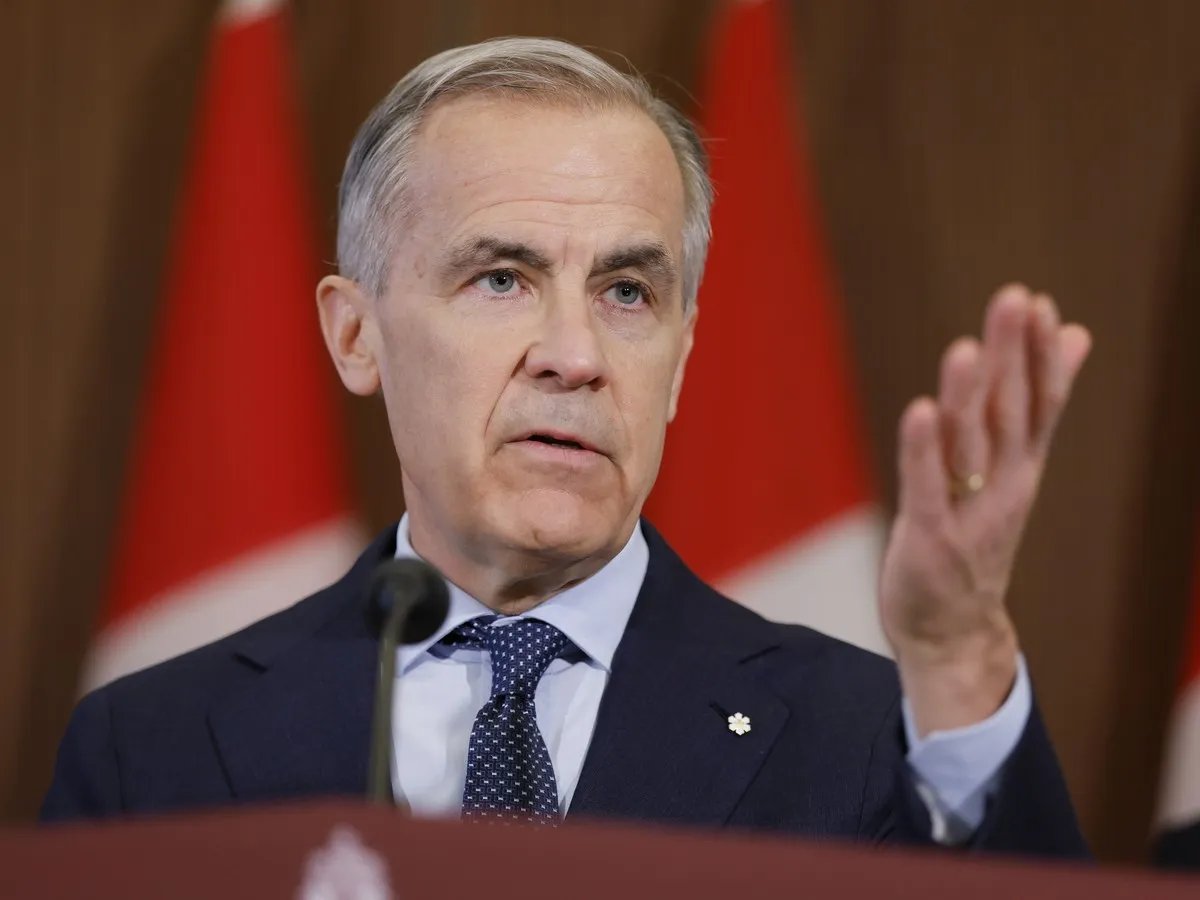
OTTAWA — No general election, no imminent cabinet shuffle, and greater control over Parliamentary committees to prevent opposition MPs from “showboating” with talk of “cats and dogs.”
Those are some of the commitments Prime Minister Mark Carney made about how he planned to wield his newfound majority government after the Liberals secured seats in three Ontario and Quebec byelections on Monday.
Carney spoke to reporters from Parliament’s West Block the day after the byelections, which capped a historic jump from a Liberal minority government to a majority. That was largely due to the addition of five opposition MPs — four Conservatives and one NDP — who broke ranks to join the prime minister’s party in recent months.
Carney dismissed the notion that he could call a general election anytime soon to deflect criticism that he had built his majority on “dirty backroom deals,” as has charged Conservative Leader Pierre Poilievre.
“I am not considering calling an election,” Carney said flatly. He emphasized that in Canada’s Westminster democracy, voters choose MPs, not parties, and that elected officials are free to decide which political stripe best represents their constituents’ interests.
“I think, very clearly Canadians want government to govern, to take action on immediate concerns,” he added.
But Poilievre, apparently inspired by Peter Parker’s fictional Uncle Ben, warned that with “absolute power comes absolute responsibility.”
“They will actually have to get things done. They will have to do so without blaming others, and they will have to start now,” Poilievre told the House of Commons Tuesday afternoon.
He argued that the Liberals had given themselves sweeping powers at the beginning of their mandate and yet failed to use any of them to approve major projects or address cost-of-living issues.
Bloc Québécois Leader Yves-François Blanchet made the same argument when asked to explain why his party failed to retain the Montreal-area riding of Terrebonne in the byelection Monday evening.
“There seems to be no alternative about who is to negotiate with Donald Trump. So, (voters) want to give some support to the guy who said he could fix it, even if, so far, he has fixed nothing,” Blanchet said.
During his press conference announcing a summer reprieve of the 10 cent fuel excise tax, Carney also squashed rumours that he is considering a cabinet shuffle before the summer recess to replace poorly performing ministers with fresh political blood.
“It’s not in my plans,” Carney said in French. “I have the opportunity of having a very capable cabinet and there is a lot to do.”
The prime minister reserved his strongest comments for House of Commons committees, which have been a thorn in his minority government’s legislative agenda.
Committees are important because they are a requisite step for most legislation, but they are also the place where opposition parties have the most procedural levers to delay or amend government legislation.
That was on full display during debate on the Liberals’ controversial Bill C-9 targeting hate symbols, where Conservatives filibustered the bill for hours in opposition to a Liberal-Bloc Québécois deal that removed the religious exemption from some hate speech laws.
Carney suggested that he aimed to rewrite committee composition quickly to give the Liberals a majority there to remove some of those levers from opposition members.
He accused opposition parties of “showboating” on committees, a comment that is sure to raise the ire of Conservative and Bloc MPs.
“We’ve had a variety of issues over the course of the Parliament where things have taken longer than they necessarily would, where debates have been more performative,” Carney said.
“There is a difference between real testimony, real substance, getting to issues, debating aspects of law…. and showboating,” he added. “We’re going to have less of that.”
To illustrate his point, Carney pointed to comments by Conservative MP Andrew Lawton during committee debate on Bill C-9 during which Lawton discussed his preference for puppies while his wife preferred cats.
In a statement to National Post, Lawton countered that his discussion of pet preferences was in fact on topic.
“My point on cats and dogs was simple: free speech is necessary to protect debate on controversial issues, otherwise our society is relegated to expressing only harmless opinions about pets. Liberal attempts to twist my words in this less than 12-second clip are nothing more than an attempt to re-write history,” he said.
National Post
cnardi@postmedia.com
Our website is the place for the latest breaking news, exclusive scoops, longreads and provocative commentary. Please bookmark nationalpost.com and sign up for our politics newsletter, First Reading, here.
