
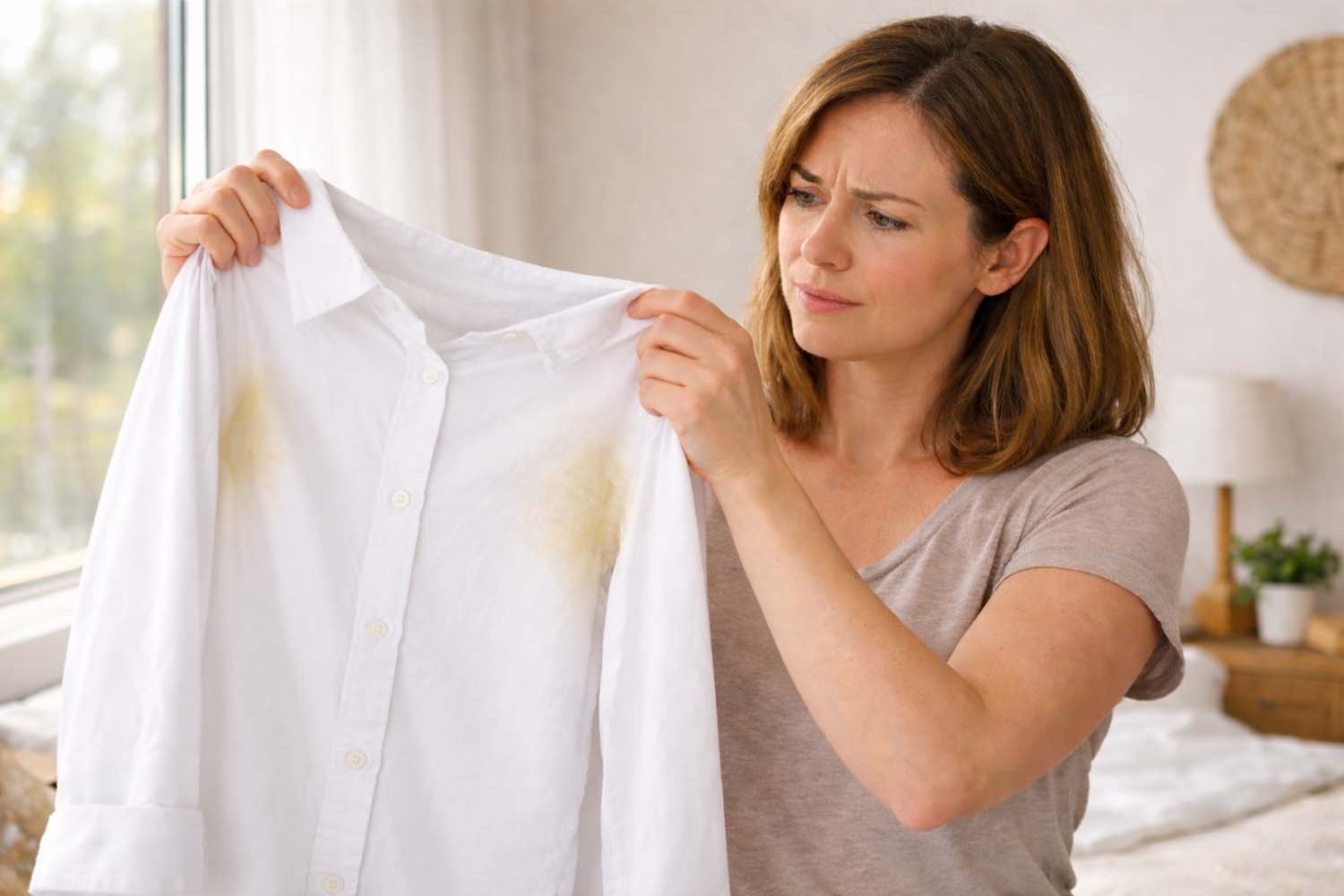
I pulled my favorite white button-down out of the closet, the one I save for job interviews and nice dinners, and standing there in the light I could see it. A faint but unmistakable yellow shadow at both armpits. Not one big incident. Just months of getting dressed, going about my day, and quietly ruining a shirt I loved without ever realizing it was happening.
My first reaction was to Google “how to get sweat stains out of clothes.” Next, I tested every method I could find, because I was not giving up on that shirt.
Spoiler: two methods work really well. One popular method can actually make the staining worse. And the thing most people think is causing the problem usually isn’t. Here’s everything I learned from turning my laundry room into a pit stain laboratory.
Quick Answer: How to Get Sweat Stains Out of Clothes
The most effective way to remove sweat stains is to create a paste of two parts hydrogen peroxide, one part baking soda, and one part water, then apply it directly to the stain with an old toothbrush. Let it sit for 30 to 60 minutes and launder as normal. For colored fabrics, use white vinegar instead of hydrogen peroxide. Never put the garment in the dryer until the stain is confirmed gone. The most important thing to know: those yellow stains are almost never caused by sweat alone. Read on for why that matters.
The Surprising Truth About What’s Actually Causing the Stain
Here is the thing most people get wrong, and it changes everything about how you treat the stain.
Sweat by itself is colorless and odorless. It’s mostly water, salt, and a small amount of proteins. On its own, it dries clear and doesn’t stain. The yellow you’re seeing isn’t coming from your sweat. It’s coming from a chemical reaction between your sweat and the aluminum compounds in your antiperspirant.
Most conventional antiperspirants use aluminum-based compounds, like aluminum chloride or aluminum zirconium, to physically block your sweat ducts and reduce moisture. When those aluminum compounds mix with the proteins in your apocrine sweat (the type produced in your underarms specifically) and then get exposed to heat from your body, they form a yellowish compound that bonds to fabric fibers. Over time, each wear adds another layer. The stain builds up, oxidizes, and eventually becomes that crusty, discolored patch that seems impossible to shift.
This distinction matters because it tells you what chemistry you actually need to break the stain down. You’re not fighting water-soluble sweat. You’re fighting an aluminum-protein bond that has baked itself into your fabric. That takes a different approach than most people reach for.
Why Bleach Makes Yellow Pit Stains Worse
Before we get into solutions, there’s one thing you need to know to avoid making things worse.
Chlorine bleach is many people’s instinct for yellowing on white shirts. Don’t use it on sweat stains. Chlorine bleach reacts with the protein components in sweat and can intensify the yellow color rather than remove it. It can also weaken cotton fibers over time, leading to fabric breakdown right at the underarm seam. This is a surprisingly common mistake, and it results in shirts that look worse after treatment than before.
Oxygen bleach, like OxiClean, is a completely different product and does work well on sweat stains. But regular chlorine bleach? Step away.
Pro Tip: Sun Exposure Is a Surprisingly Effective Free Treatment
After treating a stain with any of the methods above, try laying the damp garment in direct sunlight to dry instead of using the dryer. UV light has a natural bleaching effect and can help lift residual yellowing that remains after treatment, particularly on white fabrics. Noor de Swart, CEO of Super Label Store and an expert in textile care, told Today.com that sun exposure can be “surprisingly effective” for removing stains from white garments, especially when combined with a lemon juice pre-treatment. Just apply a small amount of lemon juice to the stained area, then let it dry in direct sunlight. Don’t put it in the dryer until you’ve checked the stain is fully gone.
Fresh Stains Versus Old Stains: A Very Different Problem
This is where sweat stains differ from most other laundry emergencies. With wine or grease, acting fast is everything. With sweat stains, you often don’t even know there is a stain until you pull the shirt out later and the damage has already been done.
Fresh stains, meaning ones you treat the same day or within a day or two, respond well to a simple vinegar rinse or a quick application of baking soda paste. The aluminum-protein bond hasn’t had time to fully set and oxidize.
Old stains, which are the ones most people are actually dealing with when they find sweat stains, have gone through multiple heat cycles from washing and drying, and the compounds have deeply bonded with the fabric. These need the heavier methods: the hydrogen peroxide paste, the dish soap combination, or the oxygen bleach soak.
The best thing you can do to avoid old stains is rinse your shirts in cold water as soon as you take them off after a sweaty day, before they go in the hamper. Just a quick rinse can prevent most of the buildup from happening.
Fabric Matters Here Too
Not every fabric handles these treatments the same way:
Cotton and cotton blends: The most forgiving. Handles hydrogen peroxide, vinegar, baking soda, and oxygen bleach without complaint. This is where all the methods above shine.
Polyester and synthetics: Sweat and aluminum compounds bond more aggressively to synthetic fibers than to natural ones, which is why pit stains on polyester can be especially stubborn. Use the vinegar soak followed by baking soda paste. Avoid hot water, which can set stains in synthetics. Do not use hydrogen peroxide on bright or dark synthetic colors.
Linen: Handles vinegar and baking soda well. For whites, hydrogen peroxide is safe but rinse with cool rather than hot water afterward to prevent shrinkage.
Silk and wool: Don’t experiment. Both are protein-based fibers and need very gentle handling. Use a tiny amount of diluted white vinegar, blot gently, and if the stain is significant, take it to a professional dry cleaner. Never use hydrogen peroxide or oxygen bleach on silk or wool.
Dry-clean only: Blot what you can and take it to the cleaner. Mention what caused the stain so they can treat it correctly.
My Step-by-Step Protocol for Sweat Stains
Here is exactly what I do now:
Step 1: Identify how old the stain is. Fresh (same day) or old (multiple wears or washes)? This determines your method.
Step 2: Choose your method based on fabric and stain age. White fabric and fresh stain: Method 1. White fabric and old stain: Method 1 followed by Method 3 or 4 if needed. Colored fabric: Method 2.
Step 3: Apply and wait. Don’t rush the soak time. Thirty minutes is the minimum. An hour is better for older stains. The chemistry needs time to work.
Step 4: Scrub gently with a toothbrush. For any paste treatment, working it in with a toothbrush dramatically improves results compared to just leaving it on the surface.
Step 5: Check before the dryer. Always. Hold the damp garment up to good light. The dryer will heat-set any remaining stain and make it permanent.
Step 6: Repeat if needed. Old stains often need two rounds. Don’t give up after one attempt.
Warning: Never Do These Things
These common mistakes will make sweat stains worse or permanent:
- Don’t use chlorine bleach on yellow pit stains. It reacts with the proteins in sweat and can deepen the yellowing.
- Don’t mix hydrogen peroxide and white vinegar together. This creates peracetic acid, which is harsh on skin and fabric. Use them in separate treatments.
- Never put the garment in the dryer until you’re certain the stain is gone. Heat permanently sets sweat stains.
- Don’t rub aggressively. Vigorous rubbing can damage fabric fibers and spread the stain. Use a toothbrush in small, gentle circular motions.
- Don’t skip the soak time. Five minutes is not enough. The chemistry needs 30 to 60 minutes to work through the aluminum-protein bond.
What Definitely Does Not Work
A few things I tested or researched that get passed around but genuinely aren’t effective:
Chlorine bleach on white shirts: Covered above, but worth repeating. It feels like the obvious choice and it makes things worse. Don’t.
Washing on hot without pre-treating: Hot water alone doesn’t break down the aluminum-protein compound. It can actually help set the stain further. Always pre-treat first.
Stain remover pens: These are great for food spills caught immediately. They don’t have the chemistry to touch a set-in aluminum-sweat stain. I’ve tried. They do very little.
Regular laundry detergent alone: Standard detergents aren’t formulated to break the specific chemical bond that causes pit stains. They’ll clean around the stain but won’t remove it. You need the pre-treatment step.
How to Stop Sweat Stains From Forming in the First Place
This is the section I wish someone had shown me before I ruined three shirts:
Switch to aluminum-free deodorant. This is the most effective long-term fix. Since the yellow stain is caused by the reaction between aluminum and your sweat, removing the aluminum removes the cause entirely. Your sweat alone won’t stain. There are now many aluminum-free options that provide solid odor protection without the staining chemistry.
Apply antiperspirant at night, not in the morning. If you prefer to keep using an antiperspirant, dermatologists and the International Hyperhidrosis Society both recommend applying it at night to completely dry skin. It has more time to absorb into the sweat ducts, requires less product, and transfers far less to clothing in the morning.
Let it dry completely before dressing. If you apply in the morning, wait a full two to three minutes before putting your shirt on. Wet antiperspirant transfers directly to fabric and accelerates buildup.
Use less product. Two to three swipes of a solid stick is enough. More product means more aluminum on your shirt.
Rinse sweaty shirts immediately. Before they go in the hamper, give sweaty shirts a quick cold rinse. This prevents the compounds from oxidizing and bonding while the shirt sits waiting for laundry day.
The One Thing I Wish I Had Known Sooner
The stain isn’t your sweat. It’s your antiperspirant reacting with your sweat. Once I understood that, it changed which products I reached for and completely changed my results.
I also wish I had known to rinse shirts immediately instead of tossing them in the hamper sweaty. Most of the shirts I had to rescue were victims of sitting in a hamper for a week, giving the aluminum-protein compounds plenty of time to oxidize and bond. A 30-second rinse before the hamper would have prevented most of it.
I now keep hydrogen peroxide, baking soda, and white vinegar in a small basket in my laundry room specifically for this. The moment I notice any underarm yellowing, I treat it before it gets worse. Catching it at stage one is dramatically easier than trying to undo six months of buildup.
Final Thoughts
Sweat stains feel uniquely personal and embarrassing, which is probably why so many people quietly retire shirts instead of trying to fix them. But they’re actually very treatable, especially once you understand what’s causing them and reach for the right chemistry.
The hydrogen peroxide and baking soda paste for whites, the white vinegar soak for colors, patience during the soak time, and never the dryer until you’re sure it’s gone. That’s the whole framework.
My button-down, by the way? I’m wearing it right now. You would never know.
Have you found a method that works particularly well on sweat stains? Drop a comment below. I’d love to hear what’s worked in your laundry room.
More Stain Removal Guides:
More Cleaning Tips:
Better Living may earn commissions through affiliate links and may occasionally feature sponsored or partner content. If you make a purchase through our links, we may receive a small commission at no cost to you.
