
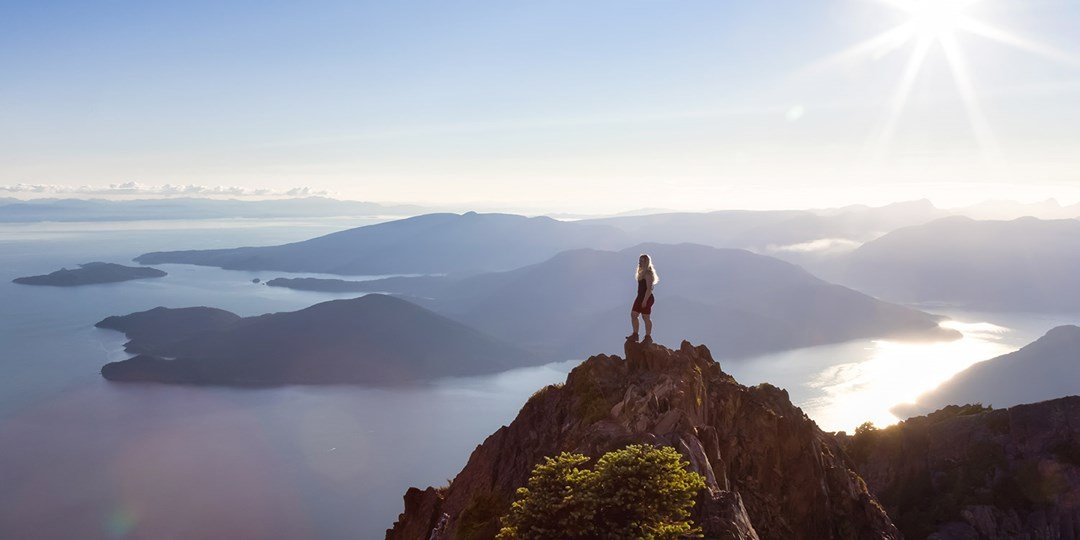
Visitors to Canada flock to the major tourist destinations like Vancouver, Banff, Toronto and Montreal (and rightly so, they’re fantastic). But Canada’s vast wilderness is where the country truly shines—and as locals, we know where to look. Here’s Travelzoo’s lineup of the country’s best “wild” destinations.
There are more than 200 islands off the coast of British Columbia, and Vancouver Island is the largest. Home to a string of distinct coastal communities, each with its own draw—from Tofino’s wild Pacific surf and storm watching to Nanoose Bay’s quieter pace and Campbell River’s seemingly unlimited access to wildlife viewing. Across the island, hiking trails wind through old-growth forests to rocky shorelines, while kayaking, whale watching and seasonal outdoor adventures make the most of the surrounding waters. There’s also a strong local arts scene, rich Indigenous culture and a growing number of wineries and craft producers to discover.
Southern Alberta melts into big skies, where prairie meets the Rockies. In the southwest, Pincher Creek sits at the edge of the foothills, known for its steady winds and access to scenic drives. It’s a gateway to Waterton Lakes National Park, with glacier-fed lakes, wildflowers and abundant wildlife. This rural corner is all about the outdoors—hiking and cycling, and fly-fishing along the Oldman River. The pace is unhurried, shaped by ranching roots and small-town charm, with dark skies ideal for stargazing.

In Algonquin Provincial Park (the province’s oldest provincial park), Ontario’s wild side comes into focus, and immersion comes naturally—paddling interconnected waterways, hiking forested trails and spotting everything from moose to black bears. Canoeing is the signature experience, with hundreds of kilometres of linked lakes and portage routes offering some of the most legendary backcountry paddling in the country.

Around Blue Mountain, the energy of the resort gives way quickly to a quieter rural landscape shaped by farmland and rolling countryside. Just beyond the village, country roads wind past open fields, orchards and working farms that reflect the region’s agricultural roots. The pace slows here—more tractors than traffic—yet the views remain expansive, with the escarpment rising in the distance. It’s a reminder that beyond the slopes and trails, Blue Mountain is firmly rooted in a broader farming landscape that defines much of this corner of southern Ontario.
Here, the landscape is defined by the meeting point of mountains and the St. Lawrence River, with wide views that shift between forested slopes, farmland and dramatic shoreline. The region is anchored by towns like Baie-Saint-Paul, known for its galleries and local food scene. Picturesque drives and lookouts along the river offer frequent viewpoints across the water and into the surrounding hills. It’s an easy region to explore at a slower pace, with nature always at hand and never far from the main routes.
 Many travellers exploring Nova Scotia head to well-known routes like the Cabot Trail or the South Shore, but quieter drives through inland areas and coastal back roads offer some of the best access to the Acadian forest in its natural form. Around places like Kemptville, the landscape is shaped by a dense mix of hardwoods and softwoods that define this distinctive ecosystem. Layered canopies cover rolling terrain, lakes, and wetlands, with hiking trails threading through stands of old-growth and protected areas. Wildlife is part of the everyday landscape here—moose, foxes and a wide range of birdlife are present throughout the forested corridors, adding to the sense of a living, breathing landscape.

Those red clay cliffs beckon tourists from all over the world. Most visitors on Prince Edward Island flock to Charlottetown and the beaches in and around Cavendish on the north shore. But Summerside on the southwestern shore offers gorgeous ocean vistas, all within half an hour’s drive of the major sites on the Island, like Green Gables Heritage Place. Nearby, there’s the historic Indian Head Lighthouse that’s been guiding seafarers home safely since the 1880s, and the beautiful beaches of Linkletter Provincial Park.
