
For decades, fairy tales — especially those shaped by Disney — quietly taught us something powerful:a girl waits, a man saves, and love fixes everything.
It was normalized. It was romanticized.
And for a long time, nobody questioned it.
But when you really look closer… it becomes uncomfortable.
Sleeping Beauty: A Romance That Raises Questions
Let’s start with one of the most iconic examples — Sleeping Beauty.
Princess Aurora is 16 years old. Prince Phillip? He is typically understood to be around 20–21 years old. That’s already a noticeable age difference — but the real issue goes deeper. Aurora meets Phillip briefly in the forest. She falls into a cursed sleep. And then she is kissed while unconscious. That kiss leads directly to marriage.
There is:
- No consent
- No real relationship development
- No agency
She doesn’t choose love. Love is done to her. At the time, this was seen as magical. Today, it raises a very different question: Why were girls taught that their story begins only when someone else saves them?
Love in Three Days: What Shrek Quietly Changed
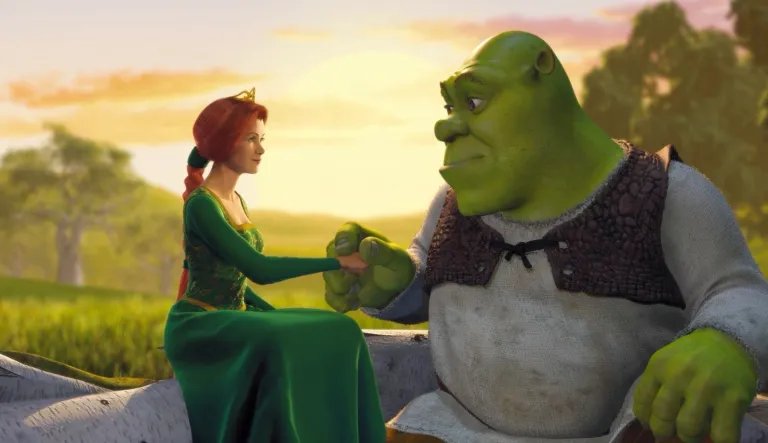
Now fast-forward to Shrek — a film that looks like a parody, but actually rewrote the rules. Princess Fiona is also under a curse. But this time, the story plays differently. So who fell in love first?
It’s Shrek. He begins to see Fiona beyond her princess identity. He listens. He connects. He softens. Fiona, on the other hand, is guarded.
She is ashamed of her “true form.” She is afraid of being rejected. And here’s where everything shifts. True love does not turn her into a perfect princess. It turns her into her true self — an ogre.
That’s not just a twist. That’s a statement. Instead of saying:
Love makes you beautiful
The film tells us:
Love reveals who you really are — and that is enough.
But Still… Something Feels Fast
Let’s be honest — Shrek still carries one of the oldest tropes. They fall in love in about three days. And that raises another question: Are we still simplifying love? Are we still telling audiences that emotional connection happens instantly?Maybe.
But there is one key difference — choice.
Fiona chooses Shrek. She accepts herself.
She is not saved — she transforms on her own terms. And that alone makes a huge difference from earlier stories.
Maleficent: When Love Is Not Romantic
Then came Maleficent, starring Angelina Jolie — and this is where everything truly shifts. Aurora still falls asleep. A prince still exists. But his kiss?
It doesn’t work. Instead, the curse is broken by something far more powerful: A mother’s love.
Not romantic love. Not destiny. Not a man.
Just love — in its purest and most human form.
And suddenly, everything changes. The villain becomes the protector. The princess is no longer waiting — she is already loved. And “true love” is no longer limited to romance.
Frozen: When a Woman Doesn’t Need Saving at All
And then came the real turning point — Frozen.
For the first time in a Disney princess story, the central character does not need a man to complete her story. Elsa doesn’t fall in love.
She doesn’t wait for a prince. She doesn’t need to be saved. Her journey is internal. She struggles with fear, identity, and control — and her transformation doesn’t come from romance.
It comes from self-acceptance. Even more powerful — the act of “true love” in the film is not romantic. It is the love between sisters. This completely breaks the formula Disney itself created decades earlier.
No prince.
No rescue.
No dependency.
Just a woman learning that:
her power is not something to hide — it’s something to own.
The Bigger Problem: How Women Were Framed
For years, female characters were written in a very specific way.
They were:
- Passive
- Defined by beauty
- Dependent on romance
- Waiting to be chosen
Their value often came down to:
- Who loved them
- Who saved them
- Who married them
And this perception didn’t stay on screen. It shaped expectations in real life.
The Shift We Are Finally Seeing
Modern storytelling is slowly — but clearly — changing that.
We are now seeing female characters who:
- Save themselves
- Reject unrealistic beauty standards
- Define love on their own terms
- Exist beyond romance
From Fiona’s self-acceptance to Elsa’s independence and Maleficent’s unconditional love, the narrative is evolving.
The issue was never fairy tales themselves.
It was the message repeated over and over again:
“You are not complete until someone saves you.”
But today, films are finally saying something different.
You were always enough — even before love found you.
