
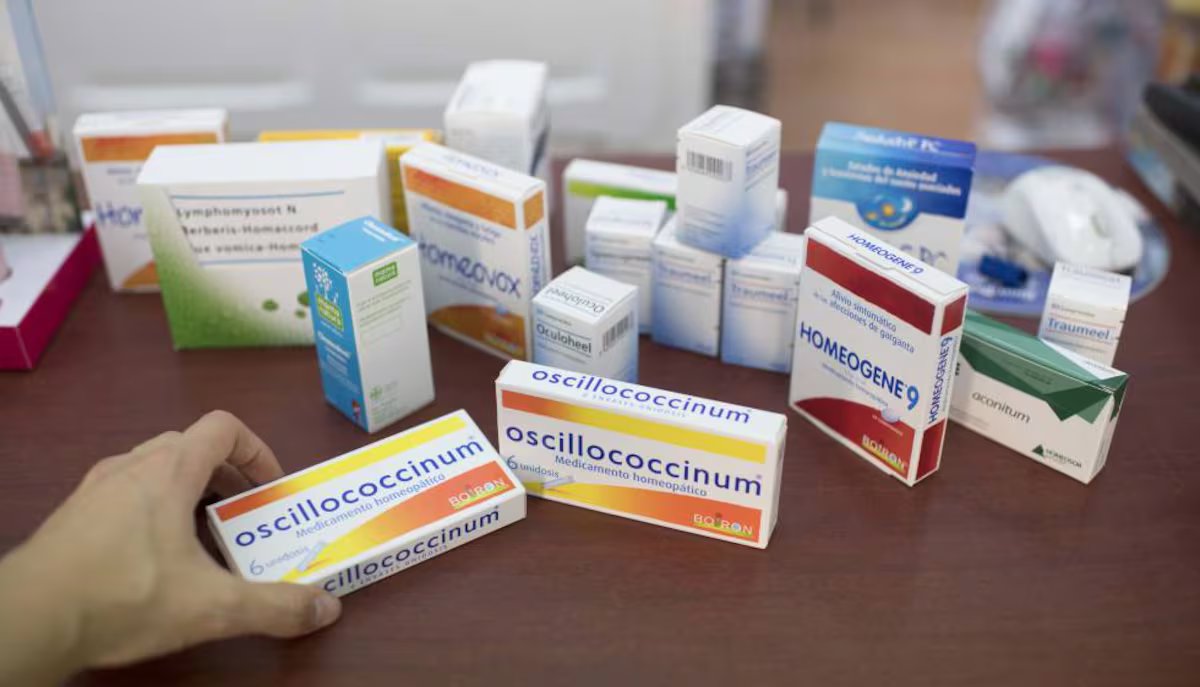
The results provided by homeopathy “do not outperform the placebo effect,” there is no scientific evidence that it is an effective treatment, and using it instead of other therapies can “pose a risk” to patients’ health. These conclusions, which the scientific community has maintained for decades, have now been confirmed by a report published on Tuesday by the Spanish Agency of Medicines and Medical Products (AEMPS), a state agency attached to the Ministry of Health.
The document does not constitute any legal obligation: homeopathic products are legal in Spain and can continue to be sold in pharmacies under certain conditions, as is currently the case. The industry had sales of over €30 million ($35 million) in 2023, according to data provided to this newspaper by the consulting firm HMR.
The report is more of an official warning that science does not support this pseudoscientific system, which is based on the false belief that “like cures like” and that a substance, diluted in water until it completely disappears, can cure the very ailment it causes.
The study provides a comprehensive review of the scientific literature published between 2009 and 2026, and included only clinical trials in humans that meet the highest standards: randomized and controlled. When health officials examined this literature, they found that homeopathy is ineffective in curing any of the conditions it claims to treat, and that it can even have side effects in formulations that do contain active plant-based ingredients.
Health Minister Mónica García was unequivocal in a recorded statement on the subject: “Homeopathy doesn’t work. We’ve analyzed all the available scientific evidence, and the conclusion is this: it’s no more effective than a placebo. Many of these substances are so diluted that it’s literally like dissolving a packet of sugar in the Mediterranean Sea.”
The minister also underscored that the real health risk of homeopathy lies in using it as a replacement for treatments that actually work. “It’s not what you take, but what you stop taking,” she said.
Vicente Baos, a doctor who has been part of the expert network of the European Medicines Agency (EMA) for years, agrees with this assessment. “In other words, the greatest danger is believing that homeopathy will actually help with an illness, and that this belief will motivate the abandonment of established treatments,” he says.
Several years ago the Spanish Ministry of Health identified 73 pseudotherapies, including homeotherapy, and began publishing reports on them. The Covid pandemic significantly slowed this process, and the plan was suspended for several years. This latest report focuses on what is probably the most well-established pseudotherapy of all and the one with the most powerful industry behind it, even though it has been in decline for some years now.
In the case of homeopathy, there are 10,000 registered doctors who recommend its products in their consultations, according to the Spanish Society of Homeopathic Medicine (SEMH).
In Baos’s opinion, it is European legislation itself, “the result of the significant presence of lobbies with interests in homeopathy, that is the main obstacle preventing us from discussing this topic in Europe — a topic that should have been relegated to the history books of medicine many years ago.”
Sign up for our weekly newsletter to get more English-language news coverage from EL PAÍS USA Edition
