
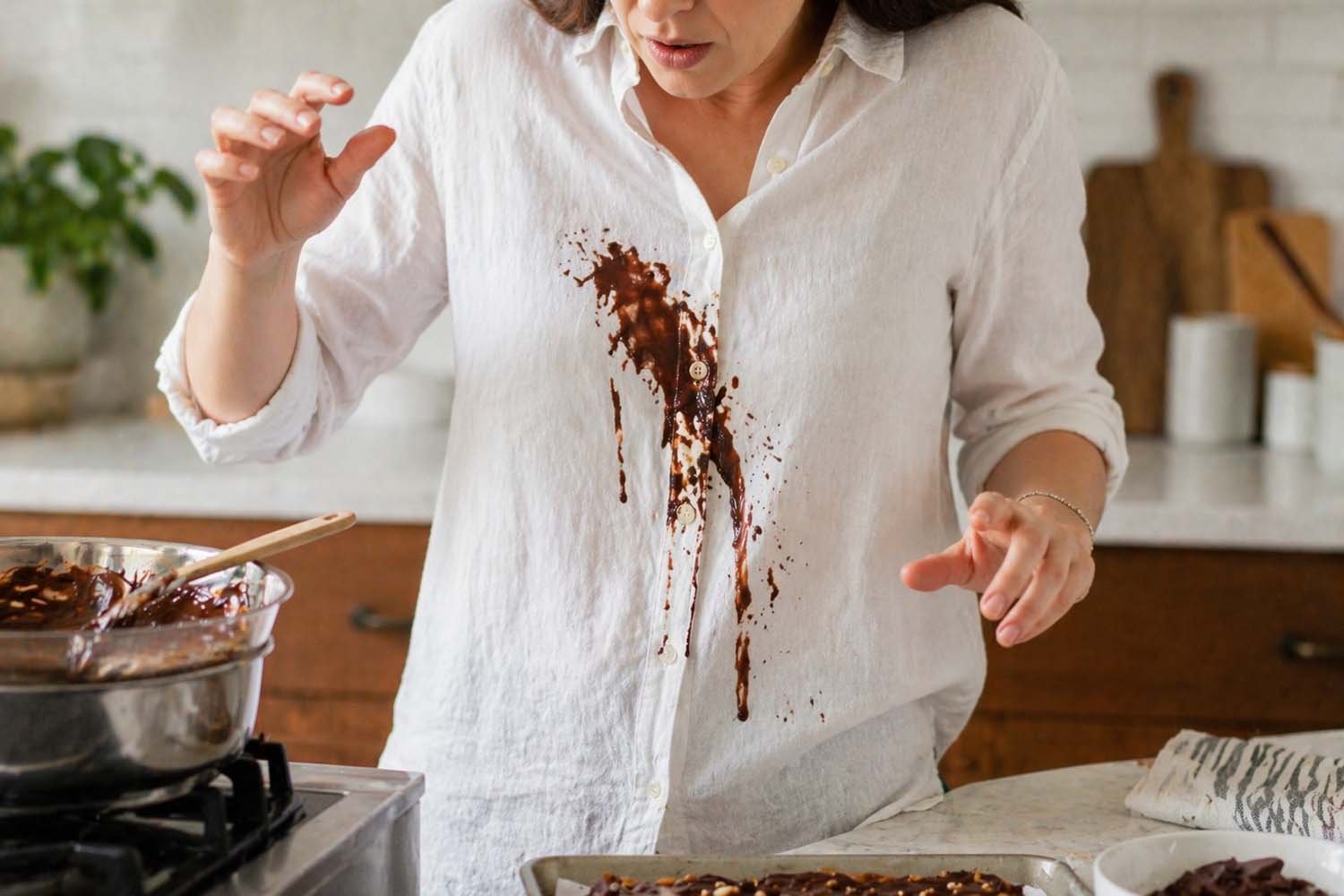
I was making chocolate bark for a dinner party, melting dark chocolate in a double boiler and feeling very accomplished, when I reached across the stove and knocked the bowl. Not off the counter. Just enough to send a wave of warm melted chocolate directly down the front of my white linen shirt.
Melted chocolate moves fast. By the time I registered what happened it had already spread across six inches of fabric and was cooling into the weave.
Here’s what I didn’t know standing there in the kitchen: almost every instinct you have about how to get chocolate out of clothes is wrong. Hot water seems obvious. It makes things significantly worse. Rubbing seems obvious. It spreads the stain wider and drives it deeper. And the reason most people fail with chocolate stains isn’t the method. It’s that they don’t understand what they’re actually dealing with.
Chocolate isn’t one stain. It’s three, layered on top of each other. Once I understood that, everything changed.
Quick Answer: How to Get Chocolate Out of Clothes
Scrape off any solid chocolate immediately using a spoon or dull knife. Don’t rub. Flush cold water through the back of the fabric. Apply liquid laundry detergent or dish soap directly to the stain, work it in gently, and let it sit for five minutes. Rinse with cold water.
For any remaining brown shadow, soak in an OxiClean solution using the warmest water the fabric allows for one to two hours, then launder normally. Never use hot water until the stain is gone, and never put the garment in the dryer until you’ve confirmed it’s completely clean. Heat sets all three components of a chocolate stain permanently.
Why Chocolate Stains Are More Complicated Than They Look
Most stains are one thing. Chocolate is three distinct chemical compounds layered on top of each other, and each one needs a different approach to remove. Treat one and ignore the others and you’ll end up with a shirt that looks better but isn’t actually clean, or worse, one that develops a brown shadow after washing that you can never fully shift.
Cocoa butter (the fat layer): All chocolate contains cocoa butter, a natural fat that behaves exactly like a grease stain on fabric. It’s hydrophobic, repels water, and penetrates fiber quickly, especially in warm conditions. Your body heat starts melting and driving it deeper the moment it makes contact with fabric. This layer needs surfactant chemistry (dish soap or detergent) to break it down.
Tannins (the pigment layer): Cocoa beans are rich in polyphenols, the same tannin compounds that make red wine, coffee, and tea such difficult stains. Tannins bond to fabric fibers and cause the dark brown discoloration. They respond to oxidizing treatments like OxiClean and hydrogen peroxide. Heat causes them to bond permanently to fiber, which is why hot water is so destructive on chocolate stains.
Milk proteins (in milk and white chocolate only): Milk chocolate and white chocolate contain dairy proteins that behave similarly to blood stains on fabric. Heat coagulates these proteins, essentially cooking them into the fiber and making them nearly impossible to remove. Cold water is non-negotiable for any chocolate that contains milk or cream.
Sugar: The good news. Sugar is water-soluble and dissolves easily in cold water. It’s the least problematic component, but if it dries and hardens it forms a crust that traps the fat and tannins in the fiber and makes everything harder to remove. Treat it before it dries.
The Chocolate Type Changes Everything
Not all chocolate stains are the same problem, and knowing what you’re dealing with helps you choose the right approach.
Dark chocolate is the most visible stain, deeply pigmented and intensely tannin-rich, but paradoxically the most straightforward to treat at home. No milk proteins means no risk of heat coagulation, and no dairy fat complicating the fat layer. Treat the cocoa butter with dish soap and the tannins with OxiClean. Dark chocolate on white fabric can look terrifying and still come out completely.
Milk chocolate is the trickiest despite looking less alarming than dark chocolate. The milk proteins add a strict cold-water requirement throughout the entire treatment process. If you use warm water at any stage before the stain is fully out, you risk cooking the protein into the fiber. The fat layer is also more complex because of the dairy fat combined with cocoa butter.
White chocolate contains no cocoa solids and therefore no tannins. The stain is almost entirely fat and sugar. Treat it exactly like an oil or grease stain: dish soap, warm water (white chocolate has no milk protein coagulation risk at moderate temperatures), enzyme cleaner if needed. Much easier than dark or milk chocolate despite the name suggesting otherwise.
Hot chocolate and chocolate milk: High liquid content means the stain spreads fast and penetrates deeply. Act immediately. The treatment is the same as milk chocolate but urgency is even higher because there’s more volume to deal with.
Chocolate spread (Nutella and similar): Palm oil or vegetable oil in addition to cocoa butter doubles the fat layer. Apply dish soap twice before any other treatment to fully break down the oil component before addressing the tannins.
The Freezer Trick Nobody Talks About
Before we get into methods, there’s one technique that is genuinely useful for soft or melted chocolate that most guides skip entirely.
If the chocolate is soft, warm, or melted (a chocolate bar that’s been in a hot pocket, a mousse smear, a chocolate truffle that made full contact), put the garment in the freezer for 15 minutes before doing anything else. The cold solidifies the cocoa butter and allows you to peel or scrape the chocolate away in one piece rather than trying to blot a liquid stain that spreads with every touch.
Once the chocolate is hardened and removed, proceed with the cold water flush and treatment below. This single step can reduce the stain surface area by half before you’ve applied anything.
Pro Tip: Sunlight Is Your Final Weapon on White Fabrics
After treating a chocolate stain and laundering, if a faint brown shadow remains on white or light fabric, hang the damp garment in direct sunlight before putting it in the dryer. UV light acts as a natural oxidizer and can break down residual tannin pigment that chemical treatments have already weakened but not fully removed. Let it sit in strong direct sun for two to four hours while still damp. This same technique works on coffee, red wine, and tomato sauce residue. Check the stain before it goes in the dryer. The dryer permanently sets anything that sunlight hasn’t cleared.
The Sequence Matters as Much as the Method
The most common reason chocolate stains don’t come out is not the wrong product. It’s the wrong order. Here’s the sequence that works every time:
The fat layer has to be addressed first, before anything else. Dish soap before OxiClean, always. If you skip to OxiClean without breaking down the fat layer first, the oxygen bleach has to work through a grease barrier and is significantly less effective on the tannin pigment underneath.
The protein layer, if present, responds best to enzyme treatment applied while the fabric is still damp after the initial dish soap rinse.
The tannin layer, which causes the brown discoloration, is addressed last with OxiClean or hydrogen peroxide. By this point the fat and protein layers have been dealt with and the oxygen bleach can work directly on the pigment.
Dish soap first. Enzyme cleaner second if needed. OxiClean soak last. Then launder.
Fabric Matters More Than You Think
Cotton and cotton blends: The most forgiving. Handles the full sequence without damage. This is where all methods above perform at their best.
Polyester and synthetics: Cocoa butter penetrates synthetic fibers via capillary action extremely quickly because of the hydrophobic affinity between the fat and the petroleum-based fiber. Treat immediately. Use cold water throughout and avoid prolonged soaks above 40°C.
Linen: Handles dish soap and OxiClean well. Use cool to lukewarm water for the OxiClean soak rather than hot to prevent shrinkage and wrinkling.
Denim: Forgiving and handles the full sequence. The tight weave means chocolate doesn’t always penetrate as deeply. Launder in cold water after treatment.
Wool and cashmere: Cold water only throughout, and use only a small amount of very mild detergent for the fat layer. Skip OxiClean and enzyme sprays, as both can damage wool fibers. If the stain is significant, take it to a dry cleaner.
Silk: Blot gently with cold water and a tiny amount of mild detergent. No rubbing, no soaking, no OxiClean. Take anything beyond a fresh minor stain to a professional dry cleaner.
Dry-clean only: Scrape gently, blot, and take it to a cleaner the same day if possible. Tell them it’s chocolate so they can choose appropriate solvents.
My Step-by-Step Protocol for Chocolate Stains
Here is exactly what I do now:
Step 1: Scrape immediately. Back of a spoon or credit card, working from edges inward. Never rub. If the chocolate is melted or soft, freeze first for 15 minutes then scrape.
Step 2: Cold water flush from the back. Hold the fabric taut and run cold water through the reverse side for at least 30 seconds.
Step 3: Dish soap or liquid detergent. Apply directly, work in gently with fingers or a soft toothbrush, let sit five minutes, rinse with cold water. Use white cloth for blotting, not paper towels.
Step 4: Enzyme spray if needed. For milk chocolate or hot chocolate, apply enzyme cleaner to the damp stain and let sit 15 to 30 minutes before rinsing.
Step 5: OxiClean soak. Dissolve in the warmest water the fabric allows. Soak one to two hours, up to overnight for older stains.
Step 6: Check before the dryer. Hold the damp garment up to good light. Any brown shadow means repeat from Step 3. The dryer makes every remaining layer permanent.
Step 7: Sunlight if needed. For white fabrics with residual shadow after laundering, hang damp in direct sun for two to four hours before drying.
Warning: Never Do These Things
These common instincts will make a chocolate stain worse or permanent:
- Don’t use hot water until the stain is completely gone. Heat coagulates milk proteins and bonds tannins permanently to fabric fibers.
- Don’t rub the stain. Rubbing spreads cocoa butter sideways and drives tannins deeper into the fiber weave.
- Don’t use paper towels for blotting. Lignin in paper reacts with chocolate tannins and can create additional brown pigmentation. Use a white cotton cloth.
- Never put it in the dryer until the stain is completely gone. Heat permanently sets all three layers of a chocolate stain.
- Don’t skip the dish soap step and go straight to OxiClean. The fat layer blocks the oxygen bleach from reaching the tannin pigment underneath.
What Definitely Does Not Work
Hot water first: The single most common mistake. It feels like the right instinct for a food stain. For chocolate specifically it coagulates milk proteins and causes tannins to bond more aggressively to fabric fibers. Always cold water first, always.
White vinegar on chocolate: Vinegar has mild tannin-fighting properties and some professional guides include it in tannin treatment protocols. The problem is it does nothing for the fat layer and nothing for the milk protein layer. On a multi-component stain like chocolate, a single-chemistry treatment that only partially addresses one of three layers will always underperform. Dish soap followed by OxiClean is faster, more complete, and handles all three layers in the right order. Vinegar isn’t going to make things worse, but it won’t get the job done on its own either.
Salt: Useful for absorbing fresh liquid spills on carpet or upholstery where you can’t use liquids freely. On clothing it does very little for chocolate beyond basic absorption. Skip it.
Rubbing the stain dry: Every instinct says to scrub harder when a stain won’t budge. With chocolate this just spreads the cocoa butter further and works the tannins deeper. Always blot, never rub.
The One Thing I Wish I Had Known Sooner
The paper towel detail. I had no idea that blotting a chocolate stain with a paper towel was actively making the tannin component worse. Lignin in paper reacts chemically with tannin compounds and can deepen the brown discoloration. Every time I grabbed a paper towel from the kitchen roll to blot a stain I was making one part of it harder to remove. A white cotton cloth from my laundry room kit makes a real difference and costs nothing extra.
The second thing: the sequence matters more than the product. Dish soap before OxiClean, every time, no exceptions. One reader in my comments tried OxiClean first on a chocolate stain and couldn’t understand why it wasn’t working. The fat layer was blocking it from reaching the tannins. Break down the fat first. Then oxidize the pigment.
Final Thoughts
Chocolate stains look catastrophic and feel hopeless, especially when they’re large and dark and on something white. But they’re actually very treatable once you understand the three-layer chemistry and address each component in the right order.
Scrape first. Cold water flush. Dish soap for the fat. Enzyme spray for the protein if it’s milk chocolate. OxiClean for the tannins. Check before the dryer. Sunlight for any residual shadow on white.
My white linen shirt, by the way, is back in rotation. You’d never know there had been a melted chocolate incident. The dinner party chocolate bark turned out great too.
Have you found a method that works well on chocolate stains? Drop a comment below.
Frequently Asked Questions
Does chocolate come out of clothes after drying?
It depends on whether the garment went through a hot dryer or just air dried. If it air dried or was line dried, the chocolate hasn’t been fully heat-set and you still have a reasonable chance of removing it using the glycerin pre-treatment followed by the full dish soap and OxiClean sequence. If it went through a hot dryer, the heat has coagulated any milk proteins and bonded the tannins more aggressively to the fiber. Full removal becomes much harder but is sometimes still possible with multiple treatment rounds. A stain that has gone through several hot dryer cycles is very difficult to reverse completely.
Is chocolate stain permanent?
Not if you treat it correctly and in time. Even older set-in chocolate stains are often recoverable with the glycerin pre-treatment and a long OxiClean soak. The most common reason chocolate stains become permanent is heat: specifically hot water used during treatment, or the dryer used before the stain was fully removed. If you’ve avoided heat throughout the process, there’s a good chance you can still get it out even if the stain is days old.
Does hot water remove chocolate stains?
No. Hot water makes chocolate stains significantly worse. It coagulates the milk proteins present in milk and white chocolate, essentially cooking them into the fabric fiber. It also causes the tannin pigments to bond more aggressively to the fabric. Always use cold water for flushing and rinsing throughout the entire treatment process. The only exception is the OxiClean soak, where warm to hot water is needed to activate the oxygen bleach. By that stage you’ve already flushed and pre-treated the stain and the protein risk has passed.
What removes chocolate stains best?
The most effective approach for most chocolate stains is a sequence rather than a single product. Start with dish soap or liquid laundry detergent to address the fat layer. Follow with an OxiClean soak to oxidize the tannin pigment. For milk chocolate, add an enzyme stain remover in between to target the milk protein layer. For white fabrics, hydrogen peroxide and dish soap can substitute for OxiClean on smaller stains. No single product addresses all three chemical layers that make up a chocolate stain. The sequence is the solution.
Can you get dark chocolate stains out of white clothes?
Yes, and dark chocolate is actually easier to remove from white clothes than it looks. Despite the intense dark brown color, dark chocolate contains no milk proteins, which removes the coagulation risk. You have access to the full treatment arsenal on white fabric including hydrogen peroxide, which is the most effective tannin oxidizer for white fabrics. After the dish soap pre-treatment, apply a mixture of three parts hydrogen peroxide to one part dish soap, let it sit 20 to 30 minutes, rinse, and launder. Sunlight on the damp fabric afterward handles any residual shadow. Dark chocolate on white clothes almost always comes out completely with this approach.
How do you get chocolate out of clothes that have already been washed?
If the garment went through a cold wash cycle without treatment, you still have a good chance. Start with a glycerin pre-treatment to soften any hardened tannin deposits, then apply dish soap, let it sit, and follow with a long OxiClean soak of four hours or overnight. Treat with enzyme spray if it’s milk chocolate. Launder and check before the dryer. If the garment went through a hot wash or the dryer, recovery is harder but worth attempting with the same sequence. Manage your expectations for stains that have been through multiple hot cycles.
More Stain Removal Guides:
More Cleaning Tips:
Better Living may earn commissions through affiliate links and may occasionally feature sponsored or partner content. If you make a purchase through our links, we may receive a small commission at no cost to you.
