
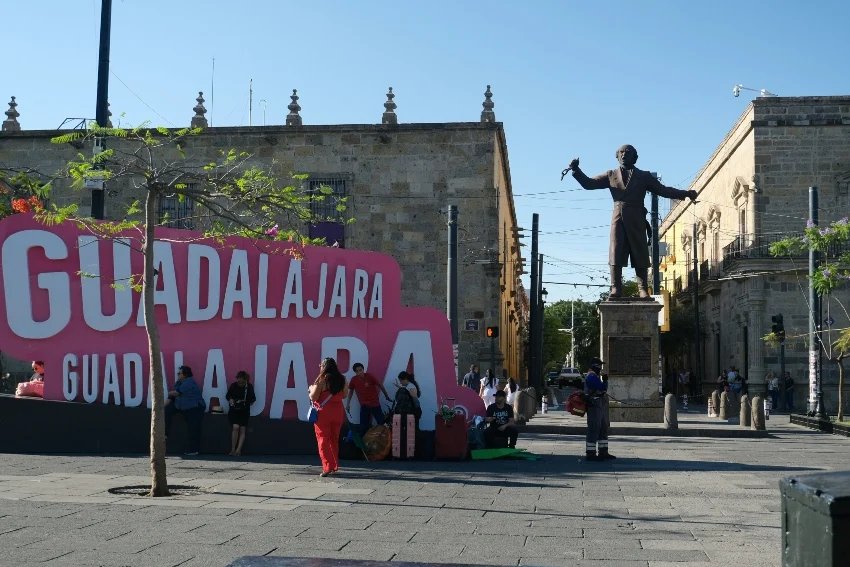
Spring has arrived in Guadalajara, bringing intense heat and brilliant sunshine. Fortunately, there are plenty of ways to keep your attention off the rising temperatures. The best options include strolling through the newly remodelled Parque de la Revolución, taking in some modern art or grabbing seasonal fruit from a local market.
A revamped Parque de la Revolución has reopened
After nearly one year of rehabilitation work and 20 million pesos in public investment, the Luis Barragán-designed Parque de la Revolución in the center of Guadalajara has finally reopened.
Updates include improvements to the benches, fountains, lighting, playground equipment and flooring, as well as restoration work on the mosaic walls in the light rail station on the park’s east side. In addition, more than 160 new trees were planted, along with myriad new plants and shrubs.
“This was a project that we kept expanding because of the level of impact it has on the city. It wasn’t just about fixing up and restoring our park, but also about being able to intervene in the social dynamics of the surrounding area,” said Juan Carlos Arauz, the Director of Public Works for Guadalajara, in a recent interview with local press.
Touring the newly reopened park during Holy Week, Guadalajara Mayor Verónica Delgadillo noted that the City Council has voted to turn Revolution Park into a protected public space. This move has prompted some controversy, as it means commercial activity inside the park will no longer be allowed, preventing the popular Saturday Tianguis from returning.
In response to protests from locals unhappy with that change, Mayor Delgadillo noted the affected vendors have been relocated to other markets such as the Tianguis Cultural near Parque Agua Azul, Mezquitán, and the esplanade of El Refugio.
Going forward, the park will instead be a hub for cultural, artistic and sporting activities for the neighboring community.

A new art exhibit asks what our attachment to screens has cost us
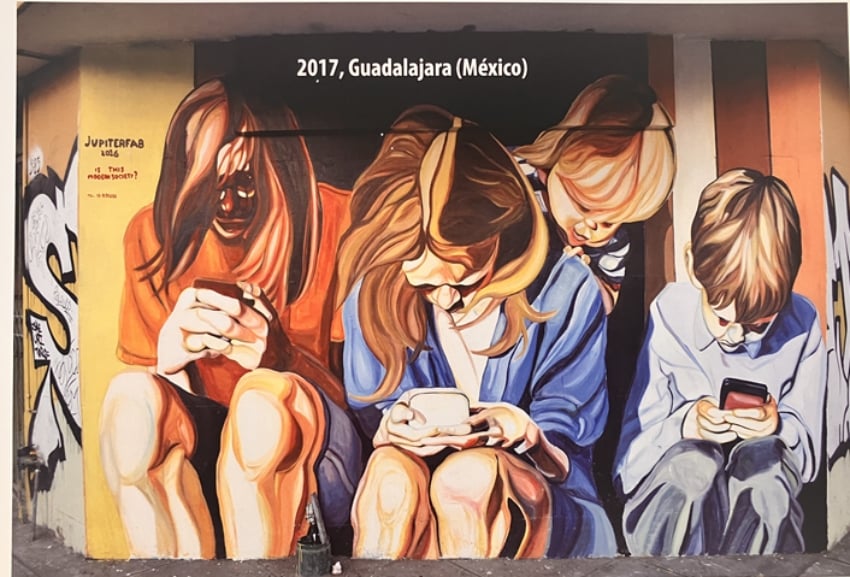
In our current landscape saturated with digital influencers, TikTok videos and Instagram reels, a new art exhibit, “Is This Modern Society?” challenges us to examine what has happened to human connection when experiences are constantly mediated through technology.
Through his vibrant paintings, the artist Jupiterfab (Italian Fabrizio Bianchini) poses some pointed questions. Perhaps the most obvious being: At what point did everyone stop looking each other in the eye and talking face-to-face?
The exhibition’s underlying message is that true connection isn’t measured in posts, signals or likes (hallelujah), but in being present with those around us. By rediscovering how to communicate without screens or simply sitting in silence, we just might rediscover our shared humanity.
Jupiterfab is a multimedia artist based in Guadalajara, known for creating street art, murals and installations. His work has previously been exhibited at the National Center for the Arts in Mexico and Can Felipa in Spain.
Dates: Through April 30, 2026
Location: Museo de la Ciudad de Guadalajara (2nd floor), Calle Independencia 684, Colonia Centro, Guadalajara
Tickets: Free
Pitahaya season is upon us, with an abundant harvest expected
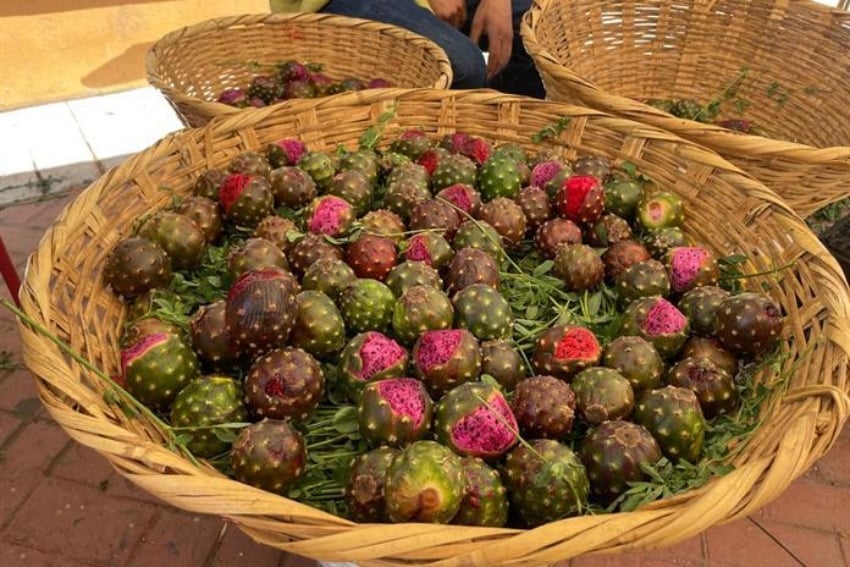
The pitahaya fruit has been cultivated by Indigenous people in Mexico and Central America for centuries. These days, the prickly, drought-tolerant fruit’s spring harvest is a major happening across Jalisco.
Locally, farmers haul their harvest from outlying towns like Techaluta to popular gathering spots around Guadalajara, like Plaza de las Nueve Esquinas in the city’s historic center, and Avenida Aurelia Ortega near Villa Fantasia in north Zapopan.
For many locals, the sight of pitayas in local markets signals the arrival of springtime. And this year’s harvest looks to be bountiful for Jalisco’s producers due to uncharacteristic rains earlier this month, followed by intense heat.
Pitahayas are picked from cactuses and come in various colors, with the green or red-skinned fruit and bright magenta flesh most common in area markets. On the palate, tiny black seeds offer a crunchy counterpoint to the soft, fleshy fruit. Sort of like a kiwi in texture, minus the tartness.
Prized for their nutritional benefits, pitahaya fruits are rich in iron, fiber and Vitamin C. Locals enjoy them raw or blended into breads, jams and syrups.
At the moment, the fruit is rather pricey, fetching up to 20 pesos per piece, as the season is just beginning. As supplies increase over the coming weeks, prices should improve for those who can’t get enough of this fleeting delicacy.
Dates: From mid-April to mid-June
Where: Check local markets. You might also see pitayas mixed into seasonal cocktails at trendy bars like De La O Cantina.
Festival Akamba returns with music, art and regional cuisine in Tequila
The Festival Akamba is an immersive electronic music, art and food festival held annually in the blue agave fields of Tequila, Jalisco, now recognized as a UNESCO World Heritage Site.
Akamba is the word for “agave” in the native Purépecha language. Now in its seventh year, the festival’s guests will be treated to a multi-sensory experience celebrating these native lands.
A talented roster of DJs from Mexico, the U.S., Europe and Israel is scheduled to perform. So enjoy a glass of tequila while dancing the night away in one of Jalisco’s most iconic landscapes.
Date: April 25, 2026, from 3 p.m. to 2 a.m.
Where: The tequila fields at the Jose Cuervo Estate. Guests can drive or access the festival site using the Jose Cuervo Express train, which departs from Guadalajara’s Colonia Moderna.
Tickets: Available from Passline from 1,890 pesos.
MND Writer Dawn Stoner is reporting from Guadalajara.
