
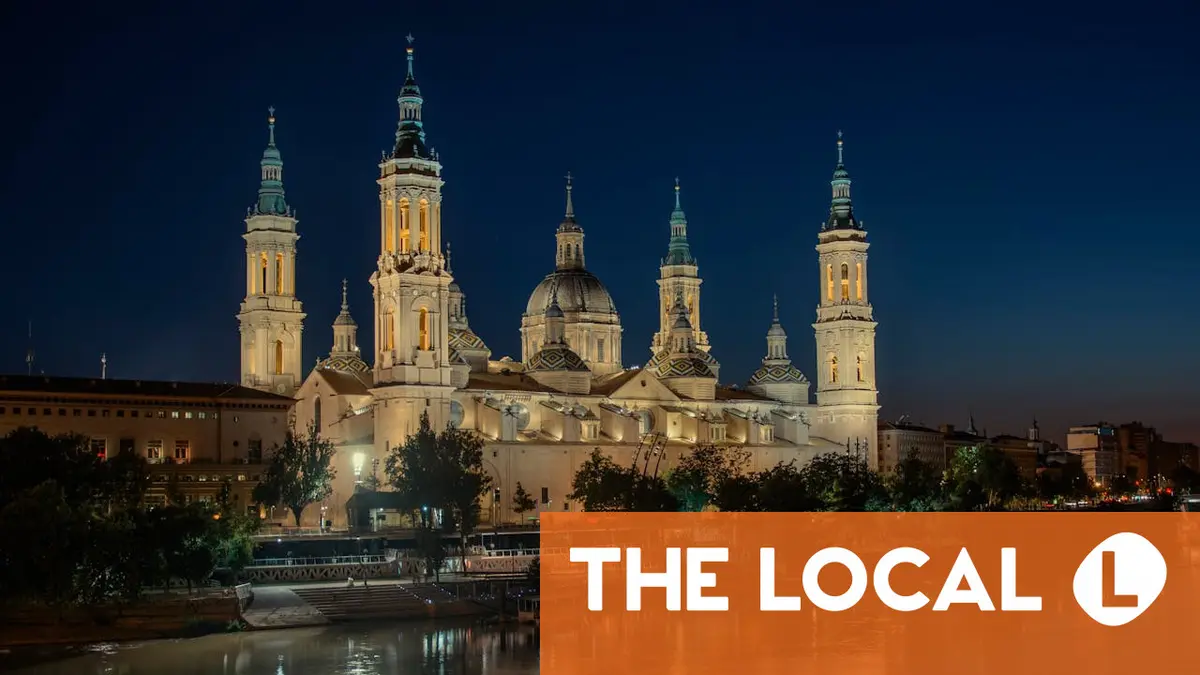
To celebrate Aragón Day (April 23rd), we’ve delved into its history and geography to offer you some intriguing facts about this overlooked region of Spain, from its unique language to its connection to chocolate.
The landlocked region of Aragón is midway between Madrid and Barcelona, and has a population of 1.3 million inhabitants, roughly half of them living in its capital – Zaragoza.
It’s divided into three provinces – Teruel, Huesca and Zaragoza.
Aragón is often overshowed by its neighbours to the east – Catalonia and Valencia and is also one of the least-visited regions by international tourists, but there’s a lot to discover here.
Advertisement
Aragón was once a kingdom
Aragón was once a country of its own – capital of a vast kingdom which included Catalonia, Valencia, the Balearic Islands Sicily, Sardinia, and Naples at different points in history.
It joined to the Kingdom of Castile in 1479 with the marriage of Ferdinand II of Aragón married Isabella I of Castile, a union which together with other factors led to the creation of ‘modern’ Spain.
READ ALSO: When did Spain become Spain?
Aragón has its own language
While Aragonese is not one of Spain’s co-official languages as is Basque and Catalan, it is a separate language, although one spoken by a small minority of people within the region and which has been split into several dialects. According to official sources, around 25,500 people speak Aragonese today – 7,200 of them are in Zaragoza and the other 8,400 are in the north of the region. Historically, the Aragonese language territory extended as far as the present-day province of Teruel.
Aragón is where the first modern day chocolate was made
In 1534, a monk named Fray Jerónimo Aguilar, who had accompanied the explorer Hernán Cortés on his expedition to the land of the Aztecs in the Americas, decided to send his friend, the Abbot of a monastery in Aragón a recipe for chocolate, along with a shipment of cacao beans.
READ MORE: How Spain invented modern chocolate – and kept it secret for 100 years
This was Monasterio de Piedra, which became one of the cradles of modern-day chocolate in Europe. It was here that Abbot Antonio de Álvaro and his fellow monks experimented with the recipe, upon finding the Aztec version too bitter. They are credited with adding sugar, cinnamon, and vanilla to the cacao to make something akin to the chocolate drinks we know and love today.
Advertisement
Aragón houses the biggest desert in Europe
Located between Huesca and Zaragoza, Monegros is the largest desert in Europe, covering an area of 276,440 hectares.
Visitors and geologists may be left in awe of its “badland” landscapes, but in truth Monegros is best known for its yearly music festival, a sort of European ‘Burning Man’ where ravers party for several days despite the scorching July temperatures.
Aragón is the home of some of the best examples of Mudéjar art in Spain
Mudéjar art is a fusion of Christian and Islamic architecture, which has been recognised by UNESCO for its unique style. Aragón is home to some of the best examples of this including Zaragoza’s Aljafería Palace and the towers in the city of Teruel.
Aragón is where Spain’s iconic painter Goya was from
Francisco de Goya is one of Spain’s most famous and revered artists, regarded as both as an Old Master and one of the Fathers to Modernism.
He was born in the Aragonese town Fuendetodos in 1746. Today, there is a museum dedicated to the artist in the regional capital of Zaragoza and he also carries the name of Spain’s most iconic film awards The Goyas.
A self-portrait of Francisco de Goya, Aragón’s most famous painter. (Photo by GABRIEL BOUYS / AFP)
Its capital is named after a Roman emperor
The name Zaragoza is derived from Caesaraugusta, the name given to this settlement in 14 BC to honour Roman Emperor Augustus, also known as Octavian.
He was the founder of the Roman Empire (of which Hispania/Spain was part of) and the first Roman emperor from 27 BC until his death in AD 14.
This Latin name was transformed after the Muslim conquest when it became Saraqusta. Finally, it became known as Zaragoza after the Christian conquest.
If you visit Zaragoza, you’ll no doubt stumble upon a statue honouring this Caesar.
READ ALSO: What are the pros and cons of life in Spain’s Zaragoza and Aragón?
