
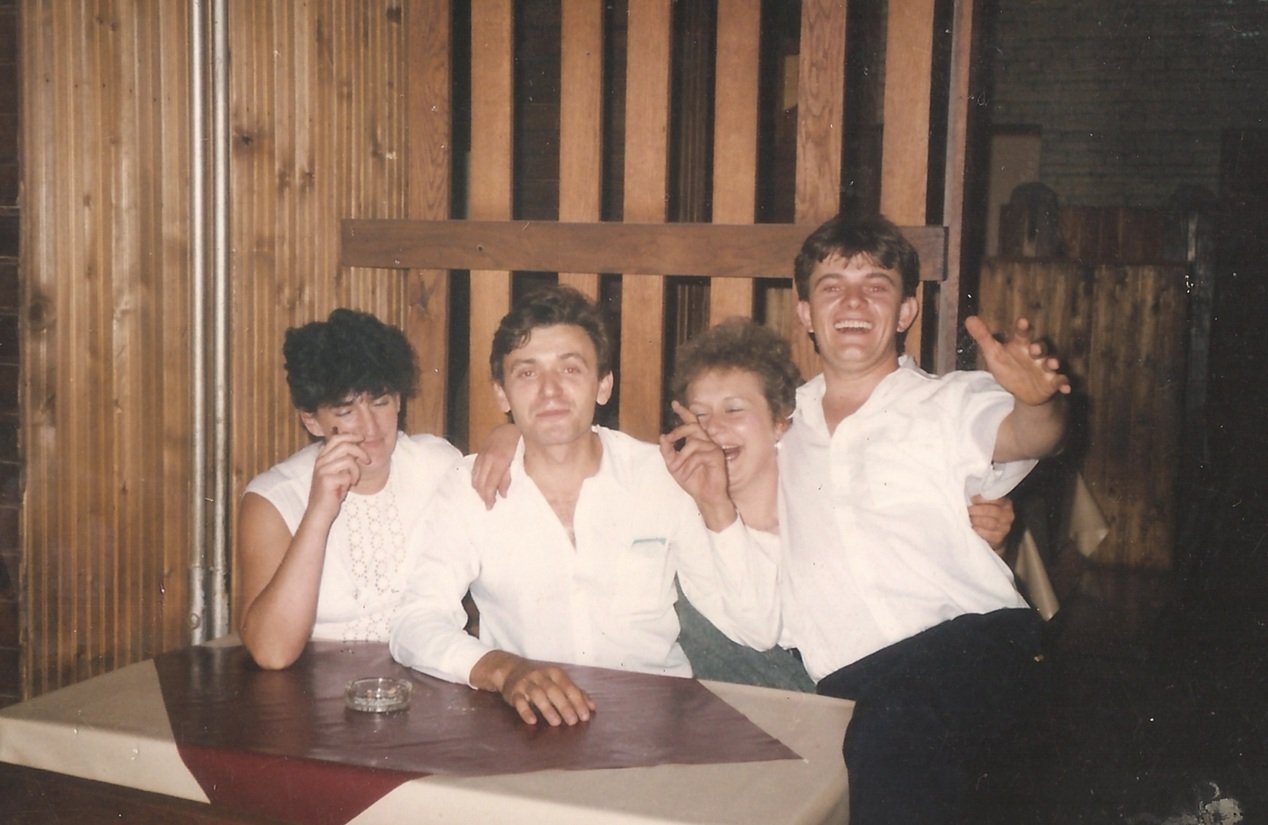
– A tavern serves as a metaphor for the collapse of Yugoslavia in this found-footage documentary helmed by Jelena Bosanac and Tanja Brzaković
The collapse of Yugoslavia remains a subject of interest across generations in the states that succeeded it after the wars of the early 1990s. The central question is how the proclaimed ideals of “brotherhood and unity” in the former socialist regime morphed into nationalist hatred and quasi-tribal wars. Artists across different disciplines have sought to capture this transformation through metaphors drawn from a range of settings, such as ethnically mixed villages and towns, workplaces that employed large numbers of people, and communal spaces – bars, clubs, inns and taverns once widely frequented.

One such tavern that operated in the 1980s stands at the centre of the documentary Remember My Song, directed by Jelena Bosanac and Tanja Brzaković. The film has just premiered in the regional competition at ZagrebDox. The opening scene shows an ageing man reciting a poem about his village of Jugovo Polje beside its road sign. The rhymes are somewhat laboured and the worldview expressed in the poem is slightly naive, evoking the idyll before the war and portraying the war itself as a kind of demon that appeared from nowhere. The scene is followed by material from a personal archive, showing the immediate consequences of the events of the early 1990s: a bare structure too large to be a single residential unit, yet not large enough to function as an industrial building. In the ruins, completely ransacked years earlier, a woman finds an old LP record, and the time capsule opens.
It takes us to a tavern called Jablan, meaning “poplar”, which operated in a village near a busy road. Its owner, Nikola, was a capable businessman, and his wife Milena had a gift for managing staff. During the day, endless meals were prepared for passing truckers, and countless coffees from the first espresso machine in the area were served. On weekend nights, the tavern turned into a folk music disco, with live performances by aspiring singers and even established stars brought in from Belgrade. The owners and staff lived in harmony and unity, while the guests kept spending their money and “producing” countless anecdotes. Questions of nationality were never raised – until nationalism reached Jablan through its guests in the early 1990s, when politicians were stirring people up for war.
However authentic it may be, the story is quite typical, touching on all of the familiar cornerstones of idyll and nostalgia. What makes Remember My Song stand out, however, is the filmmakers’ approach. Much of the film is built entirely from found VHS footage and photographic material re-shot by Željko Felbar and edited by Hrvoslava Brkušić, using experimental forward and rewind techniques to create a psychedelic effect. This effect is further enhanced by the use of (Serbian) folk music, which taps into deeply rooted emotions and is further distorted by being sourced directly from ageing VHS recordings. Over this material, Milena, the waiters, the cooks, the musicians and the regular singer Haska narrate the stories they have collected.
The filmmakers’ decision to shift their approach once the tavern’s golden years are over, turning to a series of shots of empty spaces filmed by Boško Đorđević, proves to be another effective choice, as the stylistic contrast works very well and highlights the consequences of war and destruction. In the end, with Remember My Song, Bosanac and Brzaković may be telling a well-known, oft-told story, but they do so in a captivating manner.
Remember My Song is a Croatian-Serbian co-production by Restart and Talas Film.
