
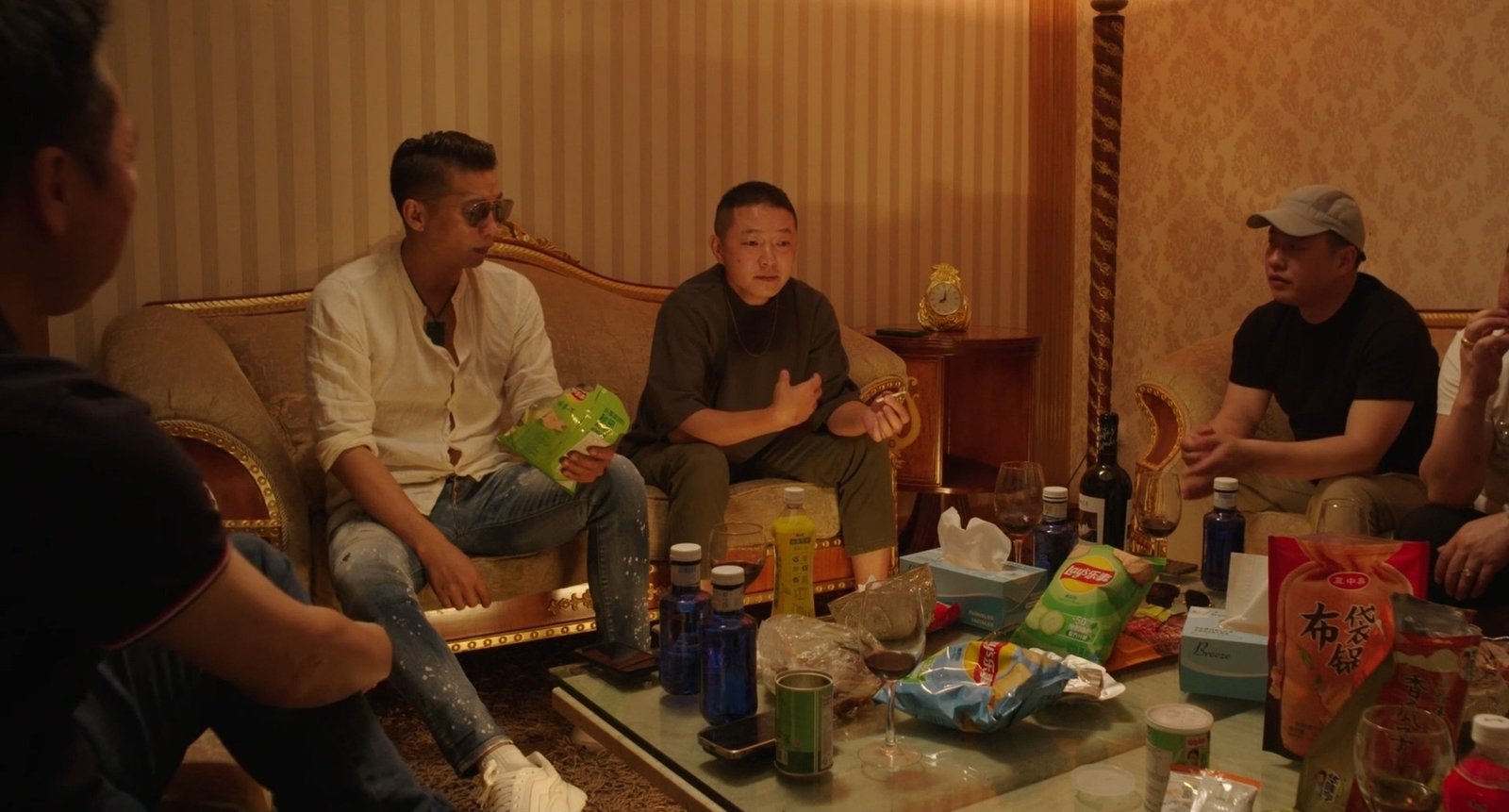
– Xisi Sofia Ye Chen’s first feature explores her relationship with her brother and their difficult past, resulting from their parents’ immigration from China to Spain
Presented as a world premiere in the Visions du Réel Festival’s International Feature Film Competition, From Dawn to Dawn by young Catalan director of Chinese origin Xisi Sofia Ye Chen offers up a new, complex and by no means stereotypical reflection on the phenomenon of Chinese immigration to Europe. The driving force behind this exploration is the director’s older brother, A Wen, whom she sensitively and meticulously observes through the lens of her camera.

Revolving around A Wen’s life, from when he arrived in Spain with his parents when he was a child and found himself reluctantly contending with the everyday challenges involved in getting by, with very few resources, in an entirely new place where they didn’t speak the language, the film gradually morphs into the portrait of a parallel reality. Xisi Sofia Ye Che’s film sees communities of Chinese immigrants – which are a common feature in all European capital cities, where they’re often pushed to the margins, as if some kind of embarrassing poor relation – taking centre stage in the story. Unhurriedly and patiently observing each and every gesture and expression, the director reads emotions on her brother’s face which he’s not yet ready to express. The result is an incredibly touching but never condescending or overly indulgent portrait of a man who’s continually torn between two realities.
From the outset of the film, which opens with A Wen in a Taoist Chinese monastery seeking out redemption, the director takes us by surprise. The person we’re introduced to is by no means the tough-guy, gangster character A Wen has acted out for so long when in the presence of his “blood brothers,” but a soul who’s lost, although determined to change; a complex and troubled character. Spanish and Chinese, silent and sociable, a gangster and a family man, A Wen seems to embody every possible contradiction whilst also avoiding categorisation.
Fascinated by the tough-guy persona she saw her brother acting out in childhood, as he sought to identify with a model of masculinity which clearly hasn’t worked in his favour, the director now tries to understand what’s hiding behind the mask he’s worn for too long. In order to do so, she immerses herself in A Wen’s day-to-day reality, full of highs and lows, dark moments and changes of mind, but also tenderness and intense friendship, reality and transcendence. The world inhabited by A Wen and his “brothers from the street” reveals all of its contradictions and paradoxes, from aggrandised stories of shootings and thefts, to discussions about his depression; from unbridled karaoke sessions where alcohol flows free – sometimes reminiscent of Hou Hsiao-Hsien’s Millennium Mambo – to consultations with a feng shui master.
The protagonist’s bilingualism makes the duality residing within him even clearer: Spanish is the language he uses to discuss practical aspects of life, whereas Chinese is used to express his emotions, to connect on deeper levels with others, and to dream. Without ever directly interacting with him, instead using the camera as a microscope, the director gently and patiently moves closer to him, painting the portrait of a man who has suffered from holding everything inside and who is now trying to work out who he really is. A statement delivered off camera by the director is emblematic, in this sense: “silence is like a virus” – a virus which renders people invisible, which pushes them to the edges of society, to warehouses in industrial zones, to insalubrious basements, and into the underbelly of indifferent societies. Without judging him, but also refusing to fall for his charms, Xisi Sofia Ye Che offers her brother, her parents and the many people forming part of their community, a rare opportunity to let their own light shine.
From Dawn to Dawn was produced by LaCima Producciones (Spain), The South Project (Spain) and La Fabrica Nocturna Cinéma (France).
(Translated from Italian)
