
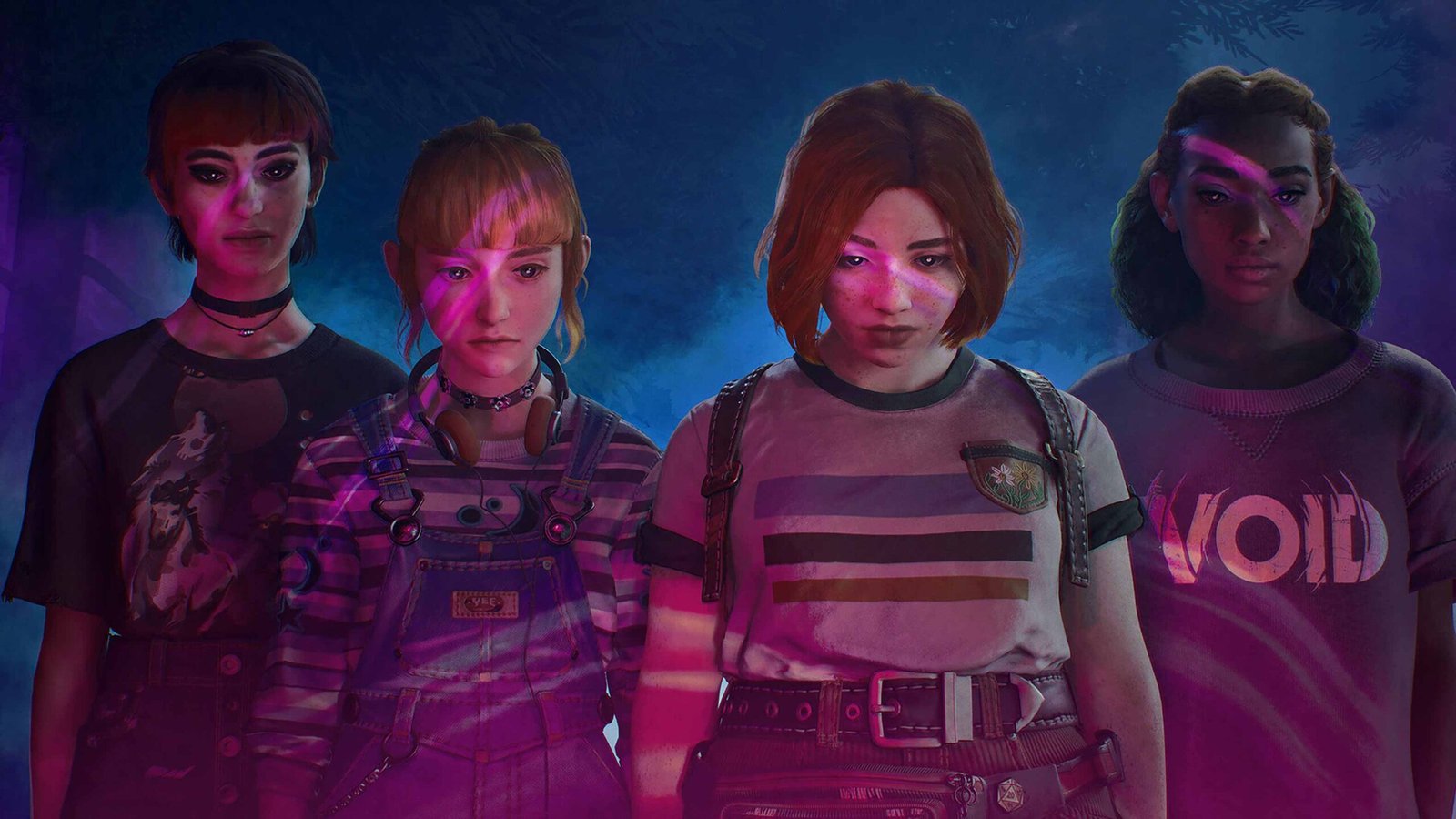
It’s been a big month for Lost Records: Bloom & Rage.
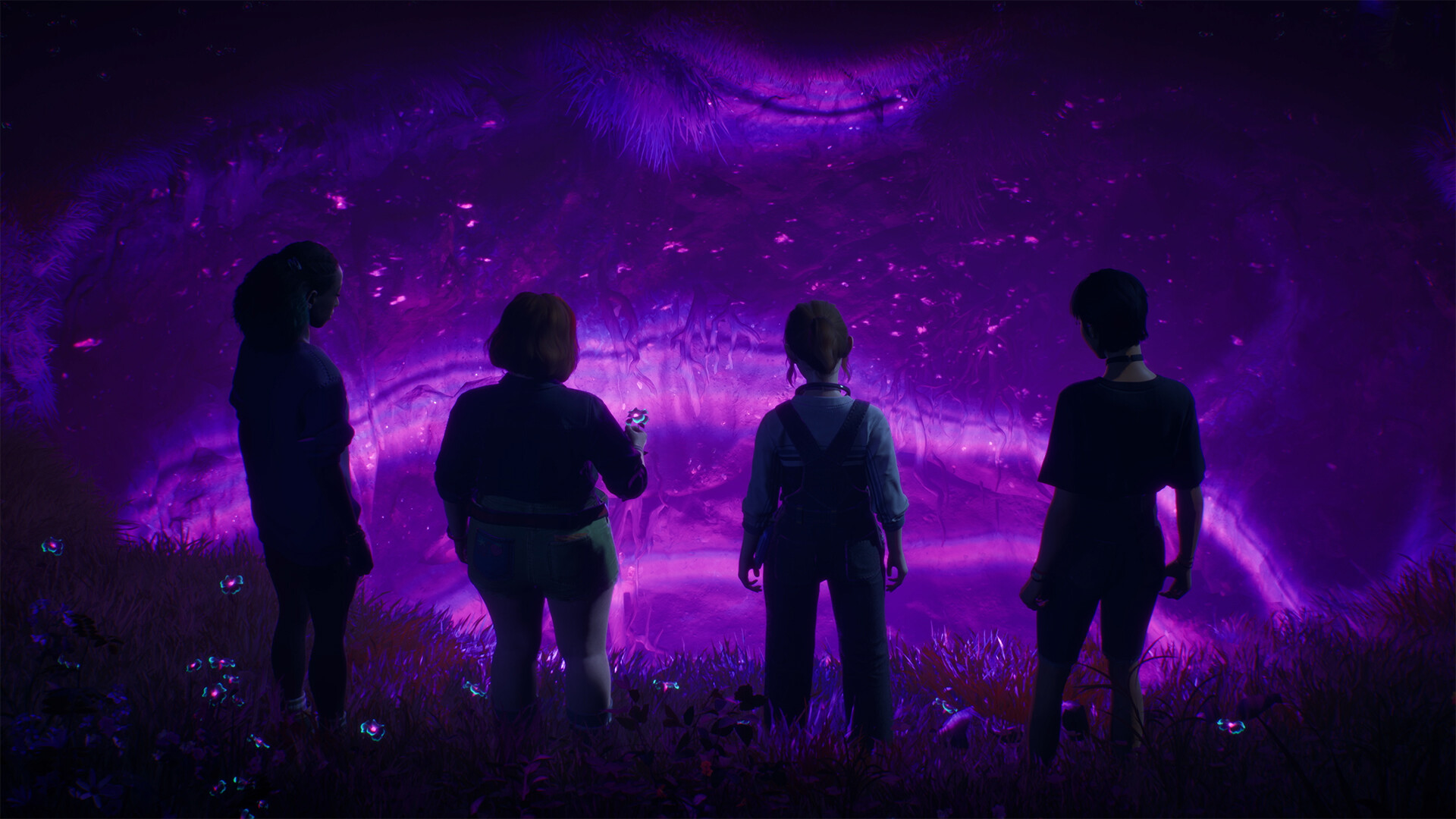
The two-part Don’t Nod Montreal-developed adventure game celebrated the one-year anniversary of the release of its second half, “Tape 2,” on April 15. And on top of that, it was recently nominated for five awards at next month’s Canadian Game Awards, including Game of the Year. For those who’ve played it, myself very much included, Lost Records is a wonderful coming-of-age story about four old friends, Swann, Nora, Autumn, and Kat, who reunite after 27 years to confront childhood trauma. As a major Life is Strange fan, it beautifully captured the spirit of Don’t Nod’s previous work while also demonstrating even more emotional maturity, meaningfully exploring themes of identity, rebellion, friendship, and healing.
With all of that in mind, MobileSyrup sat down with creative director Michel Koch and executive producer Luc Baghadoust to reflect on the anniversary, crafting a choose-your-own adventure narrative that spans nearly three decades, Don’t Nod’s refreshing approach to nostalgia, Lost Records‘ Canadian Game Awards nominations and more.
Note: This interview is largely spoiler-free when it comes to major story revelations, although a few specific details about the adult sequences are touched upon. We’ll mark the one more spoiler-heavy question below.
The one-year anniversary of Tape 2 was just a couple weeks ago. How are you feeling one year later about the game and its reception?
Luc Baghadoust: First, time flies so fast. It feels like it has been like five years and two months at the same time, which is kind of weird. The game still feels so close to us, because we released in episodic format with two tapes. But also the game has been living with the community. So there has been the awards nominations, the messages we’ve received, the Reddit and fan on social media. So we are still actively engaging the community and feeling like the game is still alive. It’s been incredible to work on this project — very proud as a team. Even though Michel and I worked on the Life is Strange games before, it’s the first game of the Montreal team itself. So because we have been involved since the beginning of the studio, with the background we had on the Life is Strange games, it’s very close to us. We’ve shaped with Frédérique [Fourny-Jennings], our manager, the studio and everything the way we hoped. So there have been challenges, of course, but on the team side, the studio side, it has been an amazing adventure. And creatively, I guess Michel, you would have more to say than me, but it’s been amazing.
Michel Koch: Yeah, it is. And I think that’s one of the great things with the kind of games we are making. These story, character-based games — they stay with us and with our fans for a longer time than some kind of other games. We’re not a game as a service that you just continue to play. But still, for something that is one story and has a small amount of content, because those are shorter games, we see so many people who are still sending us photos, fan fictions, drawings, talking about those characters, wanting to know more about what happens for those characters…
But even just with those games, we still also have fans from Life is Strange, of course. But those are games that still stand the test of time in a way. It’s still a niche kind of genre for games, but players who interact with those games, they’re really there for the long run. And getting to know those characters as if they were real friends or sometimes family members, that’s strong, because we get those messages. And same for us. I think we’re still thinking of every character and story we created in our previous games, and they’re still with us. So yeah, this one-year anniversary was really, really cool.
On the subject of these stories and characters sticking with you… Something I’m still thinking about months later — I really love the adult sequences. We see a lot of these coming-of-age stories about teenagers, but this one is very interesting because you get that flash forward nearly 30 years later. What was the process of shaping this very expansive story? What were some of the challenges of telling a story that spans three decades and making each section — the past and the future — feel simultaneously distinct but also connected?
Koch: Thank you for mentioning this. I think it was right from the beginning in the intention for this project. All our previous games were coming-of-age stories; that’s something we love. I think that because it’s so formative of your teenage mood, it’s still something that follows you up to where we are today. And we really wanted for this game to focus even more on that, focusing on, “Yes, teenagehood is interesting, it’s exciting. It’s magical. It’s a time of your life when you can be everything you want. You can do a lot of different things.” But then it’s really important who we are today as adults. That’s the reality of what life is today. It has been shaped by decisions we made in our own teenagerhood, of course, for the coming years.
But we really wanted to work on a game where we would be talking about the adults — not only telling the story of the teenagers, but also telling the stories of the adults that they’ve become. Working on a game reflects who we are, and we are growing older. And I think it’s interesting to start to acknowledge also that life goes on, and what all of those memories and things you did as a teenager, it has an impact on who we are today. So it was this idea of, yes, blending those two timelines so we could still tell a coming-of-age story with the thing that we love how to tell with the magical settings of teenagehood, but having something a bit more anchored in reality with how this affects the adults, and having the opportunity to also have a second point of view of teenagers through the lens of, when as an adult, you remember what you did 27 years ago. How do you reflect on that?
And we very quickly worked with Jean-Luc [Cano], our writer, on how to tell a story that resonates with what we like for the teenagers, but still make it work with those back-and-forth choices you will make as teenagers. How do we make a story where you can see the consequences of those choices almost right away, when we switch back to the present time and you’re playing the adults? And since it’s a game and we want to have some twist, we also did it the other way; the things that you are telling as adults, you are kind of retelling the story as teenagers. So both past and present are connecting and affecting the other, the other timeline, in a way that you are retelling your own story as both an adult and a teenager.
Baghadoust: And some behind-the-scenes aspects: the characters themselves, the fact we had to model them as young versions and adult versions, I think it was pretty interesting. Like, even if you see Autumn quite soon, we keep it a secret at first what Nora will look like for the first time. So there’s some excitement as a player. And also seeing late in the game, [adult] Swann for the first time — it was a very important part of the experience. But for the two eras, on the voice acting side, it was important for us to have the same actresses play the teenagers and adult versions to have this connection, for the audio to make sense, especially when you hear past voices over the present or the opposite. It was important to make the connection and make it work with the same person.
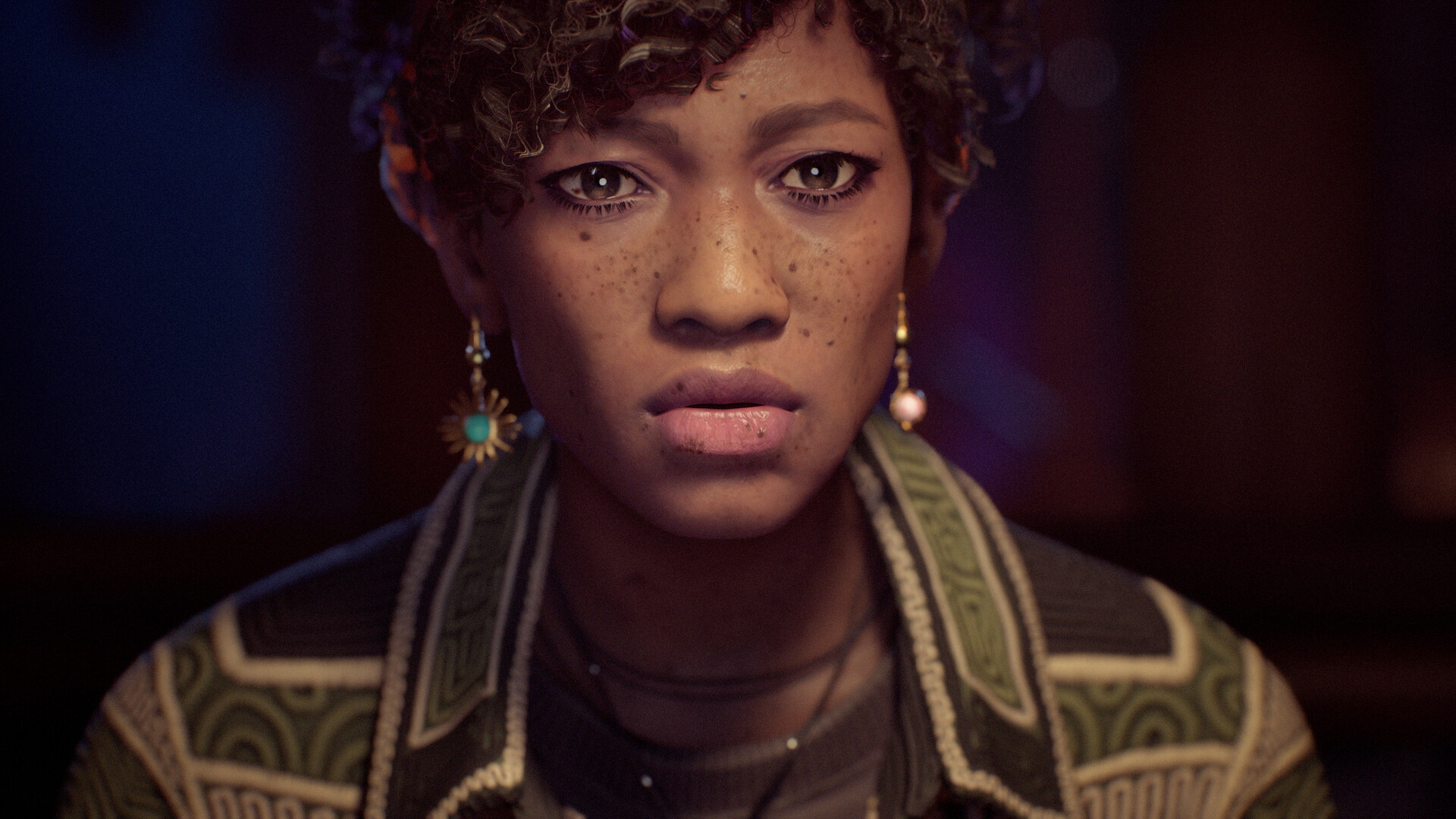
Koch: I think that a lot of time in fiction, there is this quite direct path of, “If you see teenagers that are playing music, then when they’re grown up, they should be playing music. They should maybe be successful musicians.” And that’s really something we wanted to avoid in this game with our writers [Nina Freeman and Desiree Cifre] and Jean-Luc. Because we never wanted to glamourize the success, but [instead] have a game that’s talking much more about personal success, like friendship and connections. It’s not that because you’re not a famous musicians when you are an adult that you’ve failed at your life. And that’s how we designed our characters. Nora, Swann, Autumn — we love them as adults, but we really tried to avoid the trope of having Nora arrive having just signed [with a label] and saying that she’s a very famous musician because she was playing guitar as a teenager most of the time.
A lot of people were playing guitar when they were teenagers, and they are not famous or [in] big, successful bands when they grow up. And we really wanted to tell in this game that this is perfectly fine. It’s okay, you can just be normal person and really have something fulfilling with your life. We wanted to try to get this feeling. Same thing for Swann. When you see [her], she was an introvert when she was a teenager. And she’s still an introvert as an adult, and that’s okay. She lives by herself in a small town and works in a small book shop. She doesn’t have this extensive life that you could see in some movies, but she’s perfectly fine with it. And that’s something we really wanted to push and value and show that “It’s okay, it’s great, she’s just fine how she is.”
[Spoilers for the ending below]
I love that you touched on the “Nora musician” part because that actually leads into my next question. What I also like about those adult sequences is they don’t necessarily go the way you might think. When I played Lost Records, I wasn’t able to convince Autumn or Nora to stay with me. Initially, I was a little disappointed, but the more I thought about it, I found it pretty mature to acknowledge that people change when they get older and trauma affects us all differently. So, how did you decide on all the sorts of different ways that the game could end and what it would mean for Swan and her friends?
Koch: Yeah, that’s something we wanted. When we’re designing our stories, when we’re writing, I don’t think we believe in “right” or “wrong” endings, and most of our games have been very much anchored in real life and real relationships. And most of the time, you kind of drift away from your friends. And sometimes it’s okay — you can keep contact. Maybe you’re not best friends anymore. And it doesn’t have to be that sad. For example, the ending, where Swann just is by herself at the end… We really don’t see this one as a bad ending. It’s personally one of my favourites, because you still reconnected. You had this great evening with them. You remembered the past. You had closure on Kat’s illness, and you remember what happened. You still had a way to reconnect a bit with Autumn, with Nora, and you discover that Swann still loves herself as who she is. They cannot reconnect completely and stay, and they won’t see each other every time, but at least you understand that maybe they will write to each other again.
And that’s still fine. That’s still something that makes sense. That happens a lot of time in real life. And I don’t think we should have players feel like they “failed everything” if they go into this kind of ending, because it’s not a failure. And this is the kind of bittersweetness that we think is inherent to life, that we ideally love to put in all endings, because it’s how it is. And we don’t think that there should be one fully “perfect” ending. We never wanted to have Swann finish the game by just becoming this party animal, where she would just, I don’t know, decide that she’s having everybody come to her home all the time. No, it still needed to be realistic and to be a natural progression of who those characters were that will hopefully feel like a good connection for most of our players, where they can still see some parts of themselves in those characters.
[Spoiler ends]
We find out that Vancouver is where Swann lives now. In the past, she moves there, and you find out that she stayed there all those years. It’s obviously not a major part of the story, but since we’re a Canadian site, and we don’t see Canada in a lot of games, I thought that was fun. How did you decide on Vancouver, specifically, as the place that she ultimately moves to and then settles in?
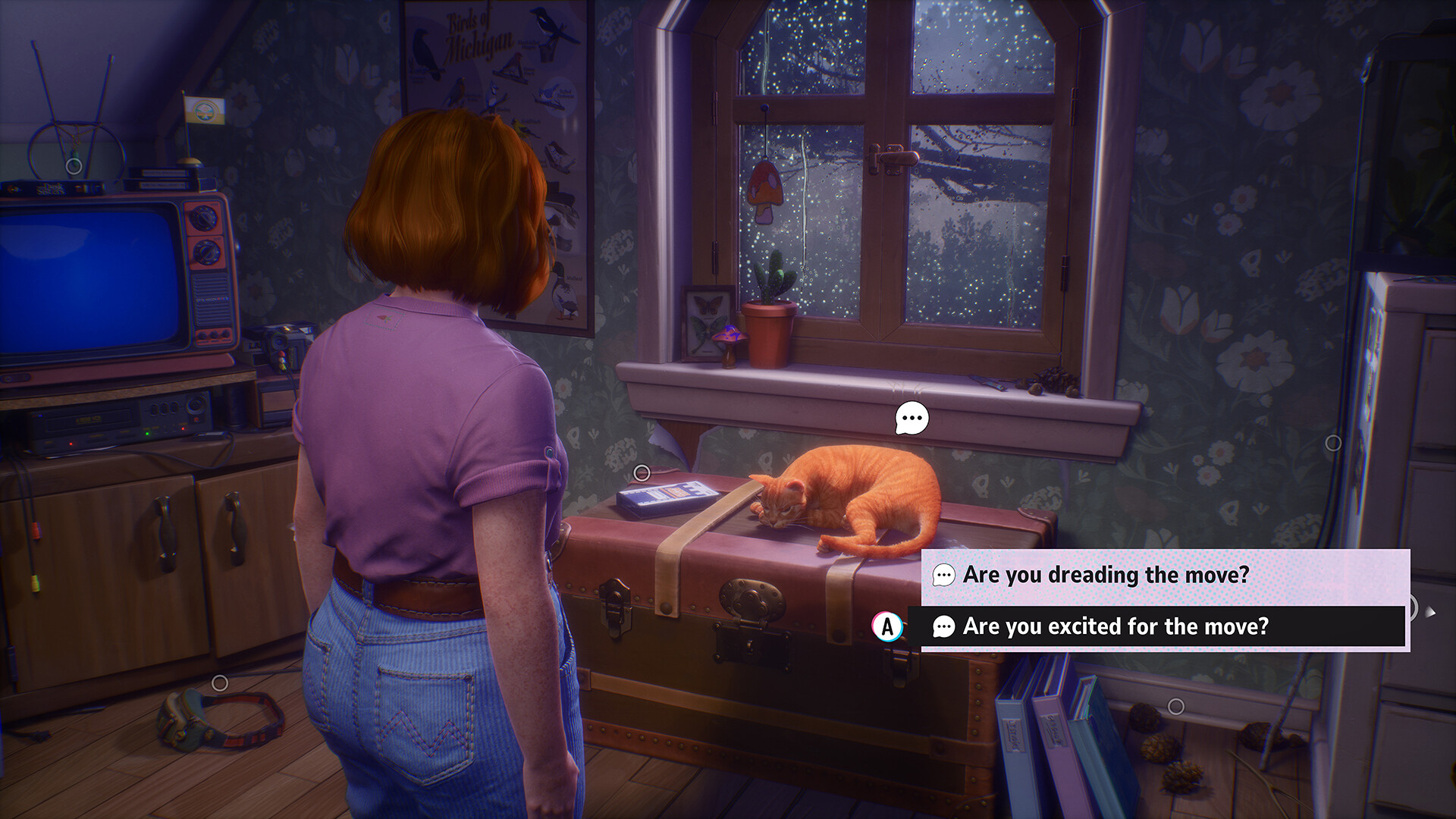
Koch: I think that as we wrote the story and we were working with the rest of the team, also with our art director [Sam Bradley], we knew that we needed Swann’s family to move away at the end of the summer. We really wanted this summer to be the last one to have this kind of ticking clock — like, “Oh yeah, I need to make friends, because at the end of August, I’m leaving. So we have those few weeks together, we need to make the most of it.” So we had this really anchored for the needs of the story — Swann and her parents, they need to move. And moving to another country felt more definitive, rather than moving to Chicago or somewhere else. Just crossing a border feels a bit more definitive that you are getting away from your friends.
And the game is made in Canada. We moved with Luc from France. I moved to Quebec in 2021. Luc, you moved a bit earlier. And I think for us, it was cool to start to mention Canada, even just a bit in the story. It made sense to go there and to feature a bit of that in the story, even if it’s just minor. There is very, very minor social commentary when Swann and Autumn are talking about health insurance; they have a few voice lines about that. So just a few things we could very subtly layer, that felt right to us.
Baghadoust: In early conception, at some point, I think it was considered to have the game in Canada. But it was easier to have this distinction, as Michel said, to have the game set in the U.S., and with the references to Canada. But we’re getting closer! Previous games were in Oregon. We’re very close, so we’ll see. [laughs]
You’re getting there! So you’re saying your next game will be set in Montreal? [laughs]
Koch and Baghadoust: [laugh]
Baghadoust: Maybe we could!
Koch: The advantage of Toronto or Vancouver, of course, is there is no French, which is still easier to sell in a global market video game, rather than having two languages. So who knows?
Nostalgia is all the rage nowadays. So many stories are about recapturing what you love with returning characters or references or other fan service. But what I love about Don’t Nod is you don’t really do that sort of thing. The kind of nostalgia you focus on is much more meaningful in terms of exploring pivotal moments during your formative years. That’s why I think I’ve seen so many people over the last several months discovering Lost Records and loving it and saying it gives them that same feeling that they had playing Life is Strange. So I’m curious: what is the sort of “secret sauce,” for lack of a better term, to making these coming-of-age games that feel nostalgic and sincere and heartfelt but also original?
Koch: I don’t know! When we were working on Life is Strange or Lost Records, we were mostly never really trying to think of what the players want, or what the market wants. You are mostly trying to think of what do we, ourselves, as players, feel will create emotions for us? And that’s the hard part, because we also, of course, need to sell games. We need to have more recognition of those games. But I feel like why we are good at doing this is also because we are trying, not too much to look at market research or things like that, but to just think of a story about, “What is nostalgia for us?” And maybe if it works for us, it will work for other people, because we are just also human beings and players. And there is something that, if it works emotionally for us when we are writing the story, when we are writing those characters, hopefully there are players that will feel the same as we do.
And I think it comes down to the team. I know that myself, I’m very nostalgic, always thinking of some eras, what I loved from previous times, how I thought that the internet was better before than it is today… A lot of things like that. We can use a bit of that creatively in what we are doing. Just thinking about those characters, what a character will feel, how a character will react, I think it’s the base of everything. Most of the time, we are working on our stories with characters first — really thinking of who are the characters and what kind of emotions they will [face]. Of course, we work on the plot too, but we make sure that the plot works for the characters, rather than the opposite.
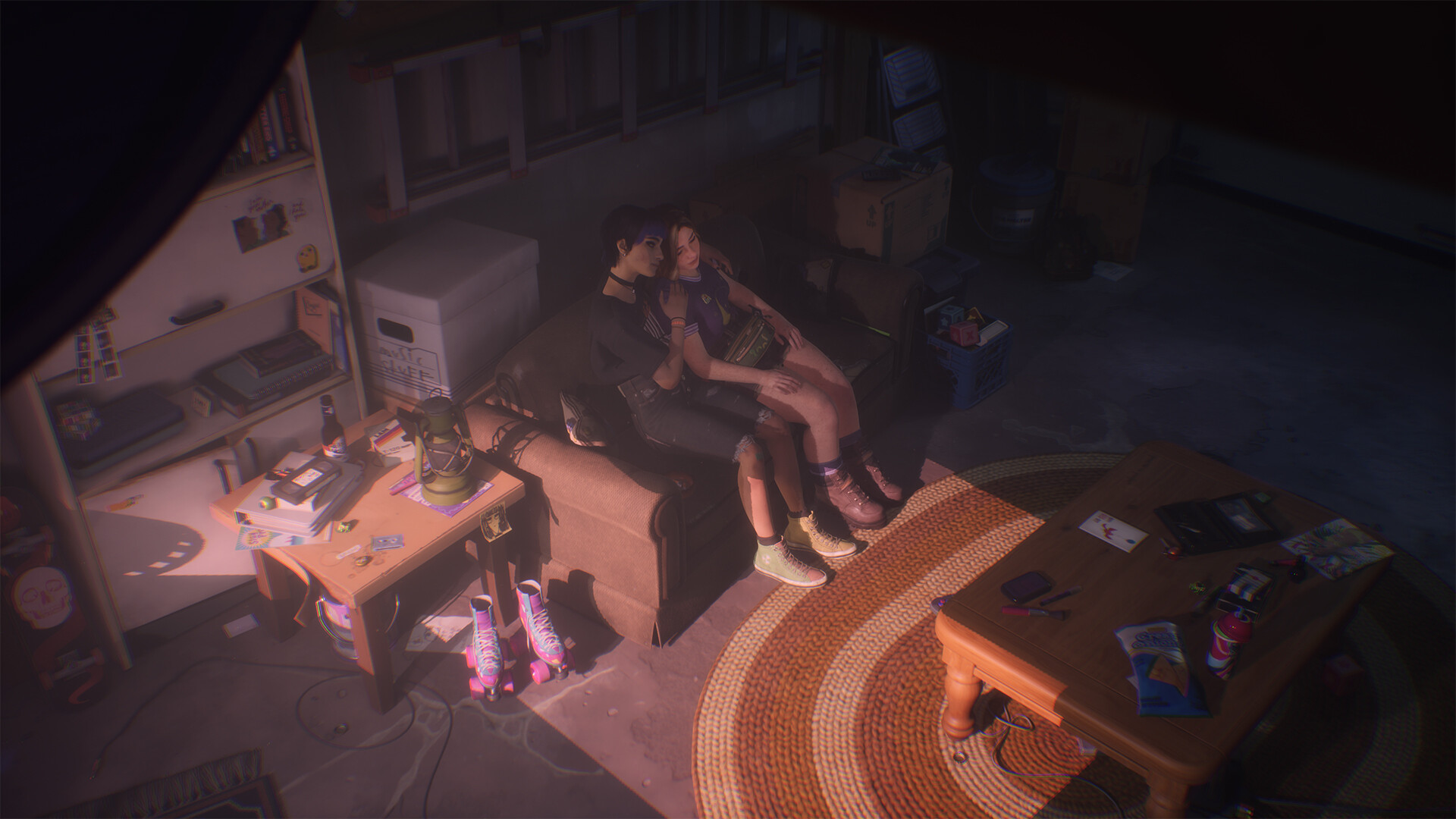
Baghadoust: To add to this […] [We have] a more indie approach to make you feel something that is not based on quick pacing and [for] low attention people. We watched Pluribus recently — episodes that are really good, and by being simple with a different pacing, you feel more invested. You feel more realism. “Okay, I understand the scene — I put some of myself in the scene, just because the pacing is different.” And this kind of art they consume and appreciate, and most of the team does as well. I think you want to create something like this.
And often I hear Michel talking about what’s important in a scene. Sometimes, it’s the details that makes the difference. And I see Michel or other directors, other people, pushing for small details, but that’s what counts. You feel in the scene. You understand what’s happening. And writing partners are very important in this as well. We have Nina [Freeman] as a writer, and I think all these people that have this indie approach.
Koch: Yeah, we hired them for that. We’re so happy that we’ve been working with Nina Freeman. I knew her games [like How Do You Do It? and Cibele] and her work for a long time, and they are so personal and intimate in a way that’s way different from, I would say, what is the base standard for video game writing. And I feel like that’s how we love to work with those kinds of people. We are trying to bring to the team people who, when I see their art or their writing, I feel something unique — who I love to watch or to play as a player, rather than just ticking boxes of, “Okay, we need this kind of writing here.” In the end, being able to write the events of a story is the easy part. But making sure that we work with people who can still bring some life, some emotion in even the smallest things, I think that’s where it’s important.
You’re both originally from France, which obviously has a very talented and prolific gaming scene. And now you’re in Canada, which also has a very prolific and talented gaming scene. So I’m curious, since you made that move, what has it been like to settle in Montreal the last few years? How would you say the two development scenes in each country are similar or different?
Baghadoust: It’s a tricky question! We don’t want to say anything bad. [laughs] But like you said, both scenes have amazingly talented people. We’ve seen one of the biggest games ever from France, Clair Obscur: Expedition 33, last year. And there are tons of friends and talented people there. On the scene part, I don’t know if it has changed, but from my time in France in development, there weren’t that much connections between teams. And when we arrived [in Montreal], I arrived first, and I was put in contact with the head of studios just to discuss. And everyone was welcoming. It feels the same thing as an immigrant, coming here, showing me how they do stuff, what are their recommendations… [It’s about] helping, not just competition between studios, even if there is obviously competition regarding resources. You felt that they wanted the industry, they wanted Quebec and Montreal and Canada, to shine and help one another. I felt helped. I felt welcome. It was really a great experience.
And on top of that, we had the chance to build a new studio. So we had the people from the Life is Strange team coming here, and we communicated on that. We said, “Okay, we want to continue on this path. We have made Life is Strange 1, Life is Strange 2, we’re making a new narrative game here in Montreal.” And the people who joined us were people who wanted to make these kind of games. So it was really a great opportunity for us to shape a new team with the same creative vision and studio values. So it’s been an amazing opportunity for us, even if it was hard to start from scratch during the pandemic. I’m so amazed by the team we have right now, whether it’s the art part, the technical part, the creative part. You feel welcome in Canada, so I hope it will stay the same.
Koch: Totally. I think you said most of everything. And one more detail, I like that how in the day-to-day work, we are speaking both English and French a lot of time at the office. Because when we were working in France, of course, everybody speaks only French, which is normal. But when we’re working on game with an international audience, I feel like sometimes it’s good to have different voices. It’s cool.
Lost Records is up for several Canadian Game Awards, including Game of the Year, which is really awesome. And I saw that [Swann actress] Olivia Lepore didn’t even know she was in the running and was really surprised by her nomination. For you, what was it like to receive those nominations? What was your reaction?
Koch: We never really work on a game thinking of any award, because there are many games every year, and there are not so many awards shows. So you’re just focusing on trying to make the best stories, the best games, the best voice acting, the best voice direction for voice actors. But I won’t lie that it feels good to receive those awards and nominations. Of course, we already have the feedback from the players, we receive some of the letters from our players who love game. But still, recognition from the industry, from peers, from other people working in the video game industry, looking at what you did, and thinking that this is worthy of being alongside some of the other best titles of the year — that’s great. And we are really extremely happy with that and just happy to be going there. And we’ll see — if we win something, that’s great. If we don’t, it’s great to be nominated among these games. [laughs]
Baghadoust: I realized during last year’s Canadian Game Awards, 1000xResist was nominated, it was the year of Balatro as well… These crazy games — so good! And realizing, the Canadian industry — and not talking just about Ubisoft, and the other big ones — but so many great games [overall]. And this year, with Rogue Factor [Hell Is Us], the Compulsion game [South of Midnight]… So just being nominated is good for us. We’re going to have a great time in Toronto, and we’ll appreciate the evening. And even without awards, we’ll be super happy for everything!
Koch: I was really happy that we were nominated for Best Art Direction, because that’s something I think we’ve never won or even been nominated for art direction for Life is Strange. I feel like art direction is always a topic that’s complex in games, because sometimes, the games that you see winning art direction are sometimes the best-looking games in terms of realistic rendering — something that’s state of the art, technical art. And sometimes it means that you could have some very simple-looking games that have a tremendous art direction that are overshadowed by games that are very technical. And I love all the games that are winning art direction each each time, but still, I feel like being nominated for Lost Records, it’s important for us, and I’m really happy for our art director and and lead character artists and environment artists […] So being nominated for this section really makes me happy for our team and all the work we put into making this kind of nostalgic summer feeling with the art.
Baghadoust: Absolutely. And another one I really like to have been nominated for is Score/Soundtrack. Even if we didn’t do the music ourselves, we worked with amazing artists. We had Nora Kelly for the “See You in Hell” song. We had Milk & Bone from Montreal. We had worked with them for a track on Life is Strange 2, but then they did some score for us. And Ruth Radelet and Nat Walker and Adam Miller — I’m such a big fan of this score. I listen to it all the time. I love it. And not seeing it nominated in other awards [shows], I was a bit disappointed. I was not sure if people didn’t like it as much as we did, or they didn’t realize how good it was. [laughs]
Koch: The work that they [Lorien Testard and co.] did on Clair Obscur: Expedition 33 for the soundtrack is amazing. There are four hours of orchestral music. It’s huge. And definitely, they deserve all the wins they’ve gotten, and I think the same thing for art direction. But I love that we can be nominated, because I still feel like even if we have only one hour of music, there is a lot of care and art, and, I think, really great quality. It’s great to see some recognition for this, so thanks to the Canadian Game Awards!
This interview has been edited for language, clarity and length.
Lost Records: Bloom & Rage is now available on PS5, Xbox Series X/S and PC. The game is 40 per cent off on Steam until May 12.
The Canadian Game Awards will be held in Toronto on May 21. Tickets are available on the show’s official website or you can stream via Twitch and YouTube. While a jury of media, developers and content creators has already voted on the nominees and winners, the public can vote on over 50 games, including Lost Records, for the Entertainment Software Association Fan Choice Award until May 4. From there, 10 finalists will be named and you can vote once more, with the winner being crowned during the ceremony.
Disclaimer: MobileSyrup is on the CGAs voting jury but is otherwise not involved in the production of the show.
