
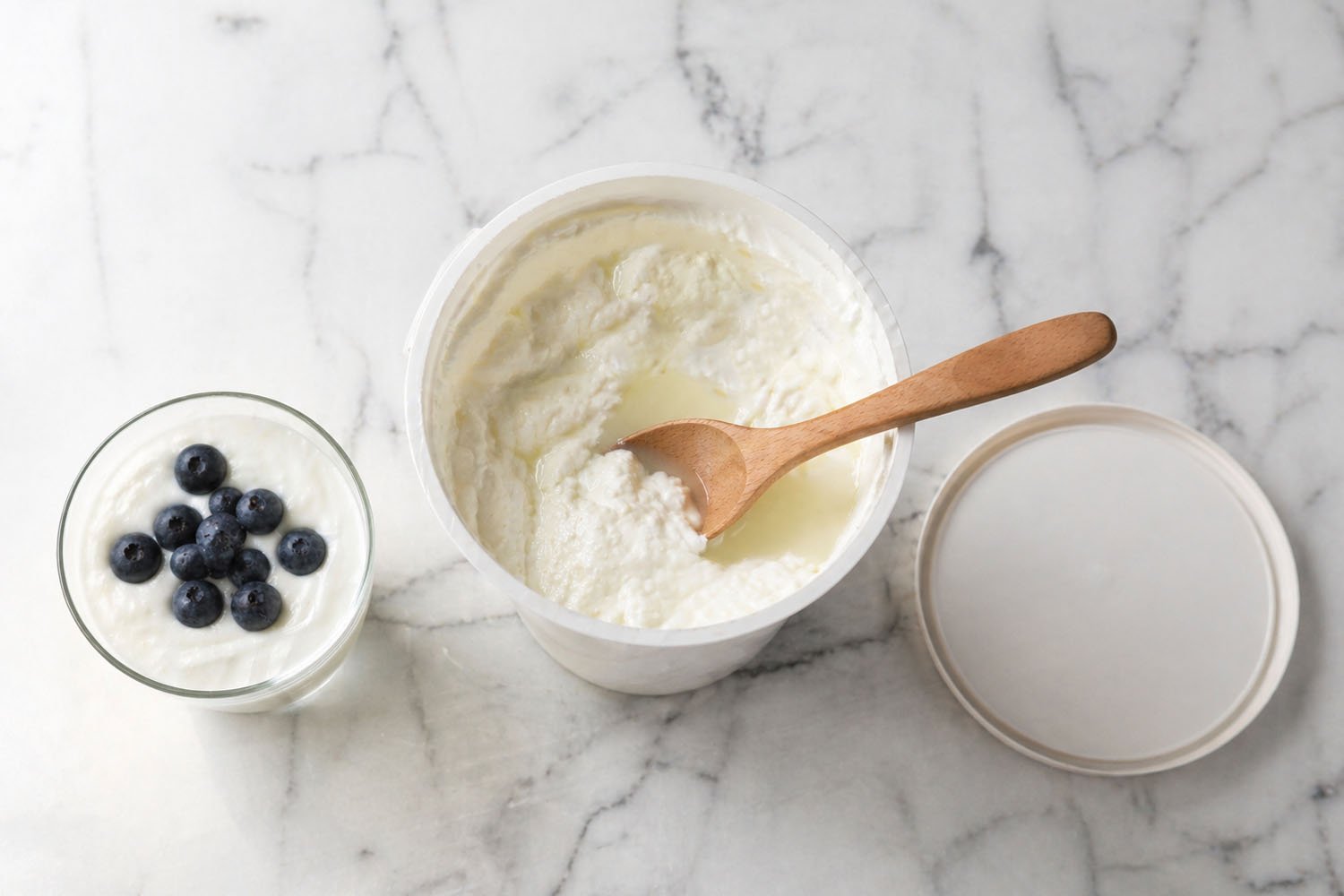
You opened a tub of yogurt a week and a half ago and it still smells fine. Or you found a container in the back of the fridge that is three weeks past the date. Does yogurt go bad?
The short answer: Yes, yogurt goes bad, but the date on the container is not the whole story. According to the USDA FoodKeeper app, yogurt should be consumed within 1 to 2 weeks of purchase. Unopened yogurt can often be safe 1 to 3 weeks past the printed date if it has been continuously refrigerated. Once opened, use it within 5 to 7 days. The type of yogurt matters significantly: Greek lasts a little longer than regular, flavored yogurt spoils faster than plain, and plant-based yogurt has its own different spoilage cues.
For a full overview of how dairy and perishable foods compare on shelf life, visit our Complete Food Storage Guide.
Key Takeaways
- Unopened yogurt: safe 1 to 3 weeks past the printed date if properly refrigerated. Always check for spoilage signs.
- Opened yogurt: use within 5 to 7 days per USDA guidance.
- Greek yogurt lasts slightly longer than regular due to lower moisture and higher acidity (pH 4.0 to 4.6).
- Flavored yogurt spoils faster than plain. Added sugars and fruit shorten the window.
- The liquid on top is whey. Completely normal, not spoilage. Stir it back in or pour it off.
- A bloated container before opening is a spoilage sign. Discard immediately.
- The 2-hour rule applies: yogurt left at room temperature for more than 2 hours should be discarded.
- Frozen yogurt: 1 to 2 months per USDA. Texture becomes watery on thawing; best for smoothies and baking.
How Long Does Yogurt Last?
Yogurt shelf life depends on the type, whether it has been opened, and how carefully it has been stored. The USDA FoodKeeper app sets the standard: 1 to 2 weeks from purchase, refrigerated. In practice, unopened yogurt stored properly often remains good beyond that window.
| Type | Unopened (Past Printed Date) | Opened (Refrigerated) | Frozen |
|---|---|---|---|
| Regular plain yogurt | 1 to 2 weeks | 5 to 7 days | 1 to 2 months |
| Greek yogurt (plain) | 2 to 3 weeks | 5 to 7 days | 1 to 2 months |
| Flavored yogurt (fruit, sweetened) | 1 to 2 weeks | 5 to 7 days | 1 to 2 months |
| Plant-based yogurt (almond, coconut, oat) | 1 to 2 weeks | 5 to 7 days; check label | 1 to 2 months |
| Homemade yogurt | Not applicable | 1 week to 10 days; no preservatives | 1 to 2 months |
Opened yogurt shelf life per USDA FoodKeeper. Unopened estimates based on USDA guidance and US Dairy industry guidance. Always check for spoilage signs regardless of date.
Why Greek Yogurt Lasts Longer Than Regular
The Science Behind Greek’s Longer Shelf Life
Greek yogurt is made by straining regular yogurt through a fine mesh or cheesecloth to remove much of the liquid whey. This straining process removes moisture and concentrates everything else including lactic acid, proteins, and fat. The result is a thicker product with a pH between 4.0 and 4.6, according to US Dairy.
That lower pH (more acidic) creates a less hospitable environment for spoilage bacteria to grow. Less moisture means less of the water activity that bacteria need to multiply. Higher protein concentration also contributes to stability. These factors together give Greek yogurt a slight edge in shelf life over regular yogurt, especially unopened.
There is a nuance though: US Dairy notes that Greek yogurt’s acidity can make spoilage harder to detect. The naturally tangy, sharp flavor can mask the early signs that something is off. Watch for a sourness that is unusually harsh or bitter rather than clean and fresh, a watery or clumpy texture, or any visible mold.
The Whey Separation Question
One of the most common reasons people throw out perfectly good yogurt is the liquid that collects on top. This is whey, the watery protein-rich liquid that naturally separates from the solids in yogurt as it sits. A small to moderate amount of whey on top of yogurt is completely normal and is not a sign of spoilage.
Simply stir it back in before eating, or pour it off if you prefer a thicker texture. Some people deliberately pour off the whey to thicken their yogurt further. The whey itself is nutritious and contains protein. Do not mistake it for water seeping in from spoilage.
What is not normal: a large amount of watery liquid that does not reincorporate when stirred, combined with an off smell or unusual texture. That combination signals deterioration.
Signs That Yogurt Has Gone Bad
When to Throw It Out
Bloated or swollen container before opening: If the lid is bulging or the sides of the container are puffed out before you open it, gas-producing bacteria have been fermenting inside. Discard without opening. This is a clear spoilage sign. Note: containers can bulge at high altitude from air pressure differences rather than spoilage. Use the other cues in that case.
Mold: Any visible fuzzy growth in green, blue, gray, white, or black anywhere in the container means discard the entire container immediately. Do not scoop around mold in yogurt.
Overly sharp, harsh, or foul smell: Fresh yogurt smells mildly tangy and clean. Spoiled yogurt smells aggressively sour, yeasty (like old bread or beer), or foul in a way that is distinctly different from the pleasant tang of fresh yogurt. US Dairy describes spoiled Greek yogurt as having an “unusually sharp or bitter sourness.” Trust your nose.
Significant color change: Yogurt should be uniformly white or off-white, or the color of its fruit flavoring. Pink, green, or gray discoloration not from added fruit is a spoilage sign.
Slimy or curdled texture that does not stir back: Some slight separation and a small amount of whey are normal. A slimy coating on the surface, or a texture that has broken down into grainy curds that will not smooth out, indicates spoilage.
Time: Regardless of appearance, discard opened yogurt after 7 days. Even if it passes the smell test, the risk of invisible bacterial growth in a high-moisture dairy product increases significantly beyond that window.
Flavored vs. Plain: Why It Matters for Storage
Plain yogurt is the most shelf-stable variety. Flavored yogurts containing fruit, fruit purees, honey, granola, or added sugars have a shorter practical shelf life once opened. The added sugars provide extra fuel for yeast and bacterial growth. Added fruit introduces additional moisture and its own microbial load. Both factors accelerate spoilage.
If you regularly buy flavored yogurt and find it going off before you finish it, switching to plain and adding your own toppings is the practical solution. Plain yogurt with fresh fruit added just before eating will always outlast pre-mixed fruit yogurt in the fridge.
Plant-Based Yogurt: Different Spoilage Cues
Coconut, almond, oat, and soy-based yogurts do not spoil the same way as dairy yogurt. Their spoilage cues are more subtle. Instead of the sharp sour smell that signals dairy yogurt spoilage, plant-based varieties may develop a flat, off, or slightly rancid flavor, unusual discoloration, or mold growth. Because the normal smell of plant-based yogurt is less distinctive than dairy yogurt, the visual check for mold and the texture check become more important than the smell test alone.
Can You Freeze Yogurt?
Yes. According to the USDA FoodKeeper app, yogurt can be frozen for 1 to 2 months. However, freezing changes the texture significantly. The water in yogurt forms ice crystals that disrupt the smooth, creamy structure. Thawed yogurt becomes watery, grainy, and separated in texture. It is safe to eat but noticeably different from fresh.
The best uses for thawed yogurt are smoothies, baked goods, sauces, and marinades where the textural change is hidden. Thaw overnight in the refrigerator and stir well before using. Do not refreeze thawed yogurt.
How to Store Yogurt Properly
Storage Best Practices
Back of a main shelf, never the door. The coldest, most consistent temperature is at the back of a main refrigerator shelf. The door fluctuates with every opening and is the worst location for yogurt.
Keep at 40°F or below. Bacterial growth accelerates above this temperature. Check your refrigerator temperature periodically.
Always use a clean spoon. Never dig into a large container of yogurt with a spoon that has touched other food or your mouth. Contamination dramatically shortens shelf life. If you are serving from a large tub, portion what you need into a separate bowl.
Keep the lid on tightly. Yogurt absorbs refrigerator odors easily. A loose lid will also accelerate drying and crust formation on the surface.
Label the opening date. Yogurt on day 3 and day 8 looks identical. A date on the container removes the guesswork.
Do not mix old and new yogurt. Never top off a nearly empty yogurt container with a fresh one. The older yogurt can contaminate the fresh batch.
Return to the fridge immediately after use. Every minute at room temperature counts toward the 2-hour limit.
Ways to Use Yogurt Before It Goes Bad
If you have yogurt approaching its window, here are the fastest ways to use it up: blend into a smoothie for an instant protein boost, use as a marinade base for chicken or lamb (the acidity tenderizes meat), substitute for sour cream in tacos or baked potatoes, stir into salad dressings, use in baking to replace oil or buttermilk, or freeze in ice cube portions for future smoothies.
Recipes That Use Yogurt
Frequently Asked Questions
Is it safe to eat yogurt past its expiration date?
For unopened yogurt that has been continuously refrigerated, yes, often 1 to 3 weeks past the printed date depending on the type. Greek yogurt handles this better than regular. Check for mold, bloating, off smell, and abnormal texture before eating. If it passes all those checks, it is likely safe. For opened yogurt, use the 5 to 7 day opened window as your guide regardless of what the printed date says. An opened yogurt 2 days past its date but opened 10 days ago is not safe to eat.
My yogurt smells sour. Is it bad?
Not necessarily. All yogurt has a naturally mild, clean sourness from lactic acid produced during fermentation. That normal tang is not spoilage. What you are looking for is a sourness that is sharply different from the normal aroma — overpowering, foul, yeasty, or ammonia-like rather than clean and mildly tangy. If the smell makes you recoil rather than just registering as tangy, discard it. If it smells like your normal yogurt just with a little more edge, check the other signs (mold, texture, date) before deciding.
Can I eat yogurt that was left out overnight?
No. Yogurt left at room temperature overnight has exceeded the FDA 2-hour safe window significantly. Discard it. Even if it looks and smells fine, bacterial growth at room temperature in a moist dairy product is real and cannot be reversed by refrigerating it afterward. US Dairy is explicit: “If yogurt has been left out overnight, it should be discarded even if it smells fine.”
Further Reading
Better Living may earn commissions through affiliate links and may occasionally feature sponsored or partner content. If you make a purchase through our links, we may receive a small commission at no cost to you.
