
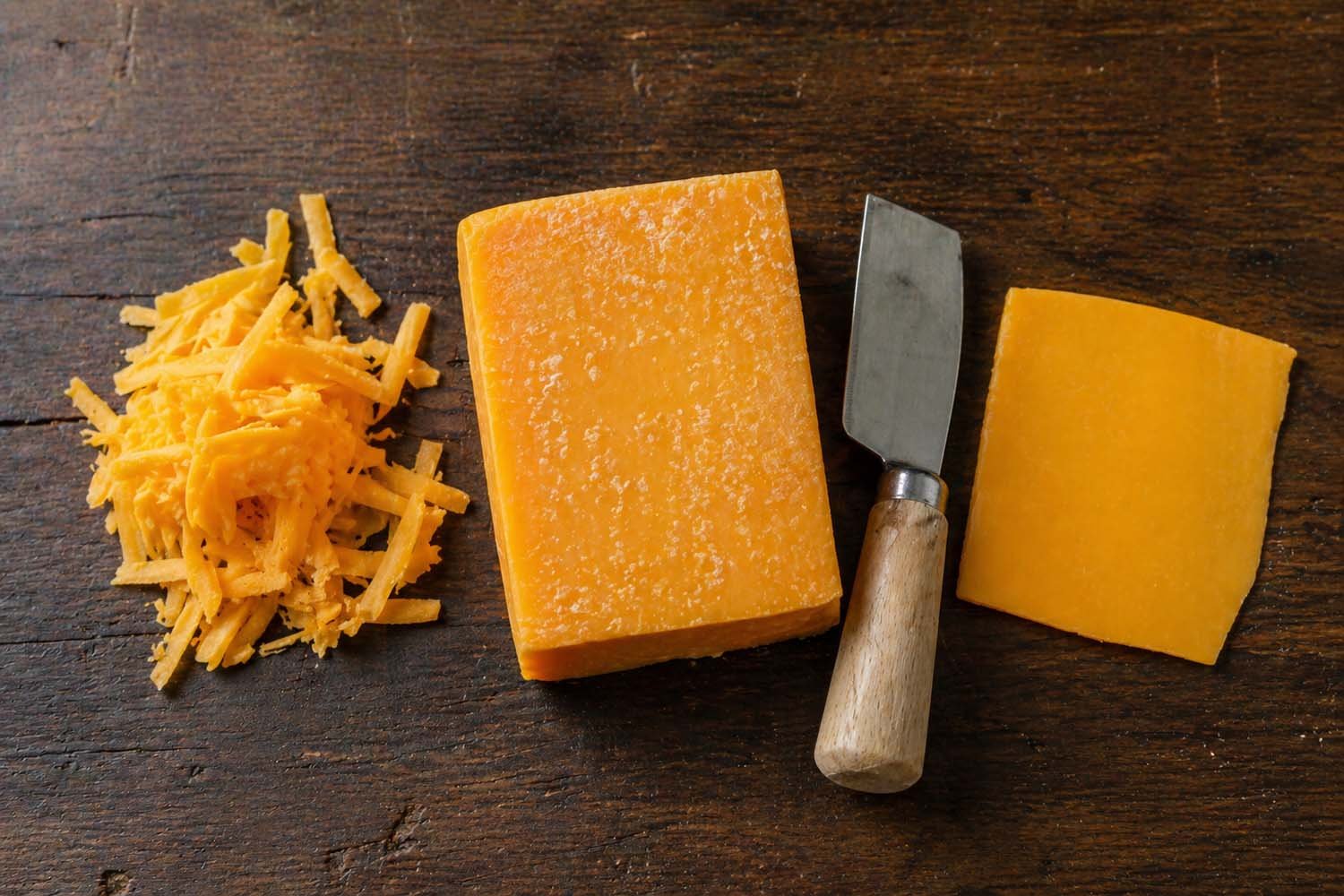
You found a block of cheddar in the back of the fridge with some white spots on it. Or there is a bag of shredded cheddar that has been open for two weeks and you are not sure if it is still good. Or you spotted what looks like mold on the corner of the block and are wondering whether to cut it off or throw the whole thing out. Does cheddar cheese go bad?
The short answer: Yes, cheddar goes bad, but the rules are different depending on which form you have. Block cheddar lasts 3 to 4 weeks opened. Shredded cheddar lasts only 5 to 7 days. Those white spots are almost certainly not mold. They are calcium lactate crystals, completely normal and safe. And if you do find actual mold on a block of hard cheddar, USDA guidance says you can cut at least one inch around and below it and eat the rest.
For a full overview of how dairy and perishable foods compare on shelf life, visit our Complete Food Storage Guide.
Key Takeaways
- Block cheddar (opened): 3 to 4 weeks refrigerated per USDA. Unopened: up to 6 months.
- Shredded cheddar (opened): 5 to 7 days only. Increased surface area means faster spoilage.
- Deli-sliced cheddar (opened): 3 to 5 days maximum.
- White spots on aged cheddar are NOT mold. They are calcium lactate crystals, a natural byproduct of aging that is completely safe to eat.
- Mold on block cheddar: cut at least 1 inch around and below the spot per USDA. Use a clean knife that does not touch the mold.
- Mold on shredded or sliced cheddar: discard the entire package immediately. No exceptions.
- Cheddar freezes for up to 6 months but becomes crumbly. Best used in cooked dishes after freezing.
How Long Does Cheddar Cheese Last?
The form cheddar is in when you open it determines almost everything about its shelf life. Block cheddar has far less surface area exposed to air and bacteria than shredded or sliced. That single difference creates dramatically different timelines.
| Form | Unopened (Refrigerated) | Opened (Refrigerated) | Frozen |
|---|---|---|---|
| Block cheddar | Up to 6 months | 3 to 4 weeks | Up to 6 months |
| Shredded cheddar (pre-packaged) | Use by printed date | 5 to 7 days | Up to 6 months |
| Deli-sliced cheddar | Use by printed date | 3 to 5 days | Up to 6 months |
| Freshly shredded from block | Not applicable | 5 to 7 days | Up to 6 months |
Block cheddar shelf life per USDA guidance. Opened hard cheese: 3 to 4 weeks per USDA. Always check for spoilage signs before using regardless of date. Consistent with USDA FoodKeeper guidance for hard cheeses.
White Spots on Cheddar: Not Mold
Calcium Lactate Crystals: Safe and Normal
One of the most common reasons people throw out perfectly good cheddar is the appearance of white spots, a white dusty film, or white patches on the surface or interior of aged cheddar. These are almost never mold. They are calcium lactate crystals, a natural byproduct of the aging process.
As cheddar ages, lactic acid combines with calcium in the cheese to form calcium lactate, which can crystallize on the surface or throughout the interior. The older and sharper the cheddar, the more likely you are to see these crystals. They are completely safe to eat and actually indicate a well-aged cheese with developed flavor. Tillamook’s cheese experts confirm these crystals “usually signify that a cheese is flavorful and well-aged.” According to food scientists at EatOrToss, calcium lactate crystals are the result of lactic acid and calcium binding during aging, concentrating on the surface as moisture evaporates.
What actual mold looks like on cheddar: fuzzy, raised, blue, green, gray, or black growth that was not there when the cheese was purchased. Mold has a texture — it is fuzzy or raised, not flat. Calcium lactate crystals are flat, powdery, and uniform. If you can rub the white spot smooth with your finger and it feels powdery rather than fuzzy, it is almost certainly crystals, not mold.
The Mold Rule: Block vs. Shredded vs. Sliced
This is the most important distinction in all of cheddar storage and the one the USDA is most specific about.
Block cheddar with mold: The USDA FSIS is explicit in their mold guidance: for hard cheeses like cheddar, mold generally cannot penetrate deep into the product. Cut off at least 1 inch around and below the mold spot. Use a clean knife and keep it out of the mold itself. Dragging a contaminated knife across the clean section spreads spores. After cutting, rewrap the cheese in fresh wrapping material and refrigerate immediately.
Exceptions: if the mold is black or dark red, discard the entire block. These colors can indicate molds that produce harmful mycotoxins. If the mold covers multiple sides or the entire surface, discard it. If the cheese also smells strongly of ammonia or has a slimy texture, discard it regardless of the mold situation.
Shredded cheddar with mold: Discard the entire bag. No exceptions. Shredding dramatically increases the surface area exposed to air and mold spores, and the mold can spread to every piece in the bag even if you cannot see it. The USDA is clear: shredded and sliced cheeses must be discarded entirely if mold appears.
Sliced cheddar with mold: Discard the entire package. The same reasoning applies as with shredded. Mold spores spread easily through the increased surface area of pre-sliced cheese.
Signs That Cheddar Has Gone Bad
When to Throw It Out
Fuzzy mold growth (not white spots): Fuzzy, raised mold in blue, green, gray, or black anywhere on the cheese. White flat spots are crystals. Fuzzy white growth that was not present when the cheese was purchased is mold. Apply the block vs. shredded rule above.
Black or dark red mold: Discard the entire block immediately regardless of how small the spot is. These mold colors can indicate mycotoxin-producing fungi.
Ammonia or sour smell: Fresh cheddar has a pleasant, milky, sharp aroma that varies by age. A strong ammonia-like odor, or a chemical smell, indicates significant bacterial or mold activity. Discard it.
Slimy or sticky texture: Cheddar should feel dry and firm to slightly waxy. A slimy or slick surface coating is a clear sign of bacterial growth. Discard immediately.
Significant darkening or discoloration: Some slight color variation in aged cheddar is normal. Significant browning, grayish patches, or dark discoloration not from natural aging indicate spoilage.
For shredded and sliced: any mold means discard the whole package. Do not try to pick out moldy pieces. Discard immediately.
Time: Discard opened block cheddar after 4 weeks regardless of appearance. Discard opened shredded or sliced cheddar after 7 days.
Why Shredded Cheddar Goes Bad So Much Faster
Pre-shredded cheddar has dramatically more surface area exposed to air and potential contamination than a block of the same weight. Each shred has multiple exposed surfaces. A 250-gram bag of shredded cheddar might have 100 times the exposed surface area of a 250-gram block. More surface area means faster oxidation, faster moisture loss, and faster mold spread if any spores land on the cheese.
Commercial pre-shredded cheese also contains anti-caking agents like cellulose powder and potato starch to prevent the shreds from clumping. These coatings slightly extend the shelf life of the packaged product compared to cheese you shred yourself, but once the bag is opened, both types follow the same 5 to 7 day rule.
The practical takeaway: if you use cheddar regularly, buying a block and shredding it yourself as needed delivers better flavor and longer storage than buying pre-shredded. If you need the convenience of pre-shredded, buy in amounts you can use within a week.
Can You Freeze Cheddar?
Yes. Cheddar freezes well for up to 6 months in terms of safety, but freezing changes the texture. The water in cheddar forms ice crystals that disrupt the protein structure, making the cheese crumbly and dry when thawed. Thawed cheddar does not melt as smoothly as fresh cheddar.
The best approach: freeze cheddar in portions sized for specific uses. Shredded cheddar for topping casseroles or soups freezes and thaws without the texture problem being noticeable in cooked applications. Block cheddar for slicing or snacking should be consumed fresh rather than frozen. Wrap tightly in parchment paper, then in a sealed freezer bag. Label with the date. Thaw overnight in the refrigerator before using.
How to Store Cheddar Properly
Storage Best Practices
Wrap block cheddar in parchment or cheese paper, not plastic wrap. Plastic wrap traps moisture against the cheese surface and can accelerate mold growth. Parchment paper allows the cheese to breathe while protecting it from refrigerator odors. Wrap in parchment first, then loosely in plastic or place in a container for a second layer of protection.
Store in the main body of the fridge, not the door. The cheese drawer or crisper drawer maintains a slightly more humid, stable environment that is ideal for hard cheese.
Never use the same knife for multiple cheeses without washing. Cross-contamination from a moldy cheese to a clean one is one of the most common ways cheese goes bad prematurely.
Rewrap with fresh paper every time you use it. Old wrapping accumulates moisture and can carry mold spores. A fresh piece of parchment each time makes a real difference.
Keep strong-smelling cheeses wrapped separately. Cheddar absorbs surrounding odors. Do not store unwrapped next to onions, fish, or strong-smelling foods.
Label opened packages with the date. Block cheddar looks the same at 1 week and 3 weeks. A date on the wrapping removes the guesswork.
Buy smaller blocks more frequently if you find yourself throwing away cheddar. A smaller block used within the 3 to 4 week window always beats a large block that goes moldy.
Recipes That Use Cheddar
Frequently Asked Questions
My block cheddar has white spots. Is it mold?
Almost certainly not. White flat spots or a white dusty film on aged cheddar are almost always calcium lactate crystals, a natural byproduct of the aging process where lactic acid combines with calcium to form visible crystals. They are completely safe to eat. The test: if the white area is flat and powdery and rubs smooth with your finger, it is crystals. If it is fuzzy, raised, and has visible texture, it could be mold. True mold is fuzzy and stands up from the surface. Crystals are flat and powdery. Both can be white, but the texture is completely different.
Can I cut mold off cheddar and eat the rest?
For block cheddar, yes, according to USDA FSIS guidance. Cut at least 1 inch around and below the mold spot using a clean knife that does not touch the mold. Rewrap in fresh parchment paper and use soon. This works because mold generally cannot penetrate deeply into hard cheeses with low moisture content. For shredded or sliced cheddar, no — discard the entire package. Mold spreads through the increased surface area of shredded and sliced products in ways that make partial salvage unsafe.
My shredded cheddar bag has been open for 10 days. Is it still good?
No. Opened shredded cheddar should be used within 5 to 7 days. At 10 days it is past its safe window. Check for mold and smell it before discarding: if you see any mold or the smell is off, discard immediately. Even if it smells and looks normal at 10 days, the increased spoilage risk from the high surface area of shredded cheese makes it not worth the uncertainty. Going forward, buy shredded cheese in amounts you can finish within a week, or shred block cheddar as needed.
Further Reading
Better Living may earn commissions through affiliate links and may occasionally feature sponsored or partner content. If you make a purchase through our links, we may receive a small commission at no cost to you.
