
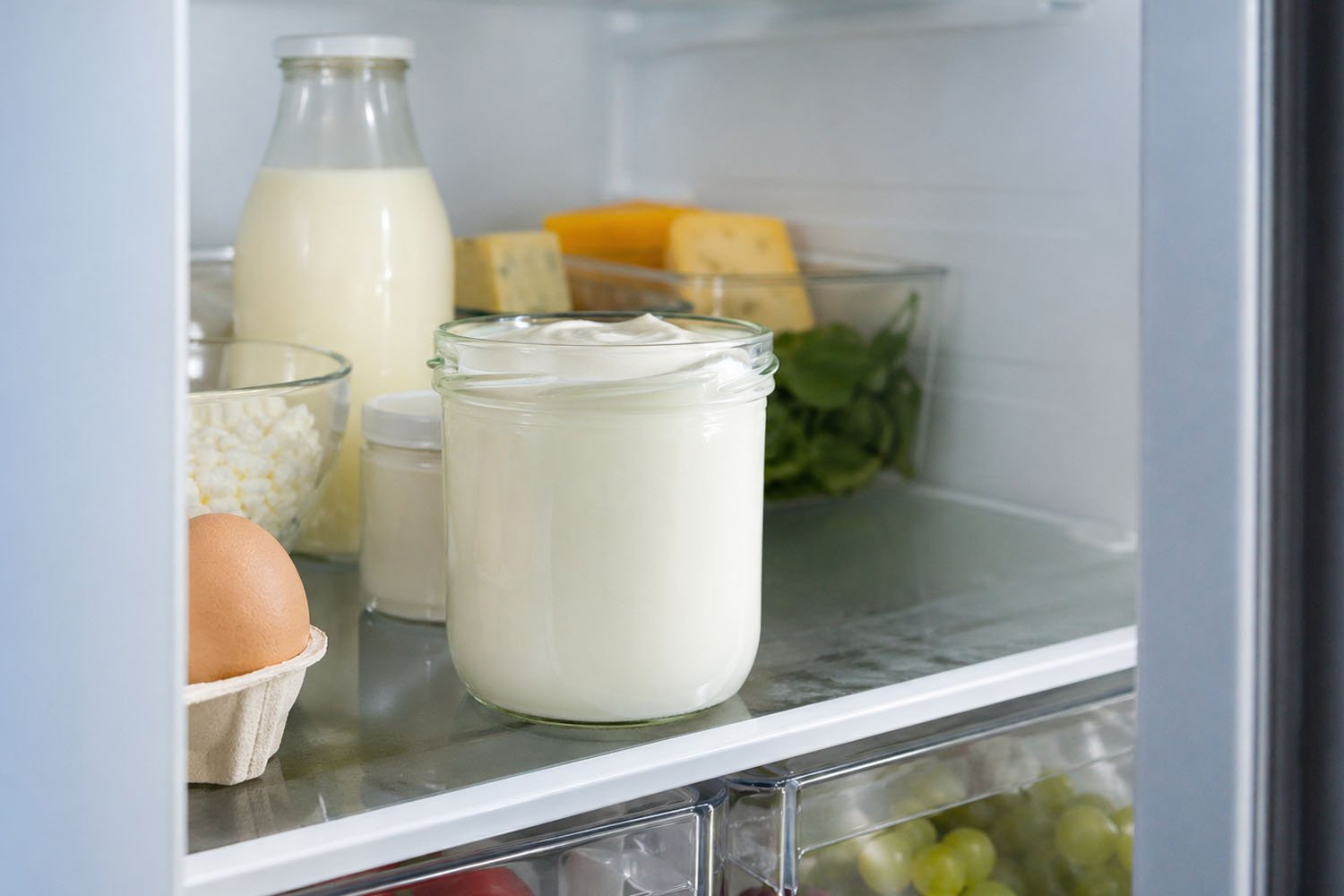
You just got home from the grocery store and are putting things away. Does the yogurt go straight in the fridge? Or you bought yogurt at a farmers market that was sitting out unrefrigerated in a cool barn and are wondering if the rules are different. Does yogurt need to be refrigerated?
The short answer: Yes, always. All refrigerated yogurt sold in the cold section of the grocery store must stay cold at all times. There is no version of standard refrigerated yogurt that is safe to leave at room temperature for more than 2 hours. The only partial exception is shelf-stable yogurt in aseptic packaging, which can be stored at room temperature before opening but must be refrigerated immediately after.
For a full overview of how dairy and perishable foods compare on shelf life, visit our Complete Food Storage Guide.
Key Takeaways
- All standard refrigerated yogurt must stay cold. No exceptions for any type: regular, Greek, plant-based, or flavored.
- The 2-hour rule is firm. Yogurt left at room temperature for more than 2 hours must be discarded. At 90°F or above, that drops to 1 hour.
- Store at 40°F or below on a main shelf at the back of the fridge, never in the door.
- Shelf-stable yogurt in aseptic packaging can be stored at room temperature before opening but must be refrigerated after opening.
- Opened yogurt: use within 5 to 7 days per USDA guidance.
- Yogurt can be frozen for 1 to 2 months. Texture changes on thawing but it remains safe.
Why Yogurt Always Needs Refrigeration
Yogurt is a fermented dairy product made by introducing live bacterial cultures to milk. Those cultures lower the pH of the milk by producing lactic acid, which is what gives yogurt its characteristic tang and helps preserve it longer than plain milk. However, the fermentation process and lower pH do not make yogurt shelf-stable at room temperature.
Yogurt still contains water, proteins, and lactose that support the growth of harmful bacteria above 40°F. The FDA classifies it as a perishable food requiring continuous refrigeration. US Dairy confirms: yogurt should not be left out for more than 2 hours at room temperature, or 1 hour if the temperature is 90°F or higher.
The 2-Hour Rule for Yogurt
Two Hours Is the Hard Limit
The FDA 2-hour room temperature rule applies to yogurt at every stage: the container on the counter while you make breakfast, a bowl of yogurt at a brunch table, or yogurt in a lunchbox without an ice pack. After 2 hours at room temperature, yogurt must be discarded.
US Dairy is explicit: “If yogurt has been left out overnight, it should be discarded even if it smells fine.” The bacterial growth that occurs at room temperature in a moist dairy product is real and cannot be reversed by returning it to the refrigerator.
At outdoor temperatures above 90°F, the window drops to 1 hour. For summer picnics and outdoor gatherings, keep yogurt in a cooler with ice packs until serving, and return it immediately after.
The Full Refrigeration Guide by Yogurt Type
| Type | Refrigerate? | How Long After Opening |
|---|---|---|
| Regular plain yogurt | Yes — always | 5 to 7 days |
| Greek yogurt | Yes — always | 5 to 7 days |
| Flavored yogurt | Yes — always | 5 to 7 days; use sooner for best quality |
| Plant-based yogurt | Yes — always | 5 to 7 days; check label |
| Shelf-stable yogurt (aseptic, unopened) | No — pantry until opened | Refrigerate immediately after opening; 5 to 7 days |
| Homemade yogurt | Yes — always | 1 to 2 weeks; no preservatives |
Based on USDA FoodKeeper guidelines and US Dairy food safety guidance. Always check for spoilage signs before eating regardless of date.
Yogurt at Picnics, Lunch Boxes, and Gatherings
Keeping It Safe Away from the Fridge
Yogurt is a popular lunch and snack food, and a common addition to picnics and brunches. The rules are the same no matter where you are: 2 hours at room temperature maximum, 1 hour above 90°F.
Lunch boxes: Yogurt packed with a frozen gel ice pack in an insulated lunch bag stays below 40°F for approximately 2 to 4 hours depending on bag quality and ambient temperature. If your child or coworker eats lunch within that window, yogurt is safe. Without an ice pack, the 2-hour clock starts the moment the yogurt leaves the fridge.
Picnics and outdoor gatherings: Keep yogurt in a cooler with ice packs until serving. Nest the serving bowl in a larger bowl of ice for the table. Do not leave it uncovered in direct sun.
Brunch tables: A yogurt parfait station set out at brunch is fine for up to 2 hours at typical indoor room temperature. After that, return it to the refrigerator or discard.
Where to Store Yogurt in the Refrigerator
Not all parts of the refrigerator maintain the same temperature. The placement of your yogurt matters.
Best location: Back of a main shelf. The back of the fridge stays at the most consistently cold temperature. This is where perishable dairy like yogurt belongs.
Worst location: The refrigerator door. The door is the warmest part of the fridge and experiences the most temperature fluctuation every time it is opened. Many refrigerators have a yogurt-sized space in the door that is genuinely tempting, but it is not the right place for perishable dairy.
Also avoid: Directly next to the meat or produce drawers if those areas are warmer in your fridge. Check with a thermometer if unsure.
Storage Best Practices
How to Store Yogurt Properly
Refrigerate immediately after purchase. Do not leave yogurt in the car or on the counter while unpacking other groceries. It goes straight into the fridge.
Store at the back of a main shelf. Consistent cold is more important than any other factor in yogurt storage.
Always use a clean spoon. Never double-dip or use a spoon that has touched other food. Cross-contamination accelerates spoilage dramatically.
Keep the lid on tightly between uses. Yogurt absorbs refrigerator odors easily through any gap. A tightly sealed lid prevents both odor absorption and moisture loss.
Label the opening date. Day 3 and day 8 look identical. A date written on the lid takes five seconds and removes the guesswork entirely.
Portion into a separate bowl rather than eating from the container. Every time you put a spoon from your mouth back into the yogurt container, you introduce bacteria. Portion what you need and seal the rest immediately.
Freeze before the window closes. If you have yogurt approaching the end of its 5 to 7 day opened window and cannot use it in time, freeze it rather than letting it go to waste. Portion into an ice cube tray, freeze until solid, transfer to a sealed bag, and use within 1 to 2 months in smoothies or baking.
Recipes That Use Yogurt
Frequently Asked Questions
I left yogurt on the counter for 3 hours. Is it still safe?
No. Three hours exceeds the FDA 2-hour limit. Discard it. Even if it looks and smells completely normal, bacterial growth at room temperature in a moist dairy product is real and cannot be undone by returning it to the fridge. This is especially important for children, pregnant people, elderly individuals, and anyone with a compromised immune system, for whom foodborne illness from contaminated dairy can be more serious.
Can I put warm yogurt back in the fridge after it sat out?
Only if it has been out for less than 2 hours. If it has been at room temperature for less than 2 hours, returning it to the fridge is fine and safe. The fridge will bring it back down to a safe temperature. If it has been out for more than 2 hours, refrigerating it does not reverse the bacterial growth that occurred. Discard it.
Does plant-based yogurt need to be refrigerated?
Yes, if it was sold from the refrigerated section of the grocery store. All refrigerated-section plant-based yogurts (coconut, almond, oat, soy) must be kept cold the same way dairy yogurt does. The 2-hour room temperature limit applies. Plant-based yogurts in shelf-stable aseptic packaging are the exception: these can be stored at room temperature until opened, then must be refrigerated. Always check the label for specific storage instructions, as formulations vary by brand.
Further Reading
Better Living may earn commissions through affiliate links and may occasionally feature sponsored or partner content. If you make a purchase through our links, we may receive a small commission at no cost to you.
