
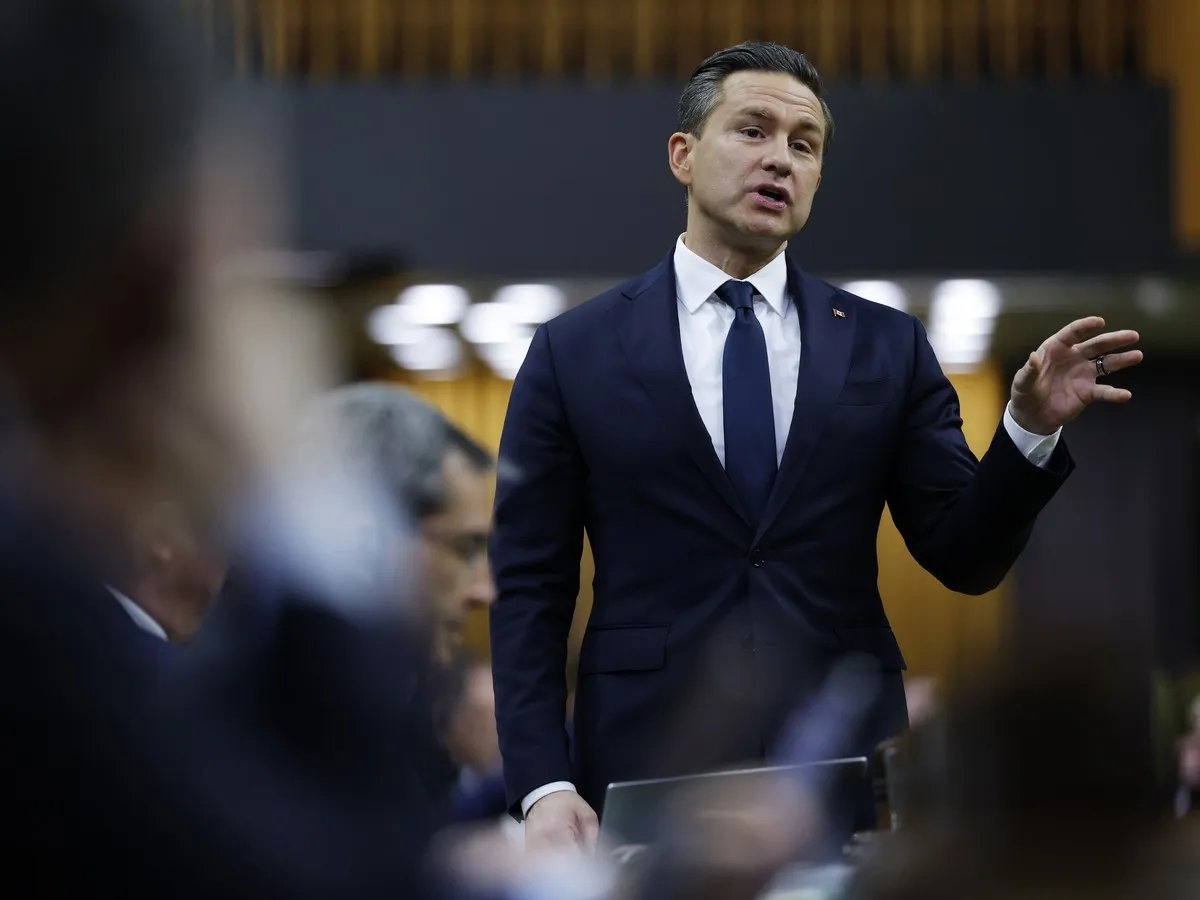
OTTAWA — As Prime Minister Mark Carney’s government weighs banning social media for minors, Opposition Conservatives have begun asking: Where does their own party stand on the issue?
With a 140-member caucus, and a coalition teeming with libertarians, social conservatives, populists, free-speech crusaders and moderates, Conservative Leader Pierre Poilievre has not yet weighed in on the notion, saying this week that it was an idea his team was exploring.
With early discussions underway, signs point to some support among Conservatives.
“It’s a good idea,” Saskatoon MP Brad Redekopp told reporters this week on Parliament Hill.
Others had a similar stance.
“It’s not an entirely bad idea,” said Ted Falk, a social conservative from rural Manitoba. “I think there’s some merit in having young children not be engaged in social media. I’m not sure about the ban or the parameters, but certainty there needs to be some guidance, if nothing else from the home anyway.”
Scott Aitchison, an MP from Ontario, added he still has more to learn but that one thing was clear.
“Kids aren’t okay right now, and we need to be doing more. I think it’s a very important conversation for us to have, and we’re certainly having (it in) the Conservative caucus. I think it’s good Parliament’s taken up the issue.”
For Dan Robertson, who worked as the party’s chief strategist under former Conservative leader Erin O’Toole during the 2021 election, the answer for whether Poilievre’s Conservatives should embrace the idea is “emphatically yes.”
“It’s good politics and it puts them on the right side of an important issue.”
Politically, he says, it could broaden the party’s reach to appeal to the types of voters it needs: parents, those who are religious and belong to immigrant communities. Ignoring that “because it doesn’t pass an ideological purity test would be madness.”
Robertson sees tension in how the ban could be viewed by the party’s more vocal and online libertarian supporters, who may deem such a measure as government acting as a “nanny state” trying to “usurp parental rights,” particularly for a leader like Poilievre, whom he views as sympathetic to those arguments.
“They’re ideological purists, and they keep Poilievre in a box. They restrict his ability to move on these things, but he has to overcome that.”
Cole Hogan, a Conservative who has worked on election campaigns for Ontario Premier Doug Ford and former Alberta premier Jason Kenney, says he does not believe there would be “overwhelming” ideological opposition among Conservatives to a social media ban for kids, namely because “everyone looks at everyone else with their phone in their hands 24/7, and sees an overall societal negative.”
“Your freedom or right to free speech isn’t being infringed upon because a minor can’t use social media,” he says.
Hogan added: “An algorithm does not have the rights to take up the bandwidth of an entire growing person’s brain.”
Others within caucus have echoed the fears being expressed by academics and those outside government around the policy, such as concerns around the effectiveness of such a ban, including in jurisdictions like Australia, which was the first in the world to legislate an outright prohibition for those younger than 16.
Anxieties have also emerged over privacy implications for methods used to verify a user’s age, from facial recognition software and government-issued digital identification. Then come the pitfalls around potentially cutting off children for whom social media acts as a vehicle for connection.
Finally, and most politically relevant, is whether Conservatives trust the Liberals to do it, after what the party has for years viewed as overreach under former prime minister Justin Trudeau, including in its last attempt to legislate against online harms which featured proposals to stiffen and expand existing hate-speech criminal provisions that civil society advocates broadly panned as draconian.
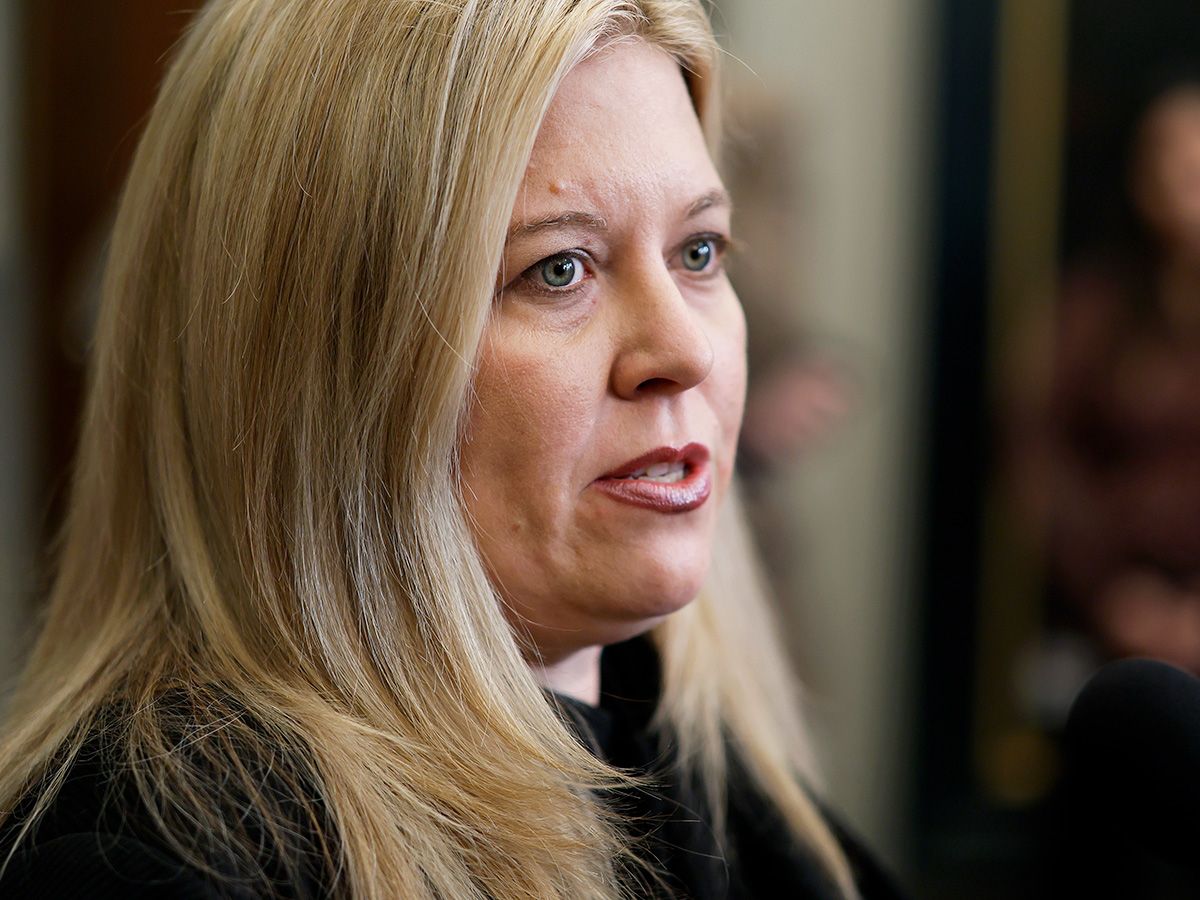
“An outright social media ban for youth may offer the Liberals a fresh angle with which to attempt to justify their speech restrictions, particularly now that they’ve orchestrated a majority government,” Conservative MP Michelle Rempel Garner warned as part of a lengthy Substack post on the matter.
Melissa Lantsman, one of the party’s deputy leaders, raised the Trudeau government’s freezing of bank accounts of supporters associated with the 2022 Freedom Convoy and its triggering of the Emergencies Act to quell the weeks-long demonstration.
On the idea of social media restrictions, Lantsman nevertheless pointed to a smattering of “ruby-red Republican states” that have their own measures in place, from Florida to Texas, writing on Substack that she some saw “some logic” in the government stepping in, similar to how it does for alcohol and cannabis.
“I think the conversation is ongoing in Ottawa, I think amongst all parties, and certainly in our party, of what that looks like in terms of protecting kids,” she told reporters.
Liberal MPs are still figuring out where to go, particularly after the party’s grassroots endorsed placing age restrictions on social media and AI chatbots at its recent policy convention, with Canadian Heritage Minister Marc Miller saying afterwards he was considering it “very seriously,” but not as a standalone policy.
“Part of my brain says this is a healthy thing, because these things are addictive,” said Ottawa MP Yasir Naqvi, who pointed out he was the father of a 10- and 14-year-old.
“On the other hand, I’m also mindful of the fact that when you ban things outright, there’s always a back doorway of getting access to it.”
Ben Carr, a Liberal MP and former high school teacher, says he hears a lot about online safety.
The Winnipeg MP also says he spoke with Miller about issues of jurisdictions in light of the recent announcement by Manitoba Premier Wab Kinew that his NDP government would move to ban social media and generative AI for minors — a move that has raised many questions about how the province would do it.
Miller, who is tasked with delivering for the government a new online safety bill, but one that is without a firm timeline, told reporters this week that “coordination” was needed and that the regulation of social media belonged in the federal government’s arena.
“Whether we’re talking about moratoriums, or the proper regulation of egregious online harms and that’s stuff that we’re frankly, a couple years behind in regulating, as we see other jurisdictions like Australia, like Britain, like France, taking action, so we need to take action as well,” he said.
By Friday, the Conservative party was reminding users of its rock-ribbed stand against such policies, sharing a post from party’s whip Chris Warkentin, who wrote: “Liberal Minister CONFIRMS his plan to regulate what Canadians can say on social media.” Warkentin pointed to the fact the United Kingdom was cited by the government as an example, which he described as a “censorship regime.”
“Conservatives will always defend your right to freedom of expression,” the party added.
If the Conservative stance on a social media ban for kids is evolving, the party’s skepticism of Liberal governments remains as strong as ever.
National Post
Our website is the place for the latest breaking news, exclusive scoops, longreads and provocative commentary. Please bookmark nationalpost.com and sign up for our daily newsletter, Posted, here.
