
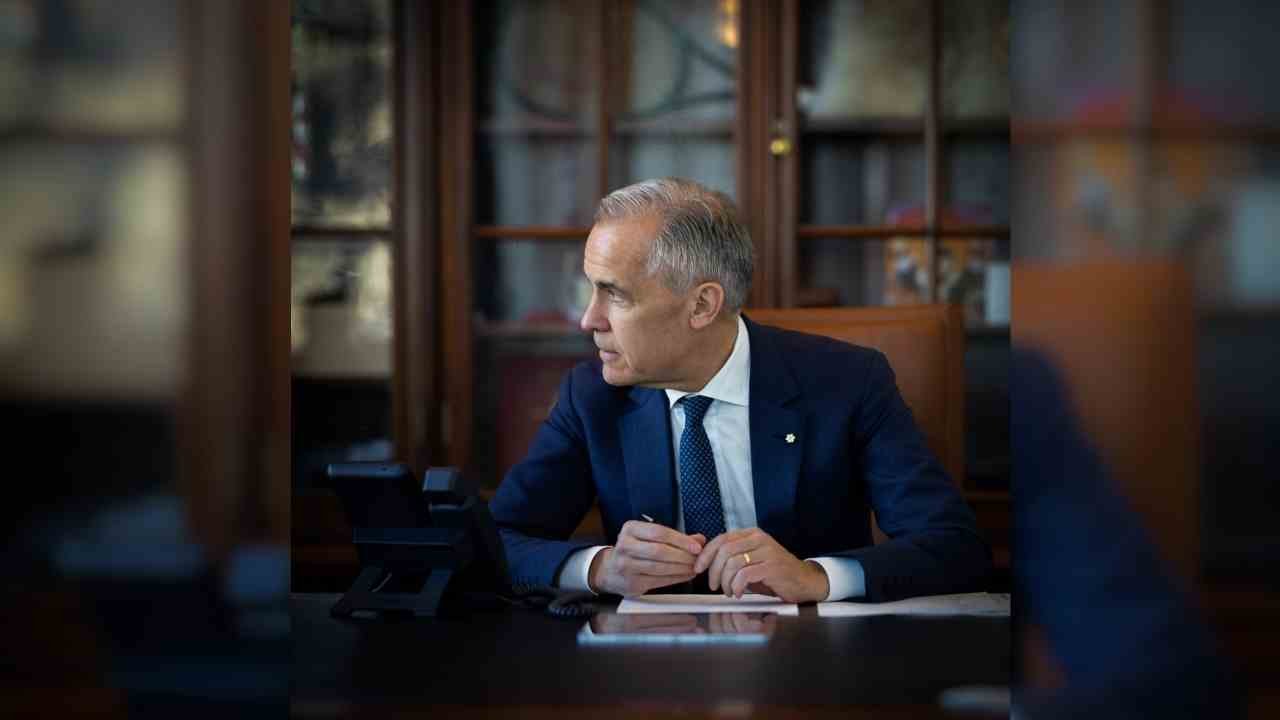
Ottawa’s plan to vastly boost our military spending will hugely and needlessly drain resources from every other priority.
But if there’s a silver lining, it’s this: Mark Carney could use the additional international credibility that all this excessive military spending will likely win him to make a significant difference in pushing the world towards nuclear sanity.
Of course, it’s unlikely that the world will adopt a saner approach to avoiding nuclear war. Still, in an age when U.S. President Donald Trump and AI only increase the possibility of nuclear Armageddon, it’s urgent that we try.
And Carney is in an excellent position to do so, having made a surprisingly impactful impression on the world in his brief stint as Canada’s prime minister.
Here’s what we need Carney to do.
Right now, at the UN in New York, talks aimed at saving the world’s nuclear disarmament process — ultimately aimed at eliminating all nuclear weapons — are hopelessly stalled, and risk falling apart.
The central problem is that the nuclear-armed states are not reducing their arsenals, which they promised to do as part of the grand bargain they signed with non-nuclear states in 1970. On the contrary, the world’s nine nuclear powers are mostly expanding their arsenals.
Frustrated over this lack of disarmament progress, some middle-power nations, including Austria, Ireland, Mexico and Brazil, created a new process about a decade ago with a more ambitious agenda — immediately prohibiting nuclear weapons.
Although the nuclear powers shunned it, 99 non-nuclear countries have signed or ratified this UN Treaty on the Prohibition of Nuclear Weapons (TPNW), and a global campaign backing it won the 2017 Nobel Peace Prize.
But Canada, once an important voice in nuclear disarmament, has refused to sign.
Carney could help jump-start the revival of the world disarmament cause by signing that treaty.
Indeed, the time for that may be ripe. Canada’s resistance to signing it has been based on the fact that both the U.S. and NATO vigorously oppose it, notes Douglas Roche, former Canadian UN Ambassador for Disarmament.
But Trump and his open hostility to NATO creates a new dynamic and perhaps an opening to reviving the campaign to prohibit nuclear weapons.
In an interview this week, Roche said it would even make a big difference if Carney were to signal some support for the TPNW by announcing that Canada would become an “observer,” as four other NATO states have — Germany, Netherlands, Norway and Belgium.
Similarly, Carney could make a difference, according to Roche, by offering Canada’s support for another long-stalled UN nuclear initiative — an initiative that’s suddenly taken on new relevance with the U.S. and Israel launching a war ostensibly to prevent Iran from developing nuclear weapons.
But the quest to keep nuclear weapons out of Iran would be achieved more sensibly (and without bombing Iranian civilization back to the stone age) through diplomatic efforts to make the Middle East a nuclear-weapons-free zone.
In fact, since the 1970s, Iran and a number of Arab countries have backed UN efforts to establish such a zone, which would require all Middle Eastern countries to submit to international inspections.
The obstacle to such a treaty is Israel, which has nuclear weapons but refuses to officially acknowledge them or submit to international inspections.
Media outlets, which barely cover nuclear talks, apparently think viewers are bored by the possibility that nuclear war could obliterate the human race. Yet it’s hardly boring that the hands on the “Doomsday Clock” (set by nuclear scientists) have recently been moved to 85 seconds to midnight — the closest ever to doomsday.
Mark Carney is understandably focused on protecting Canada from Trump’s trade aggression.
But Carney’s emergence as an influential international figure equips him to do something even more important than tariff reduction.
And, for what it’s worth, providing global leadership to help humanity avoid a nuclear apocalypse would also likely impress the hell out of Canadian voters.
This article was originally published in the Toronto Star.
