
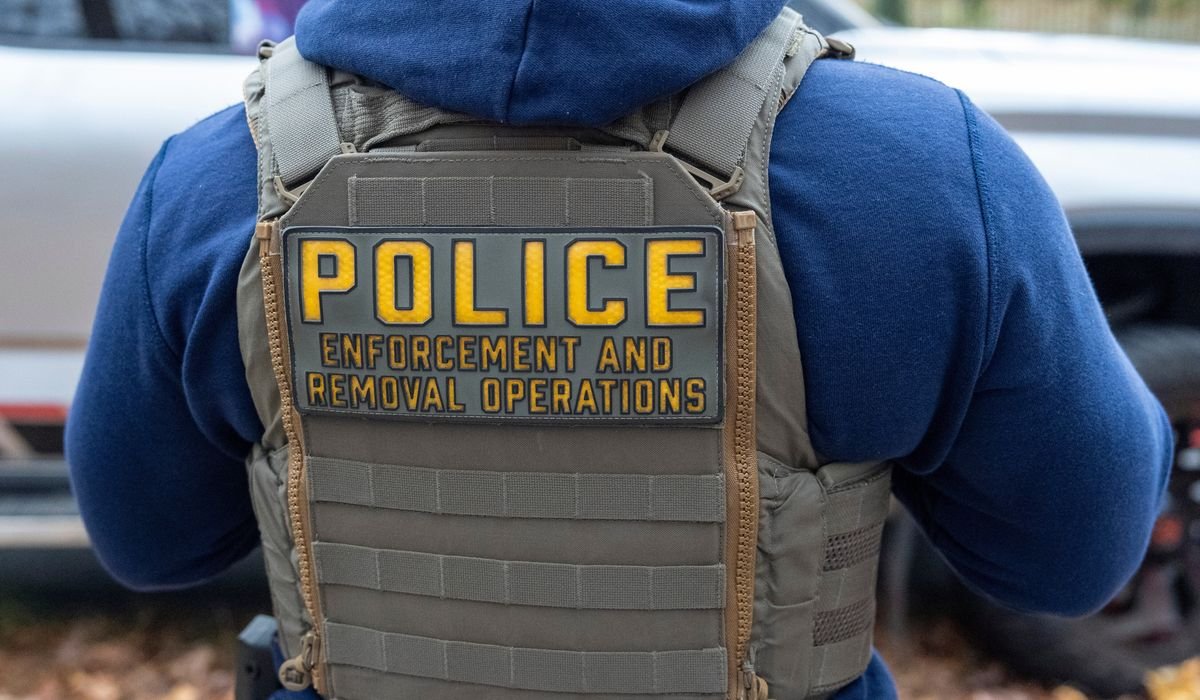
A federal judge in Minnesota swatted down a challenge to ICE’s policy allowing immigration arrests near schools, ruling Wednesday that the school districts that sued to stop it lacked legal standing to bring the case.
Judge Laura Provinzino, a Biden appointee, said she wasn’t giving approval to the policy itself. But she said neither the school systems nor Education Minnesota, a teachers union, could show they were injured by last year’s policy making it easier to carry out arrests near sensitive locations.
The educators had filed their lawsuit in February, amid the Trump administration’s immigration surge and just weeks after the arrest of 5-year-old Liam Conejo Ramos, with his school backpack and blue bunny hat made national headlines.
They argued that Homeland Security’s new willingness to make arrests near schools had left students and staff afraid to attend class. Fridley Public School District, one of the plaintiffs, said its attendance dropped 33% on two days in January, and it had to “unenroll” some students for chronic absenteeism.
The school district said Homeland Security’s 2025 memo removing some restrictions on arrests near sensitive locations was issued too hastily and without following the usual notice and comment process.
Judge Provinzino, though, said that while they could trace the drop in attendance and their other worries to U.S. Immigration and Customs Enforcement’s overall stiffer posture toward illegal immigration under the Trump administration, they couldn’t prove it was directly linked to any new powers ICE is claiming.
In particular, she said that even under the Biden administration, enforcement at or near schools was allowed, even though it was discouraged.
“The 2025 guidance, in short, did not change DHS’s ability or authority to engage in enforcement activity at or near protected areas,” she wrote. “What has changed, evidently, is DHS’s willingness — not its authority — to conduct immigration enforcement activity at or near protected areas like schools. But such immigration enforcement has always been subject to DHS’s judgment and discretion,
The Biden guidance generally required an officer to get approval from a supervisor.
The current Trump policy dispenses with that review, though it urges officers to use “a healthy dose of common sense,” Judge Provinzino wrote.
She rejected the Fridley school district’s argument that ICE was trespassing on its grounds, saying school parking lots aren’t private property.
She also said even if the Biden rules were still in place, Homeland Security agents could have engaged in much the same conduct.
Her ruling came just hours after a federal appeals court in Richmond heard oral argument on part of the sensitive locations policy that applies to arrests at or near houses of worship.
The 4th U.S. Circuit Court of Appeals was far more skeptical of the Trump administration’s argument, with judges saying that the Religious Freedom Restoration Act requires the government to take extra steps to balance religious rights, and a drop in attendance at services could be evidence of legal standing.
Judge Provinzino said no such principle applies to schools.
