
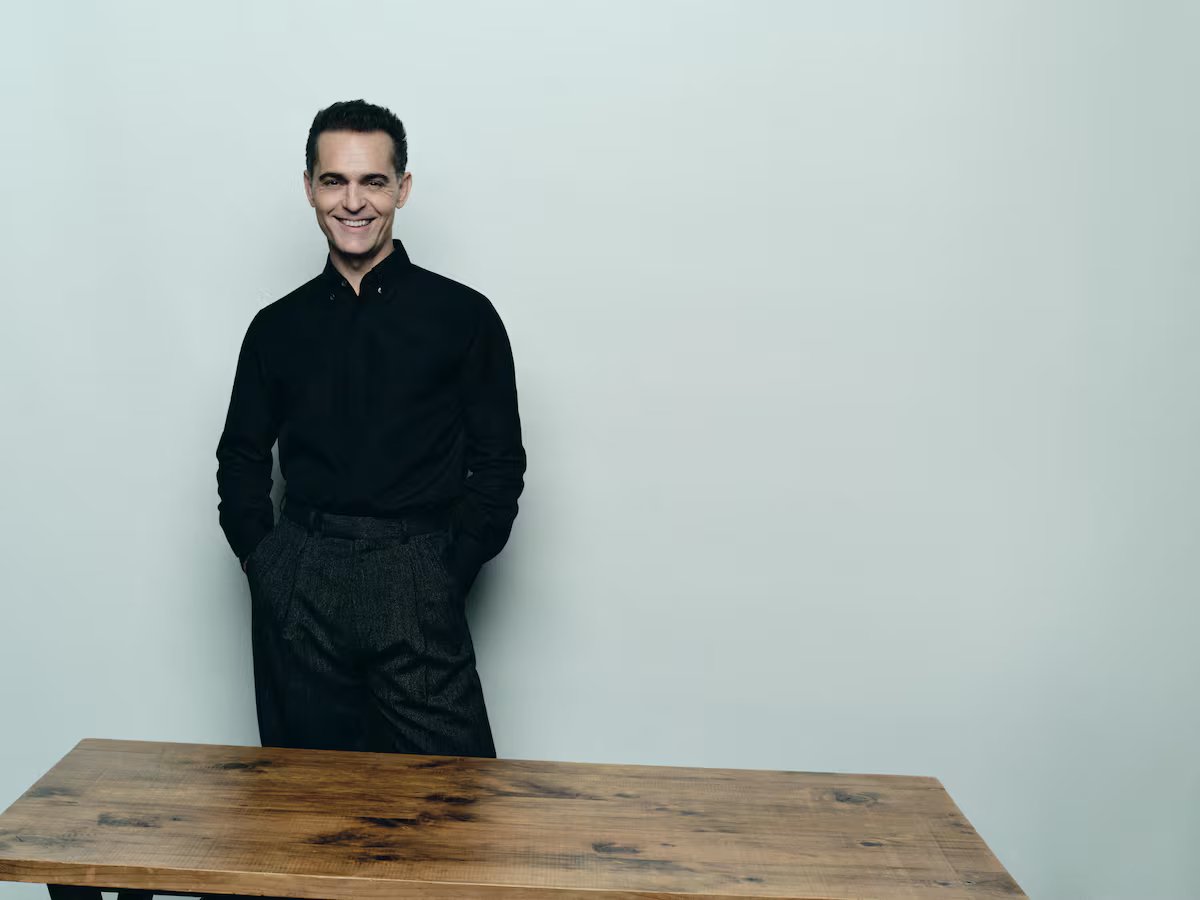
Pedro Alonso, 54, woke up this Monday with renewed energy. He had slept well. He went out for a coffee in the streets of A Coruña, where he is filming his new movie, and walked through the Old Town. It was then that he began to realize this wouldn’t be just any ordinary week.
At 10 a.m., he was on the phone with EL PAÍS. “A little while ago, someone from Netflix’s press department told me we were going to have a long chat. But we would need five days for this conversation,” he says.
This isn’t just another promotional interview for Berlin and the Lady with an Ermine, the new installment of the Netflix series about Berlin’s adventures before Money Heist, which returns on May 15. Pedro Alonso has made a decision: he will not reprise his role as Berlin. This week, he will travel to Madrid to give more interviews and will continue the tour in Seville, where the new episodes are set.
But before all that, Alonso sits down with EL PAÍS for nearly an hour of unhurried conversation in which the actor weighs every word. “I feel like I’m going to be overcome with emotion in unexpected ways,” he says.
Question. Why did you decide to leave the character of Berlin?
Answer. I’ve been on a journey of reconnecting with my intuition over the years. At no point in these nine years, until this past year, had I felt I had to close this chapter. I did have doubts at various times about whether I could sustain the character. But last year was very tough; filming was very demanding, both physically and psychologically. It coincided with the illness and death of someone who had been with me throughout my entire professional career, Clara Heyman, my only agent.
I didn’t realize the impact it was having on me on every level until I finished filming. I have the feeling that I’ve completed an enormous cycle of life with a character who has allowed me to soar, and that the best way to honor everything that has happened to me was to let it go. It was about making the decision and feeling my life move forward completely. It’s a matter of feeling it in your bones, knowing that to live life, you have to understand that there are phases, and that there are several lives in one life.
Q. You made the decision after filming the series. Does that mean there’s no goodbye, no ending for the character?
A. Álex Pina [co-creator of the series] has always been very meticulous about ensuring that all the pieces were consistent. Nobody knew I was going to make that decision during filming, but I think it’s a natural ending. It leaves seeds that connect with the entire mechanism of what was in Money Heist.
Q. How did Álex Pina and Esther Martínez Lobato, the creators of the series, respond to the news?
A. I had a truly moving meeting with them. I didn’t want them to feel bad. They’ve really inspired me; they’ve given me confidence. It’s a gift from life when someone fuels you and keeps fueling you — it’s something you have to honor. Yes, it’s true that it hasn’t left them indifferent, but I’ve felt a lot of empathy from them on a human and personal level. We’ve experienced incredible things together, and that’s what we’ll take with us.
Q. Didn’t they try to convince you to change your mind?
A. [Laughs heartily and takes a few seconds to answer] Well, obviously not everyone has felt the same way. Concha Velasco once told me: “You don’t walk away from a hit, Pedro, you don’t walk away from a hit.” But I also feel, although I don’t know if this phrase is mine or if I said it in the series, that the best way to honor love is through absence, and sometimes the best way to honor a success is by leaving. There’s a sense of responsibility for what I’ve done, but there’s no calculation involved; it has nothing to do with some intellectual strategy for my life. I’m not an actor who says, “I want to play a different character every time.” No, what I want is to have a connection with what I’m doing, and to feel that there’s a fuel that compels me to strengthen my commitment. Leaving has to do with this commitment, but also with the saga and the role. And it came from the gut, I felt a click in my gut, and I’m listening to my gut more and more.
Q. Looking back now, how do you see this life cycle that is coming to an end for you?
A. Sometimes I feel like the replicant from Blade Runner. I’ve lived through things you wouldn’t believe. The landscapes I’ve crossed, the miles I’ve traveled, the incredible moments I’ve experienced, the doors and windows that have opened… I’ve lived nine years in a state of wonder. Nothing and no one could have prepared me for everything that’s happened.
It’s been a very seductive phenomenon, yes, but also transformative in terms of personal growth — observing human nature, my own and that of many colleagues, and of the people who came into my life along the way. I’m grateful that the start of the saga caught me at a time when I was realizing that the most important thing was to take care of myself, that the price this profession exacts does matter. I’ve taken great care of myself and tried to balance the overwhelming moments of exposure with moments of retreat. I’ve traveled extensively, I’ve been to the Amazon, I’ve published a book, I’ve written for newspapers, I’ve produced and directed, I’ve dedicated myself to taking care of myself and deconstructing myself…
Q. Do you know where your next cycle is headed?
A. I directed and produced a very niche, very particular documentary series [titled On the Ship of Enchantment], connected to my desire to inhabit my own work. It was an incredible four-year journey of immense learning. Also, in the last 10-12 years, I’ve written a lot, mostly non-fiction, and suddenly I felt I wanted to take the step into fiction writing. I started working with Paco Bezerra; we’ve been working together for a year and a half and are finishing a first draft of a fiction screenplay that I want to direct.
I see myself as very eclectic, very cross‑disciplinary. I don’t want to stop acting or approach it with prejudice, but I do feel the need to inhabit material I’m directly connected to, so I’m going to try to take a strong step in that direction. And after several attempts where I didn’t quite see it, I’ve said yes to a job in English. There’s been a kind of small revolution inside me. You never know what’s going to happen, but it gives me that fizz in the stomach that you need to evolve — the good kind of fear.
Q. Have you discovered things about yourself in Berlin that you didn’t know before?
A. Berlin is like an energetic, narrative, acting‑driven magic carpet. It has allowed me to delve deeper into my way of seeing and doing things, also as an actor. The sense of breath, timing, listening, pausing… Seen in retrospect, it has allowed me to explore aspects of communication, interpretation, and storytelling that greatly interest me. It’s a character that may seem very contrived, but I think the core of it comes from a certain kind of listening, a certain presence, a kind of deceleration that triggers things. The most incredible part of an actor’s work begins when you’re able to stay still and do nothing, when you’re able to be in the listening. The Money Heist and Berlin saga is a project with a whole apparatus and a wild sense of mechanism, of fireworks, but at its center, there’s an animal that scrutinizes life at another speed. I don’t want to sound pretentious, but I once read that this job is about stopping time. And Berlin is a machine for stopping time.
Q. You are a very spiritual person. What does that world bring you, and how does that connect with the film and TV industry?
A. I think it was Ben Kingsley who said that the actor’s work was like that of those cavemen who, around a fire, began to tell stories to neutralize their fear when night fell and to connect with something greater than all that fear. There’s a part of that ancient discourse that resonates with me. But although that might sound very spiritual and very solemn, it has to do with something very rudimentary and primal. I am spiritual, and I have this yearning for a very simple impulse: I want to look myself in the eyes, and look into the eyes of others and feel that I am here.
Q. Would you take on a character for as long as you played Berlin — nine years?
A. What life has taught me is that no one can predict what’s going to happen to them. What I am clear about, though, are some of my goals. Berlin has been with me all these years, but he’s also allowed me to do so many things. He didn’t lock me inside my own workshop — he threw me out into the world, took me to unbelievable places, opened the doors of incredible people’s homes, introduced me to extraordinary individuals, brought fantastic opportunities my way. I can go to many places now, and I know people will listen to me.
Q. Are you mentally prepared for this week of goodbyes?
A. I honestly don’t know. Today I remembered times when, after filming a season, someone would say to me, “Pedro, say something.” And suddenly I was overwhelmed by emotions in a way that was quite shocking to me. I’m very at peace with the decision I’ve made, but as I was walking earlier, or even talking to you now, I realize this week is dangerous — I can feel an ocean of things underneath. I’m sure that at some point it’s going to become very intense. I’ve received so much affection, so much understanding, and respect for this character. Feeling myself let him go has shaken me, and I want to thank people — all those who have looked at me, sometimes letting me in, sometimes not.
I’m glad that such a paradoxical, ambivalent, even dangerous character by certain standards has been understood as a non‑moralistic invitation to talk about what brushes up against the human condition. I’ve never said Berlin is an example, but he is a catalyst for emotions. Fiction and storytelling aren’t meant to make you think “correctly,” but to make you feel — and then you decide what to do with what you feel. If it has served that purpose, if it has been a warm breath for people in their lonely hours in these times of noise and fury, then I’m deeply honored, and thank you all.
Sign up for our weekly newsletter to get more English-language news coverage from EL PAÍS USA Edition
