
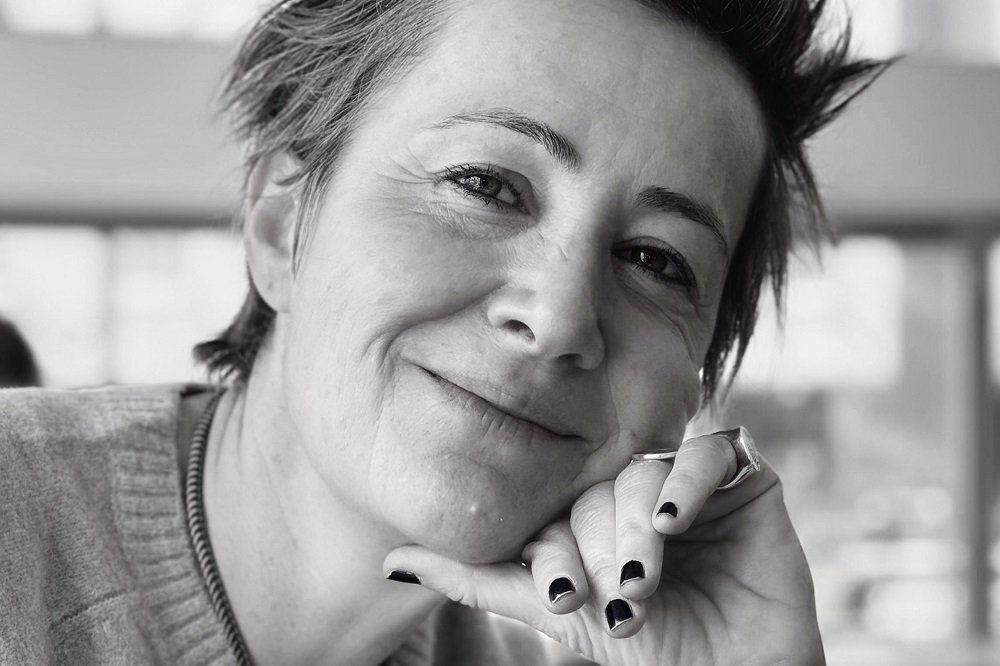
– The Greek producer spoke with us about launching debut features, transitioning into animation, and building international collaborations
Athens-based producer Danae Spathara of Heretic has been selected as this year’s Greek participant in the European Film Promotion’s Producers on the Move initiative in Cannes. She has developed a strong profile across international co-productions and emerging talent, and her latest production, Kyuka – Before Summer’s End by Kostis Charamountanis, opened the ACID section in Cannes in 2024. She is currently developing the stop-motion debut feature Human Negligence by Eirini Vianelli, which participated in the Sundance Screenwriters Intensive Lab. We spoke to her about positioning first features, expanding into animation, and the role of international networks in sustaining a producing career.

Cineuropa: How did the ACID premiere of Kyuka – Before Summer’s End shape your approach to positioning debut features internationally?
Danae Spathara: Positioning a film internationally starts with the story itself. You have to dig into its core and identify one or two elements that feel universal, something audiences anywhere can connect to. From there, it becomes a question of how those elements relate to the film’s overall cinematic identity. With Kyuka – Before Summer’s End, which is a Greek-language debut, those universal aspects were wrapped in a strong sense of “Greekness”. That was both a strength and a thread. The idea of the Greek summer is widely appealing, but it can also create misleading expectations; if someone walks in expecting something closer to Mamma Mia!, they would be disappointed. So, we focused on highlighting the qualities that reflect Kostis Charamountanis’ voice as a director, the poetry, experimentation, sensitivity, and humour, while maintaining a delicate balance between homegrown authenticity and something that can travel. That balance comes up again with Human Negligence, another Greek debut, by Eirini Vianelli. It’s a different film, but the same question applies: how do you take something rooted in a specific place and make sure its emotional world still reaches people everywhere?
Talking of which, what draws you to animation at this stage, and how has it reshaped your producing process compared to live-action work?
Moving into animation was not something I had planned. I wasn’t even a big animation fan or connoisseur. But when Eirini Vianelli shared the story with me, I was immediately hooked. The themes, combined with her talent and passion, really pulled me in that direction. Then the project was selected for the Sundance Intensive Screenwriters Lab, where Eirini and co-writer Andrew Gilchrist developed the next draft. At the same time, I had to consider whether I could commit to the long and demanding process that a stop-motion feature requires, especially coming from a country with limited animation infrastructure. I had to educate myself, watch films, study materials, and attend programmes like CEE Animation Workshop and ACE Animation Special, which helped me better understand the field and build a network. What I realised is that while the process can differ significantly from live action, the core of filmmaking remains the same. And through this journey, I am very happy to keep learning, connecting and collaborating with the international animation community, which I find to be incredibly passionate, resilient, hardworking and modest.
As part of Heretic, how does working within a company with a strong international outlook influence your choice of projects and collaborators?
Working within Heretic is a significant advantage because of its established international network and strong profile. At the same time, it is important to share common ground in terms of taste and to allow space for agreement and disagreement. When choosing a project, I rely on intuition. I focus on what genuinely moves me and gives me the energy to commit for several years; I also try to get a sense of whether the people involved are those I’d want to spend the next few years with. In a way, it’s similar to choosing a life partner; you have to navigate both the happy moments and the challenges together.
Having gone through programmes like EAVE and ACE Producers, how have these networks influenced the way you build and sustain co-productions?
These programmes are essential to a producer’s sustainability. They provide the tools and skills needed to boost and strengthen careers. They also create safe spaces for professional dialogue. Coming from a country with limited formal training opportunities in filmmaking, I can say that without programmes like these, it would be extremely difficult to stand on equal ground with colleagues from countries that have more established training systems. If we are serious about building a diverse European cinema, one where less privileged and underrepresented voices are heard, then continued support for these programmes is not optional; it’s necessary for cinema and for the quality of our democracy.
As one of EFP’s Producers on the Move this year, what are you hoping to unlock at Cannes in terms of partnerships or new directions for your slate?
Honestly, first and foremost, I want to experience and enjoy the programme itself. I am looking forward to meeting the other producers, exchanging ideas, and discussing not only projects but also the broader realities of our professional lives. It is a strong selection, and when the right group of people comes together, meaningful collaborations tend to emerge naturally. I am confident that new partnerships will grow out of these encounters, and that they will lead to projects we will continue to build on in the future.
