
Mario never has time. He’s always rushing off towards the next adventure. When he’s not saving worlds, or his beloved Peach, he’s racing cars, playing tennis, healing patients, or dancing. “Mario excels at sports including tennis, golf, baseball, soccer, and even kart racing. He’s good at all of them! He’s a plumber by profession but is really a jack of all trades,” reads his profile on the Nintendo website. “Mario is always bright and cheerful.”
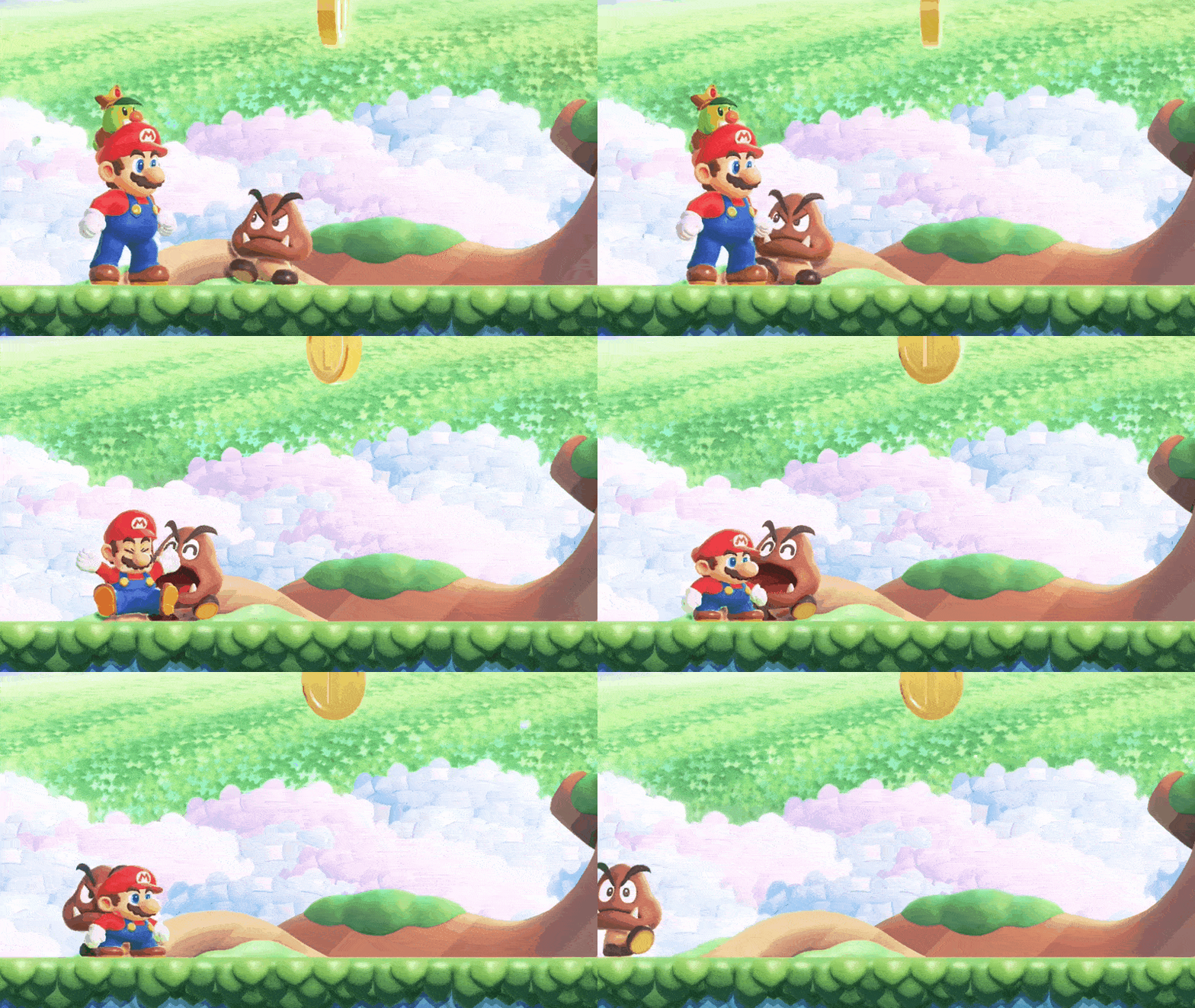
A universal talent — and universally loved: Nintendo estimates it has sold 452 million video games, although some estimates reach double that. A survey in the U.S. concluded in the 1990s that he was more famous than Mickey Mouse. A colossal success, but an exhausting one. Indeed, in some video games, if the player sets the controller down, Mario takes the chance to sit. He immediately falls asleep and even starts snoring. Because Mario is unique and, at the same time, just like anyone else. And that’s why everyone feels at least a little fondness for him. Even more so now that he’s celebrating his 45th anniversary. Let this article serve as a gift.
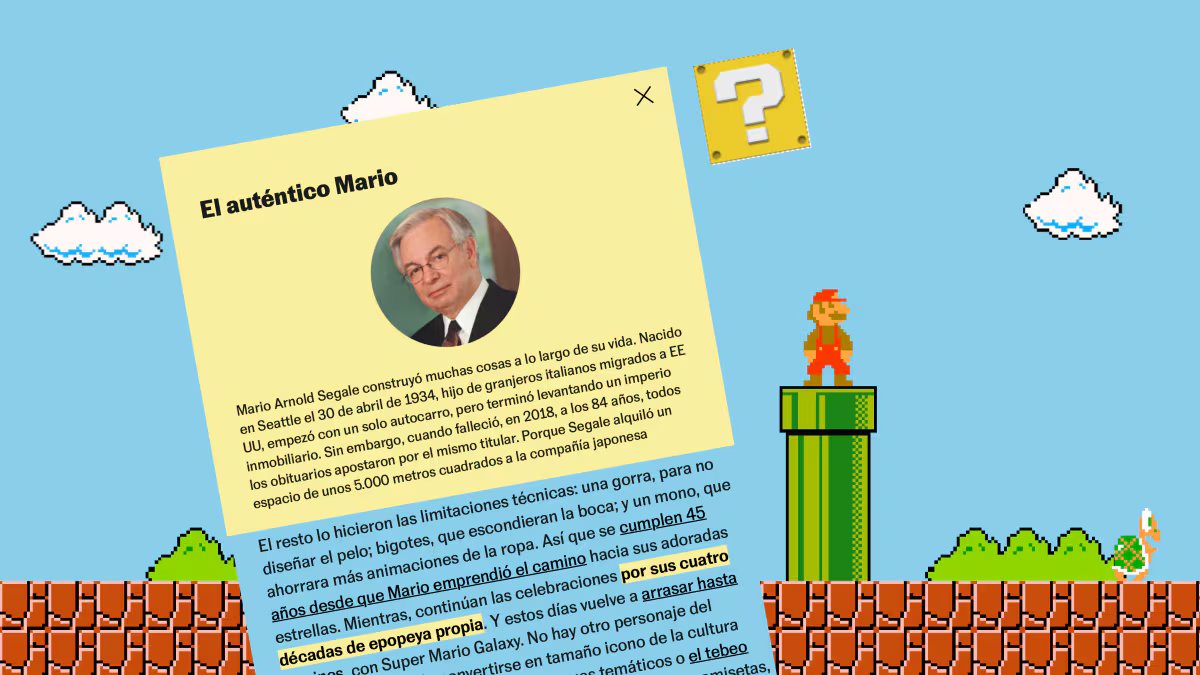
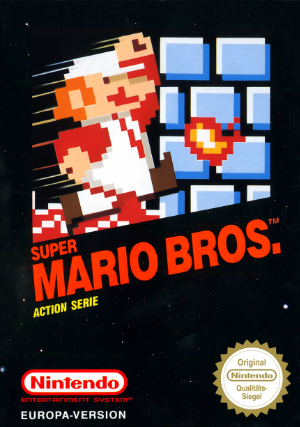
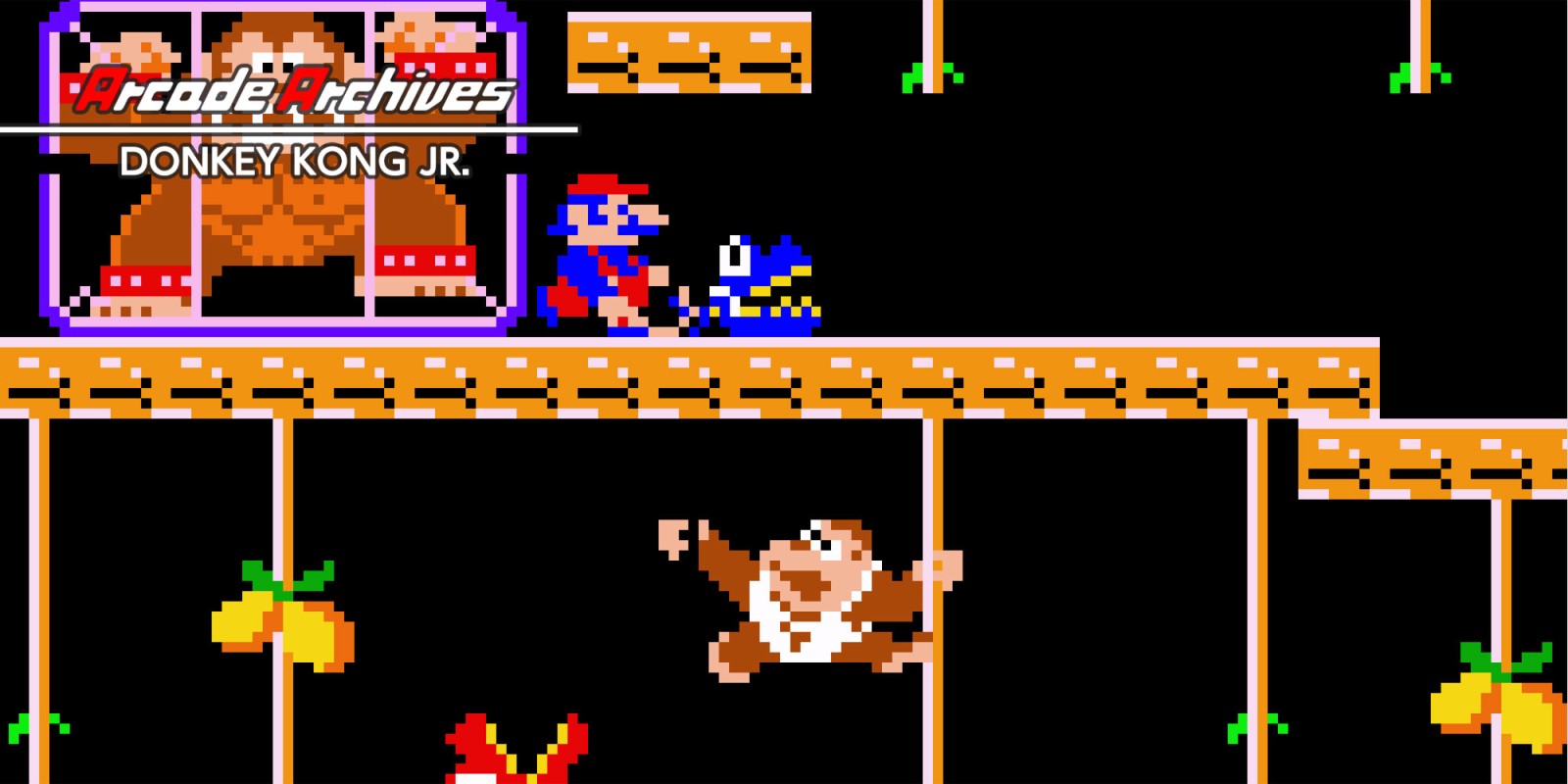
His creator, Shigeru Miyamoto — whose message of thanks to EL PAÍS readers appears at the end of this article — said that the character is “between 24 and 25 years old.” But the truth is, he first appeared 45 years ago: although, in 1981, he didn’t have the name or the prominence he has today. He was called Mr. Video, or Jumpman. And, in the video game Donkey Kong, he was the guy who dodged the barrels thrown by the evil ape to rescue the princess. At the time, the story cast him as a carpenter. So the myth required some tweaking: a more appropriate profession, since he went down so many pipes; or the chance appearance during a meeting at Nintendo’s U.S. offices of Mario A. Segale, an Italian-American businessman who leased the building to the company. He had come to demand the rent, with some insistence. But he ended up giving his name to the 1985 game Super Mario Bros.
The rest was down to technical limitations: a cap, to avoid designing the hair; a mustache, to hide the mouth; and overalls, which spared them from drawing extra clothing movements. So, it’s been 45 years since Mario embarked on his journey to his beloved stars. And four decades of his solo epic, whose celebrations continue. These weeks, he’s also dominating the box office again with Super Mario Galaxy. No other video game character has become such a pop culture icon. Restaurants, theme parks, and even Niall Breen’s comic book, The Lonely Plumber, are dedicated to him. He’s featured in museums, on T-shirts, toys, watches, backpacks, Legos, and even rattles, thanks to the recent My Mario baby line. Because the young players who grew up with him are now passing on their passion to their children and grandchildren. Mario’s online profile says he loves “partying with his friends.” He has plenty of reasons to.
There are also several reasons for its success. “It’s like the line from The Leopard: ‘If we want things to stay as they are, things will have to change.’ A player of the first Mario game who tries the latest one will understand. You can play with a joystick and a button; it has a simple introduction, although it’s difficult to master afterward. There’s always something different, but the core gameplay remains,” reflects Manuel Curdi, marketing director of Nintendo Spain for the past 20 years. “The most important thing is that it’s very entertaining, for all ages and audiences,” adds Pablo Díaz, a violinist with a passion for the plumber’s work. “It was literally the first video game that an entire generation held in their hands. It helped invent and define what we expect from video games,” adds Chip Carter, who followed the character’s growth since 1990 through his pioneering column in The Chicago Tribune.
In the history of video games, Mario’s importance is, to say the least, difficult to overstate. He’s not just a popular character or a long-running franchise, but a way of understanding design and the relationship between user and world. Journalist Paula Sáez Pérez highlights the foundational nature of the first Super Mario Bros.: how it “established side-scrolling” and how it introduced learning mechanics without the need for text. “The first level of the game is still studied in design schools,” she notes, precisely because of its ability to teach without words. Some consider it the best implicit tutorial ever created.
“Its influence is absolute and still relevant. At first glance, it seems to only affect the mechanics, but it also encompasses the very concept of adventure and how to present it to the player,” notes Adrián Suárez, co-author of the book On Mario: From Plumber to Legend. That idea, condensed into minimal resources, was revolutionary at the time. “There were secret places, changes in the sky, very few elements… and yet it offered a vast journey,” adds Suárez. The key wasn’t quantity, but precision. From the structure to the smallest visual details, Mario laid foundations that continue to be replicated. “Prestigious authors like Hideo Kojima and Hidetaka Miyazaki have acknowledged its influence,” says the expert, who holds a doctorate in video game narrative and is a professor at the International University of La Rioja (UNIR).
The saga, to date, comprises 24 main games. And around 200, if you include the Kart series and any other appearances on screen. Mario’s biggest misstep also came on screen: the 1993 live-action film. Consoles have come and gone, from the Nintendo and the Game Boy to the current Switch 2, but Mario has remained its standard-bearer. Unmatched in popularity by any rival, be it Sonic — for once doomed to run behind him, not ahead — Lara Croft, or Pikachu. He’s unbeatable in the market too, just as he is when he grabs a star or a mushroom. Miyamoto, for the record, has clarified that the magic of those mushrooms was inspired by folklore, not Alice in Wonderland, and certainly not by hallucinogenic experiences.
All of this remains unchanged even in the most recent Super Mario Bros. movie, Wonder, from 2023. Although in their development diary, the creators explain that they sought to recapture the “wonder” of the first Mario. In keeping with the quote from The Leopard, the plumber still moves forward and jumps from left to right, collecting bonuses and coins along the way, until he faces the most fearsome turtle of all: Bowser. Around him, however, the ideas keep coming even faster than the threats. A proposal for a realistically proportioned Mario who would hum the famous theme as he walked — and shout “Boing!” when he jumped — didn’t make the cut. But the game does completely reinvent the gameplay of many levels, with flights, dragons, and bubbles, and transforms the hero into an elephant or even one of those Goombas that try to chase him with their tiny legs.
The paradox is that Mario’s simple coherence has slowly turned him into something of an outlier. In a medium striving for sophistication — where plot and graphics increasingly dominate, sometimes even overshadowing gameplay — the plumber flips that logic on its head. “If we look at how he constructs the world, we see a story that isn’t fully told, that remains implicit,” says Suárez. This narrative style, based on suggestion and exploration, has ultimately become one of the pillars of modern design. “Mario showed us how to tell adventures within playable environments. Gameplay comes first,” he adds. “Often, in pursuit of a more complex and artistic status, the industry has moved towards niche markets. Mario embodies the opposite, the ambition to include everyone,” says Manuel Curdi. In 1985, when each gamer barely had a couple of cartridges and often one was a Mario game, and today, when he dominates amidst an overwhelming array of options, the effect is the same. The overlap of anniversaries, the debut of the Switch 2, and the long wait since his last 3D game (Odyssey, 2017) have only fueled speculation about new announcements.
Curdi, however, isn’t giving anything away. For now, we’ll have to make do with what we have. “Mario is charismatic, powerful, someone you can easily identify with,” says Suárez. His simplicity — a plumber with a cap and a mustache — is one of his greatest strengths. “He’s almost a blank slate; he has very specific attributes, and adding more could exclude someone. He tries to be universal in everything, including the plot and the interface,” Curdi notes.
For someone so famous, remarkably little is known about him — certainly nothing resembling political, social or philosophical positions. He hardly speaks, except for the occasional “mamma mia!” he always smiles, helps, never gives up, and little else. That same tradition, which has cemented his success, has also become the subject of critical re‑examination, especially regarding gender roles. Journalist Marta Trivi points out that the classic structure follows a deeply rooted narrative logic: “Peach is kidnapped because in traditional stories, princesses… the hero has to rescue them. That structure is sexist.” She clarifies that it’s not about demonizing the saga, but about understanding the context in which it emerged and is repeated. “There has always been a tendency to represent women as passive figures and men as agents of action,” a dynamic that Mario has reproduced without question for decades.
Paula Sáez agrees, pointing to the “damsel in distress” trope as one of the saga’s most recognizable elements. However, both experts acknowledge certain advances in recent years. Trivi highlights that current reinterpretations seek to “turn these tropes on their head,” not only due to the influence of feminism, but also because of the need to surprise an audience already familiar with these narratives. Sáez, for her part, mentions the growing prominence of characters like Peach, albeit still in a limited way. In this sense, they point out that the future lies not only in gameplay innovation, but also in rethinking the dynamics that have defined its universe for years. Even the ending of Odyssey — where the Peach rejects marriage proposals from both Mario and Bowser and walks away — ultimately fell back into the stereotype: both characters immediately chase after her to win her over.
At least in the recent films, Peach is portrayed as a wise stateswoman and a brave warrior — someone Mario learns from. However, no major revolutions are expected in the short term. “The character can only be stretched a little. Every single detail is overseen by Japan, perhaps even by Miyamoto himself. It’s the intellectual property that defines the company. We have the trust of many families; that’s a treasure that must be protected,” says Curdi. Nintendo now entrusts its symbol to other companies, like Lego or Universal, to help explore toys or film, but it always keeps control. After all, that’s how it has secured 45 years of success — with more to come. It’s enough to make you say, “Mamma mia!”
There’s no break ahead for the icon, unless the player grants him one. Then, finally asleep, the plumber will begin to dream of spaghetti, ravioli, lasagna, or carbonara. Even his fantasies are simple — pure nostalgia for home. No matter how much they call him Super, deep down, he’s always just Mario: an ordinary guy.
“Hello to all EL PAÍS readers. I’m Shigeru Miyamoto from Nintendo. It’s been 40 years since we released Super Mario Bros. for the Family Computer in Japan back in 1985. Thank you for your continued support of Super Mario!”

Credits
Coordination: Brenda Valverde Rubio
Design: Ana Fernández and Ruth Benito
Art direction: Ruth Benito
Development: Fernando Anido and Alejandro Gallardo
