
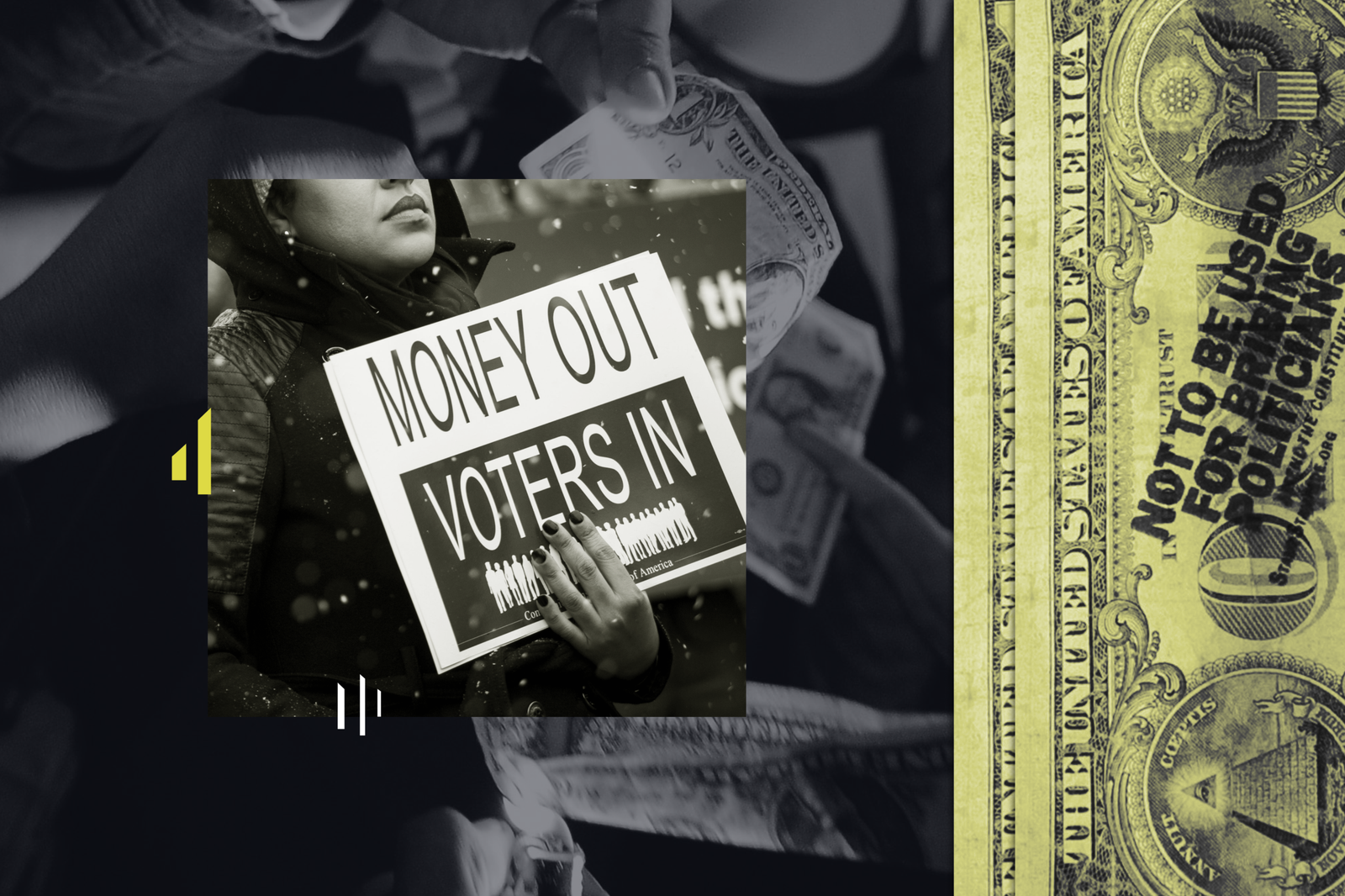
Americans think cash rules more of the political system than it should — a concern that crosses party lines as midterm spending is projected to once again shatter records.
New results from The POLITICO Poll are stark: 72 percent of Americans say there is too much money in politics, with just 5 percent disagreeing. Across parties, majorities say billionaires wield outsized influence over U.S. politics and that special interest spending is a type of corruption that should be restricted, rather than protected as free speech. Nearly half of respondents say voters have too little power.
Outside money shows no sign of slowing. New groups tied to artificial intelligence, cryptocurrency and other emerging industries are rapidly entering the political arena, pouring millions into competitive primaries to shape who makes it to Washington. Each of the last three midterm elections has set new spending records, and ad tracking firm AdImpact projects advertising spending will once again reach new heights, to the tune of $10.8 billion.
“This type of astronomical spending corrodes people’s faith in our system of government, and I think people are really looking for changes to take some of this outrageous amount of spending and rein it in,” said Michael Beckel, the Money in Politics Reform Director at Issue One, a nonprofit advocacy group.
The poll — conducted in partnership with Public First — suggests many Americans see that influence as coming at voters’ expense, raising concerns not just about fairness, but about the health of the democratic system itself.
Still, there was some partisan disagreement, with Democrats tending to hold the strongest views against money in politics. Non-voters, meanwhile, were more likely to respond “I don’t know” to these questions, which lowered the overall shares of Americans who are critical of money in politics, compared with Harris voters and Trump voters.
Here’s a look at where Americans stand, starting with a place of unified skepticism:
Americans overwhelmingly believe there is too much money in politics.
Cutting across party lines, nearly 3 out of 4 Americans agreed with the statement that “There is too much money in American politics,” while most others didn’t take a position.
They also see that money as powerful. A majority think it can shape election outcomes — with 39 percent saying money can outright buy results and another 34 percent saying it can influence but not buy them. That perception mirrors what’s already playing out in campaigns: wealthy donors and outside groups are pouring millions into competitive races, often through vehicles that can accept unlimited contributions and amplify a small group of voices.
There’s a partisan break in beliefs about how far that money can go. Trump voters lean toward saying people or organizations with a lot of money can influence elections without buying the outcomes, while Harris voters were more likely to say election outcomes can be bought.
Americans agree: Voters don’t have enough power.
When asked how much sway different groups have over politics, about half of respondents said voters have too little — far greater than the shares that said voters have either too much influence or the right amount.
Meanwhile, 6 in 10 say billionaires have too much influence over U.S. politics — a view that’s more widespread among Democrats, with 75 percent of Harris voters agreeing, compared with 55 percent of Trump voters. A sizable share of respondents also see political parties, special interest groups and foreign governments as overly influential, far outweighing the number of Americans saying those groups have too little influence.
Concern about special interest money runs particularly deep. Not only do two-thirds of Americans say there is too much of it flowing into U.S. politics, a majority (53 percent) view that money as corrupt and in need of stricter regulation, instead of following the conservative legal principle that it is an act of free speech to be protected. That includes 56 percent of Trump voters.
Money plays a major role in shaping elections, including in determining candidates’ ability to run advertising to get their message in front of voters, to hold campaign events and to hire staff. It can even shape who runs in the first place.
Americans know that money matters, expressing a broad skepticism about how elections are decided. A plurality believes the candidate with the most money — not the most popular positions — wins.
That view is far more common among Democrats: Over half of 2024 Harris voters say money is the deciding factor, compared with a little over a third of Trump voters.
Erin Doherty contributed reporting.
